COLD OPEN
My parents spent years comparing my nursing salary to my brother’s six-figure income.
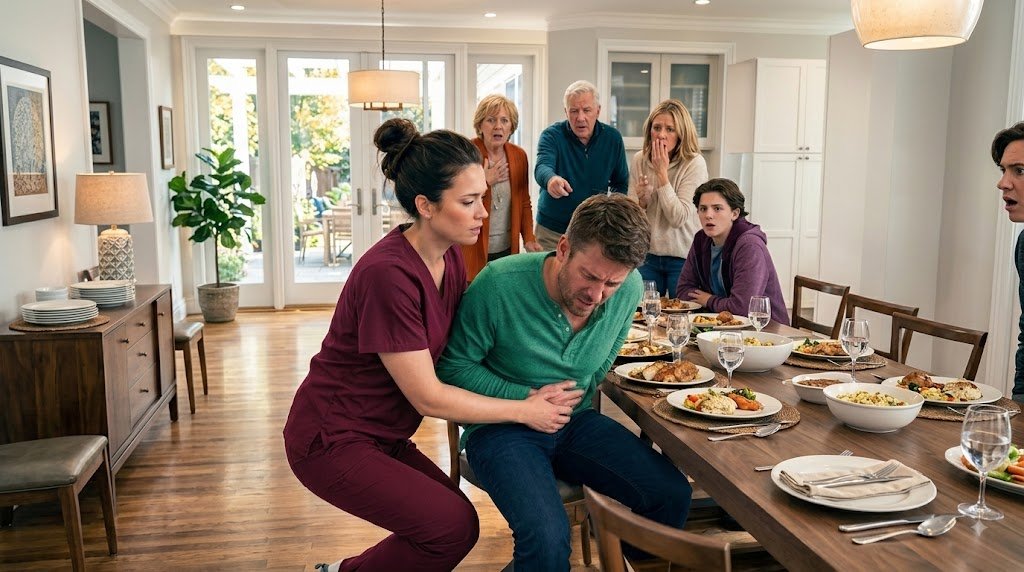
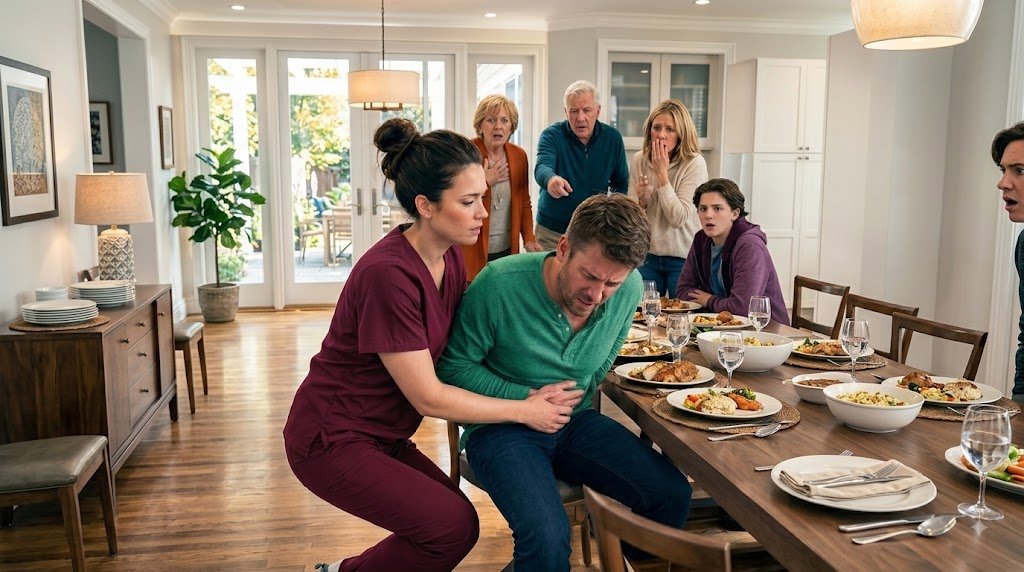
Then one Sunday night, my brother suddenly doubled over at the dinner table.
Everyone told him it was probably something he ate.
I took one look at his face and said, “We’re going to the hospital.”
Twenty minutes later, the doctor came through the curtain and said one word:
“Appendicitis.”
Then my brother looked at me and whispered, “You were right.”
Part 1: The Dinner Table
My mother managed to mention Derek’s salary before the dinner rolls even reached my side of the table.
“He got his annual review on Thursday,” she announced.
Derek lowered his eyes toward his plate.
“Mom.”
“What? We’re proud of you.”
Dad leaned back in his chair.
“Two hundred thousand now?”
Derek gave a reluctant nod.
“Close to that with the bonus.”
Dad whistled.
His wife, Natalie, smiled politely, though she looked slightly uncomfortable with the conversation.
I reached for a roll.
I already knew where this was going.
It had been happening for years.
My name is Rachel Monroe. I was thirty-five and had worked as an emergency-room nurse for nearly ten years.
I loved my job.
Not every shift.
Nobody loves every shift.
There were mornings when I drove home after a twelve-hour night shift with aching shoulders, parked outside my house, and sat in the car for several minutes because I was too exhausted to walk inside.
But there were also nights when frightened people arrived believing their entire world had fallen apart, and I got to be one of the people who helped make those moments a little less terrifying.
That mattered to me.
My parents had never really understood why.
Mom spread butter across her bread.
“Rachel could have gone into Derek’s industry if she had wanted.”
There it was.
Derek worked in corporate technology sales.
He was good at it.
He traveled regularly, handled major accounts, and could walk into a room full of executives and somehow make everyone feel like they had known him for years.
I was proud of him.
My parents just seemed incapable of praising him without turning me into the comparison.
Dad said, “You always had the grades.”
“I still have them, Dad. They didn’t disappear.”
He laughed.
Mom didn’t.
“You know what I mean. Nursing is exhausting for what they pay you.”
Natalie tried to change the subject.
“Rachel, are you still training the new nurses?”
“Yes. Three this month.”
Mom sighed.
“Exactly. More responsibility.”
She paused.
“And probably not much more money.”
I put butter on my roll.
“Not really.”
Derek leaned back.
“You could move into hospital administration.”
“I could.”
“Or medical equipment sales.”
“I could.”
“You’d probably make twice as much.”
I looked at him.
“Do you want to become a nurse?”
“No.”
“Then I think we’ve solved the problem.”
Natalie laughed.
Derek smiled.
Mom didn’t.
Years earlier, she had told me that becoming a bedside nurse was “a waste of your intelligence.”
I never forgot it.
Not because I secretly believed her.
Because she’d said it while I was still wearing my hospital scrubs after a thirteen-hour shift.
That night, I’d helped stabilize a construction worker after a serious fall, stayed beside a terrified teenager waiting for test results, and comforted an elderly patient whose daughter was driving in from another state.
I arrived at dinner exhausted.
Mom looked at my wrinkled navy scrubs and saw a bad career decision.
Eventually, I stopped defending myself.
Family dinners became easier when I let Derek’s paycheck pass through the conversation like weather.
That Sunday, though, Derek was unusually quiet.
I noticed because he normally ate enough at Mom’s house to make everyone else feel guilty.
He had taken only a few bites of roast chicken.
His potatoes were untouched.
“You okay?” I asked.
He looked up.
“Yeah.”
“You’re barely eating.”
“Had a big lunch.”
Natalie looked at him.
“You told me you skipped lunch.”
Derek gave her an irritated glance.
I watched him shift in his chair.
His hand briefly moved toward the lower right side of his abdomen.
Then he pulled it away.
“Does your stomach hurt?”
Dad sighed.
“Rachel, don’t turn dinner into a hospital shift.”
“I asked one question.”
Derek shook his head.
“It’s nothing. My stomach’s been off since this morning.”
“Where does it hurt?”
“Rachel.”
“What?”
“I’m fine.”
Natalie frowned.
“You complained about it in the car.”
He shrugged.
“Probably something I ate in Phoenix.”
He had returned from a business trip the previous evening.
Mom immediately jumped in.
“Airplane food.”
Derek pushed his plate away.
I studied his face.
There was a faint sheen of sweat along his forehead.
The dining room was cool.
“How long has the pain been getting worse?”
He exhaled.
“I don’t know. A few hours.”
“Did it start where it hurts now?”
He looked annoyed.
“No.”
“Where did it start?”
“More around the middle.”
“And now?”
He pointed toward the lower right side.
I slowly put down my fork.
Natalie noticed.
“What?”
“I think he needs to get checked.”
Derek laughed.
“For a stomachache?”
“I’m not diagnosing you.”
“That sounds exactly like diagnosing me.”
“No. I’m saying abdominal pain that has moved and gotten worse, combined with nausea and the way you look right now, deserves an evaluation.”
Dad shook his head.
“He doesn’t look that bad.”
Derek suddenly pushed himself up from the chair.
He made it halfway to standing before stopping.
His hand grabbed the edge of the table.
His face tightened.
Natalie immediately stood.
“Derek?”
“I’m fine.”
“You keep saying that,” I said.
He slowly sat back down.
Mom brought him a glass of water.
Dad suggested antacids.
Derek insisted he had an important presentation Monday morning and wasn’t spending Sunday night in an emergency department because his sister had decided to “go into nurse mode.”
That irritated me enough that my voice became calmer.
“You have two choices. Natalie drives you, or I do.”
“Rachel—”
“You can complain about me the entire way.”
He looked at Natalie.
She was already reaching for her purse.
Twenty minutes later, we were driving toward the hospital.
Halfway there, Natalie’s phone rang.
It was her mother.
She lived several hours away and had been admitted to a hospital earlier that afternoon after suffering a fall.
Natalie went pale.
“I need to go.”
Derek immediately told her to leave.
She hesitated.
“I’m staying with him,” I said.
Natalie looked at me.
Despite all the jokes and comparisons in our family, she had never questioned my profession.
“You’ll call me?”
“Absolutely.”
She turned to Derek.
“Listen to your sister.”
He muttered,
“Everyone seems way too happy about this.”
Nobody laughed.
At the emergency department, I didn’t flash my badge or tell anyone how to do their job.
I checked Derek in.
Then I stopped being a nurse.
I became his sister.
The triage nurse asked questions.
Derek answered them.
Blood was drawn.
A physician examined him.
Imaging was ordered.
Dad arrived while we waited.
He sat beside Derek and spent nearly twenty minutes complaining about the parking garage.
That was what Dad did when he was worried.
He complained.
Finally, the physician returned.
He pulled the curtain closed behind him.
“The scan is consistent with appendicitis.”
Derek stared at him.
The doctor continued.
“We’re going to have the surgical team come speak with you.”
Derek slowly turned his head toward me.
For once, there was no joke in his expression.
No irritation.
No argument.
Just fear.
“Rachel…”
I reached for his hand.
“I’m right here.”
He swallowed hard.
Then he whispered,
“What happens now?”
Part 2: The Moment Everything Changed
The surgeon arrived less than fifteen minutes later.
She introduced herself as Dr. Hannah Pierce, then pulled up the imaging results on the computer.
“Your appendix is significantly inflamed,” she explained. “The good news is that we caught it before it ruptured.”
Derek stared at the screen.
“So I need surgery tonight?”
“Yes.”
He looked at me.
“Seriously?”
I nodded.
“Seriously.”
For the first time all evening, he didn’t argue.
He simply leaned back against the pillow and closed his eyes.
Then his phone buzzed.
Natalie.
Derek answered.
“Hey.”
I watched his expression change as he listened.
He didn’t tell her everything immediately.
When he finally said, “They’re taking me into surgery,” his voice sounded smaller than I’d ever heard it.
Natalie started crying.
Derek looked at me.
I mouthed, She’s okay.
He nodded.
After the call ended, he stared at the ceiling.
“I have that presentation tomorrow.”
I almost laughed.
“You’re worried about your presentation?”
“I’ve been preparing for it for three months.”
“Derek, you’re having surgery.”
“I know.”
He rubbed his face.
“I just can’t believe this.”
I understood.
People rarely expect serious problems to happen on ordinary days.
A family dinner.
A business trip.
A stomachache.
Everything can seem normal until suddenly it isn’t.
The surgical nurse came to prepare him.
Dad stood near the doorway.
For once, he wasn’t talking about money.
He wasn’t talking about Derek’s career.
He wasn’t comparing us.
He simply looked at his son.
“You scared me tonight.”
Derek looked at him.
“Sorry, Dad.”
Dad shook his head.
“Don’t apologize.”
Then he glanced at me.
“I suppose your sister was right.”
I smiled faintly.
“About what?”
He hesitated.
“About getting him here.”
Derek gave a tired laugh.
“Don’t make her too proud.”
Dad actually smiled.
“Too late.”
The surgical team wheeled Derek away shortly after midnight.
The doors closed.
I sat beside Dad in the waiting room.
For nearly an hour, neither of us said much.
Then Dad finally spoke.
“You know your mother doesn’t mean those things about your job.”
I looked at him.
“She says them all the time.”
“I know.”
“And you let her.”
He lowered his eyes.
“I suppose I did.”
That admission surprised me.
Dad leaned forward.
“When you were younger, I thought success meant earning more money.”
I said nothing.
“Your brother did that.”
He paused.
“You chose something different.”
“I didn’t choose less.”
He looked at me.
“I know that now.”
I looked down at my hands.
“People think because I don’t make what Derek makes, my work matters less.”
Dad shook his head.
“Not tonight.”
The words stayed with me.
Not tonight.
Tonight, nobody cared about Derek’s salary.
Nobody cared about quarterly bonuses or corporate accounts.
We cared whether he would wake up safely.
Around 1:20 a.m., the surgeon finally appeared.
Dad stood so quickly his chair scraped across the floor.
“How is he?”
Dr. Pierce smiled.
“Everything went well. His appendix hadn’t ruptured.”
I felt my entire body relax.
“He’s in recovery now. You should be able to see him soon.”
Dad exhaled.
“Thank God.”
I closed my eyes for a moment.
The tension I’d been carrying all night finally began to leave.
When we entered Derek’s recovery room, he was still groggy.
His eyes opened slowly.
“Hey,” I whispered.
He looked at me.
Then at Dad.
“Did I miss Monday?”
Dad laughed.
“It’s still Sunday.”
Derek smiled weakly.
“Good.”
I pulled a chair beside his bed.
“How are you feeling?”
“Like I got hit by a truck.”
“That sounds about right.”
He was quiet for a moment.
Then he said something I wasn’t expecting.
“Rachel?”
“Yeah?”
“You were right.”
I smiled.
“About the appendix?”
“About everything.”
He looked toward the ceiling.
“I kept thinking because I make more money, I knew more about life.”
Dad looked away.
Derek continued.
“But tonight I realized I didn’t even know what was happening inside my own body.”
His voice became quieter.
“You saw it.”
I shook my head.
“I recognized the warning signs.”
“Same thing.”
“No. You trusted me when it mattered.”
He looked at me.
“I almost didn’t.”
“I know.”
He smiled weakly.
“I’m sorry.”
I reached over and squeezed his hand.
“Just recover.”
A few minutes later, his phone buzzed again.
Natalie had sent a message.
Tell Rachel thank you.
Derek showed it to me.
I laughed softly.
“Your wife is very smart.”
“She married me, so clearly we have different definitions of smart.”
Dad laughed from the corner.
It was the first normal sound we’d heard all night.
But the next morning, something unexpected happened.
Mom arrived at the hospital carrying a bag of clothes for Derek.
She walked into the room, looked at him in the hospital bed, then at me sitting beside him.
For once, she didn’t mention money.
She didn’t mention nursing.
She didn’t mention how much Derek earned.
She simply walked over to me.
“Rachel.”
I looked up.
She took a breath.
“I owe you an apology.”
And before I could answer, she said something I had never expected to hear from her.
“I was wrong about what makes a person’s life valuable.”
Part 3: What Really Matters
Mom stood beside Derek’s hospital bed, still holding the bag of clothes.
For a few seconds, nobody spoke.
Then she looked at me.
“I spent years measuring success by a paycheck,” she said quietly. “I thought I was helping you by pushing you toward something more profitable.”
I swallowed.
“You didn’t make me feel helped.”
“I know.”
Her eyes filled with tears.
“I made you feel like what you did wasn’t enough.”
Derek shifted against his pillow.
“Mom…”
She turned toward him.
“I did the same thing to you, didn’t I?”
Derek gave a tired smile.
“Sometimes.”
Mom sat down.
For once, there was no argument.
No comparison.
No lecture.
Just silence.
Then Dad cleared his throat.
“I think your mother has something else to say.”
Mom looked embarrassed.
“I’ve been wrong about Rachel’s career for a long time.”
She looked directly at me.
“You weren’t wasting your brain.”
I felt my throat tighten.
“You were using it every night.”
I didn’t know what to say.
Derek reached for my hand.
“She saved me from making a very stupid decision.”
Mom nodded.
“She did.”
The next few days passed quietly.
Derek recovered faster than expected.
The surgeon said the appendix had been removed before complications developed, and he would eventually return to normal.
His big Monday presentation was canceled.
His company rescheduled it.
And, for the first time in years, Derek didn’t seem bothered by it.
On Wednesday afternoon, he was sitting in the hospital chair eating soup when he looked at me.
“Can I ask you something?”
“Sure.”
“If you weren’t there Sunday, what would have happened?”
I knew what he meant.
“I don’t know.”
He stared at his soup.
“I kept telling everyone I was fine.”
“You did.”
“I believed it.”
“That happens.”
He shook his head.
“No. I think I believed it because I didn’t want to admit I needed help.”
I smiled.
“That’s probably the most honest thing you’ve said all week.”
He laughed.
“Don’t tell anyone.”
I promised.
Before he left the hospital, Derek hugged me.
It was awkward at first.
We weren’t a family that hugged often.
Then he held on tighter.
“Thank you,” he whispered.
“You’re welcome.”
He pulled back.
“And Rachel?”
“Yeah?”
“If Mom ever starts talking about your salary again…”
I raised an eyebrow.
“What?”
“I’ll shut it down.”
I laughed.
“You better.”
He smiled.
“I will.”
A month later, our family had dinner together again.
This time, Mom didn’t ask about Derek’s bonus.
Dad didn’t mention corporate salaries.
Instead, he asked me about the new nurses I was training.
Mom listened.
Actually listened.
Then she asked,
“What do you like most about the job?”
I thought about it.
“The moments when someone comes in terrified, and by the time they leave, they’re not alone anymore.”
Mom nodded slowly.
“I understand that now.”
Across the table, Derek lifted his glass.
“To Rachel.”
Everyone followed.
I shook my head.
“Please don’t make a toast about me.”
Derek smiled.
“Too late.”
He raised his glass higher.
“To the person who knew something was wrong when I kept insisting everything was fine.”
Dad added,
“And to knowing when money isn’t the most important thing in the room.”
Mom looked at me.
“No. It never was.”
I smiled.
For years, I’d thought my family would never understand why I chose nursing.
That Sunday night changed something.
Not because I proved my career was valuable.
It was already valuable.
Not because I saved my brother.
The doctors and surgeons did the actual treatment.
What I did was notice.
I listened to the warning signs.
And I refused to ignore them simply because everyone else wanted the evening to remain comfortable.
Months later, Derek still jokes about the dinner that ended with emergency surgery.
He tells people his sister “diagnosed him over mashed potatoes.”
I always correct him.
“I didn’t diagnose you.”
He laughs.
“You dragged me to the hospital.”
“Exactly.”
And every time he says it, we both remember how easily that ordinary Sunday could have ended differently.
Because sometimes danger doesn’t announce itself.
Sometimes it looks like a stomachache.
Sometimes it looks like someone saying, “I’m fine,” over and over.
And sometimes the person who notices isn’t the wealthiest person at the table, the most successful person in the room, or the one with the biggest paycheck.
Sometimes it’s simply the person who knows what the warning signs mean.
That night, my family finally learned something my mother had spent years overlooking:
A person’s value isn’t measured by how much they earn.
Sometimes it’s measured by what they do when someone else needs them.
And sometimes, being there at exactly the right moment is worth more than any salary ever could be
THE END.