COLD OPEN
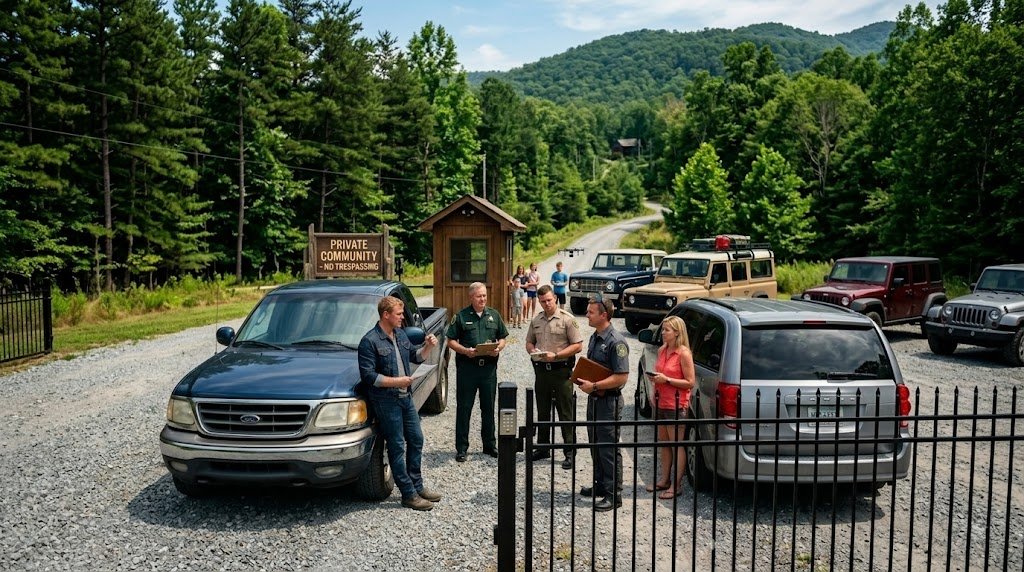
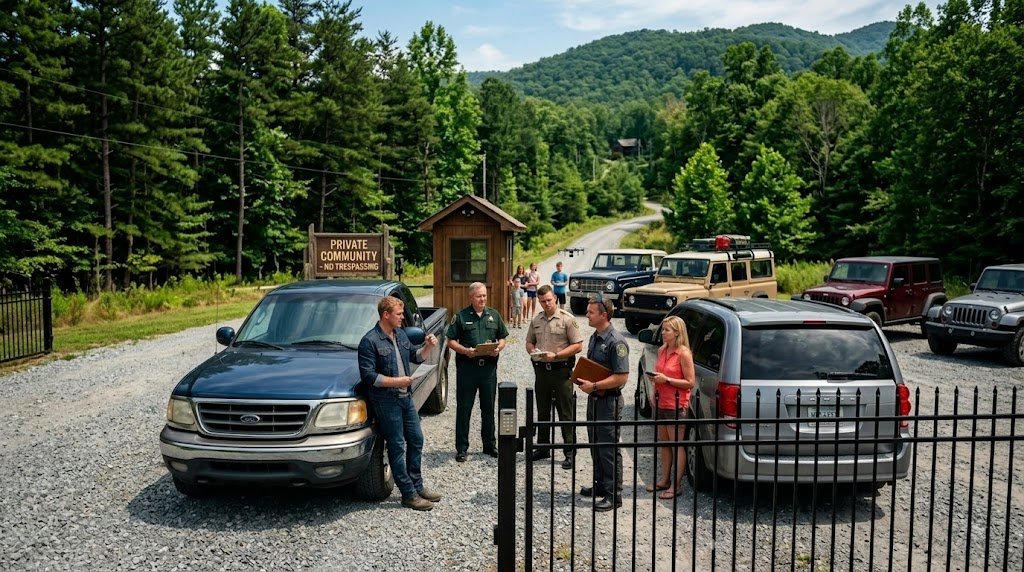
When I bought a secluded lake house in northern Wisconsin, my older brother laughed and announced he was bringing ten people for a two-week vacation. He expected me to stock the kitchen, clean up after everyone, and give up my bedroom. But when three SUVs arrived at the private entrance, the property manager asked him one question—and the confidence vanished from his face.
PART 1 — THE HOUSE MY BROTHER THOUGHT HE OWNED
When my brother found out I had purchased a lake house, he didn’t congratulate me.
He laughed.
Then he told me he was coming.
He never asked.
He simply announced it.
“We’re coming up next Saturday,” Derek said, speaking as casually as if he were booking a hotel room that happened to belong to me. “Me, Natalie, the kids, her brother, his kids, and maybe Owen. Ten people total. You’ve got four bedrooms, don’t you?”
I was sitting at my kitchen counter in my Milwaukee apartment, sorting invoices from my contracting business.
“That sounds like a lot of people,” I said carefully. “The house isn’t really prepared for that many guests.”
Derek chuckled.
It wasn’t an amused laugh.
It was the laugh of someone who had already decided my answer didn’t matter.
“Come on, Ryan. Don’t make this complicated. You can take the sofa. Natalie will send you the grocery list. And make sure you buy the good cereal. The kids won’t eat that cheap stuff.”
That was the moment I understood.
He hadn’t called because he wanted to visit me.
He had called because he had already decided my property was available for his use.
My name is Ryan Mercer. I’m thirty-four years old, and for most of my life, I had been the quiet son.
The dependable one.
The one who avoided arguments, asked for very little, and usually said yes before anyone had to ask twice.
Derek was different.
He was seven years older, louder, more confident, and somehow always managed to look successful even when his latest business idea had fallen apart.
My parents called him driven.
They called me responsible.
In our family, “responsible” usually meant the person expected to clean up everyone else’s mess.
Whenever Derek lost money, I helped.
When my parents used part of their savings to cover one of his failed businesses, I quietly paid their overdue utility bills.
When another venture collapsed and he needed help moving equipment, I showed up with my old pickup truck.
“Family takes care of family,” my mother always said.
I eventually noticed that the rule seemed to operate mostly in one direction.
For nearly twelve years, I worked with my hands.
I repaired damaged hardwood floors, restored old cabinets, rebuilt doors, and renovated houses that other people had already given up on.
I knew how to make broken things useful again.
Unfortunately, I had never figured out how to fix the role my family had assigned me.
So I saved.
Quietly.
Patiently.
I skipped expensive vacations.
I drove the same aging truck year after year.
I ate sandwiches at job sites while Derek posted pictures of expensive dinners and talked online about “building his future.”
Then I found the lake house.
It sat beyond a narrow road outside Hayward, Wisconsin, surrounded by tall pines and overlooking a quiet stretch of water.
Four bedrooms.
A wide wooden deck.
A stone fireplace.
And enough forest around it that you could stand outside at sunrise without hearing another human voice.
The first time I walked onto the deck, I felt something I hadn’t felt in years.
Peace.
I bought the property with my own money.
No family loan.
No co-signer.
No help from Derek.
For almost three months, nobody knew I owned it.
Those weekends became the best part of my life.
I repaired the dock.
Repainted the kitchen.
Fixed a leaking bathroom faucet.
Some mornings, I sat on the deck with black coffee and listened to the loons on the lake.
I didn’t answer calls.
I didn’t explain myself.
I simply existed.
Then I made one mistake.
I told Aunt Evelyn.
She had always seemed different from the rest of my family.
More observant.
More compassionate.
She had noticed for years how often I was expected to solve Derek’s problems.
One Sunday morning, I showed her a photograph of the house.
“Please don’t tell Mom or Derek,” I said.
She squeezed my arm.
“Ryan, sweetheart, you finally have something that’s yours. You deserve to enjoy it.”
Four days later, Derek called.
“Nice lake place, little brother,” he said.
My stomach dropped.
Evelyn had told Mom.
Mom had told Derek.
And somehow, he had gotten the exact address.
That was how quickly my family’s interest could destroy my privacy.
Derek didn’t ask how I had afforded the property.
He didn’t say he was proud of me.
He immediately started planning his vacation.
“We’ll stock the fridge before we arrive. We’re staying two weeks. The kids can take the smaller rooms. You don’t really need the master bedroom, right?”
I tightened my grip around my coffee mug.
“I’ll think about it.”
But I wasn’t thinking about it.
I’d already made my decision.
That evening, I sent him one text.
The house isn’t available. Please don’t come.
He called me fourteen times.
Then Mom called.
Then Dad sent a message.
I’m disappointed in the way you’re treating your brother. Make this right.
I read it once.
Then deleted it.
The following morning, I met with a property attorney named Caroline Voss.
She had a quiet office overlooking downtown Milwaukee and the calm expression of someone who had spent years watching people turn simple disputes into expensive legal problems.
I placed everything on her desk.
The deed.
The community rules.
Derek’s messages.
His demands.
She read everything carefully.
Finally, she looked at me.
“If your brother arrives anyway, are you prepared to refuse him entry?”
“Yes.”
“And if he refuses to leave?”
“Then I’ll call the authorities.”
Caroline nodded.
“Good. Don’t argue with him. Let the property manager handle the gate.”
After leaving her office, I drove north.
At the lake community, I met Walter Boone, the property manager.
He was a former state trooper with silver hair, a neat jacket, and the kind of expression that made people reconsider bad decisions.
I handed him a copy of the deed.
“No unauthorized guests,” I told him. “If anyone arrives claiming they’re family, don’t let them through.”
Walter studied the document.
“Understood.”
“If they cause trouble?”
“I’ll contact the sheriff.”
For the first time in a long while, I slept peacefully.
Saturday arrived warm and clear.
At 3:06 that afternoon, I was standing on the deck with a mug of coffee when I heard engines approaching from the main road.
Three SUVs appeared between the trees.
Derek’s dark blue Tahoe came first.
Natalie’s minivan followed.
A third SUV rolled behind them.
Ten people.
Exactly as he had promised.
They stopped at the private entrance as if the entire property belonged to them.
From the hill above the gate, I watched Derek step out.
Sunglasses.
Expensive watch.
That familiar confident smile.
He walked toward the security booth.
Walter stepped outside.
Derek pointed toward the lake house.
Walter shook his head.
Natalie climbed out of the minivan and immediately began arguing.
The children started moving between the vehicles.
Suitcases appeared.
Coolers were unloaded.
Someone opened a car door and left music playing.
Then Derek pulled out his phone and called me.
My phone was already on silent.
I watched him call again.
Then something changed.
Derek opened the rear door of his SUV and removed a thick brown folder.
He walked back to the gate and slapped the folder against the security window.
He was smiling.
That smile told me this wasn’t a spontaneous family trip.
He had prepared something.
A few minutes later, a county sheriff’s vehicle appeared behind the three SUVs.
Its lights flashed across the trees.
That was my cue.
I set my coffee down, grabbed my keys, and drove toward the entrance.
By the time I arrived, Derek was standing beside the sheriff, waving papers in the air.
“This property is partly mine,” he insisted. “My brother is trying to keep me away from an investment I helped pay for.”
Natalie was filming with her phone.
Walter stood silently beside the gate.
The deputy took the folder from Derek.
He scanned the first page.
Then the second.
Then he looked toward me.
“Are you Ryan Mercer?”
I stepped out of my truck.
Derek turned and smiled like a man who believed the final piece of his plan had arrived.
“Tell him, Ryan,” he said. “Tell him to open the gate.”
I looked at the folder in the deputy’s hands.
Then I looked at my brother.
“No,” I said quietly.
Derek’s smile disappeared.
I pointed toward the papers.
“Before anyone opens that gate, I think you should ask him where that signature came from.”
PART 2 — THE SIGNATURE THAT CHANGED EVERYTHING
The deputy looked at me.
Then at Derek.
“What signature?”
Derek’s confidence flickered.
“It’s a private family matter,” he said. “My brother knows exactly what I’m talking about.”
“I don’t,” I replied.
The deputy opened the folder again.
There were several printed documents inside.
Derek stepped closer.
“Ryan, don’t do this.”
“Do what?”
“Embarrass me in front of everyone.”
I almost laughed.
“You brought ten people to my property after I told you not to come.”
Natalie lowered her phone slightly.
The children had stopped talking.
Even Walter seemed interested now.
The deputy held up the first page.
“This says you contributed money toward the purchase?”
Derek nodded quickly.
“Exactly.”
“How much?”
“Twenty-five thousand.”
I looked at him.
“You never gave me twenty-five thousand dollars.”
He pointed at me.
“That’s not true.”
“It is.”
“You’re really going to stand here and lie?”
“I have bank records.”
The deputy looked between us.
“Do you have documentation showing this payment?”
Derek hesitated.
Then he tapped the folder.
“It’s right there.”
The deputy examined the page.
“This is a photocopy.”
“Yes.”
“And this signature?”
Derek’s jaw tightened.
“That’s my brother’s.”
I stepped closer.
“No, it isn’t.”
He turned toward me.
“Ryan.”
“I’ve never signed that document.”
The deputy looked at me.
“Are you saying this signature was forged?”
“Yes.”
Silence fell over the entrance.
Natalie stopped recording.
Derek’s face hardened.
“You’re accusing your own brother of forgery?”
“You brought the document here.”
“You know we had an agreement.”
“No.”
“We talked about the cabin.”
“We talked about you visiting.”
“That’s not what happened.”
The deputy held up his hand.
“Everybody needs to calm down.”
He examined the document again.
“Mr. Mercer, do you have the original?”
Derek swallowed.
“No.”
“Where did this copy come from?”
“My attorney.”
“What’s your attorney’s name?”
Derek didn’t answer immediately.
That hesitation told me more than his words had.
I looked at him.
“You didn’t expect me to see this, did you?”
His eyes narrowed.
“Stop acting like you’re innocent.”
“I am.”
“You think because you saved a little money and bought a vacation house, you’re better than everyone?”
“This isn’t about being better.”
“Then what is it about?”
I looked at the gate.
“It is about ownership.”
The deputy nodded slowly.
“That part is straightforward.”
He turned toward Walter.
“Do you have the official property records?”
Walter reached into his booth.
“Yes.”
He handed over a thick file.
The deputy compared the records with Derek’s document.
Within seconds, his expression changed.
“Mr. Mercer, the county record lists Ryan Mercer as the sole owner.”
Derek shook his head.
“That doesn’t mean anything.”
“It means quite a bit.”
“You don’t understand our family arrangement.”
“I understand property records.”
Derek stepped toward him.
“I put money into that place.”
“Then you’ll need to prove it through the proper channels.”
Natalie finally spoke.
“Derek, maybe we should just leave.”
He turned sharply.
“No.”
“But—”
“No.”
His voice was louder now.
He looked at me.
“You’ve always done this.”
I frowned.
“Done what?”
“Acted like the innocent one while everybody else has to clean up after you.”
I stared at him.
That was almost funny.
For years, I had been the one cleaning up after him.
But I didn’t say it.
I didn’t need to.
The deputy closed the folder.
“You’re not being allowed through the gate today.”
Derek’s face went red.
“You can’t keep me out.”
“The property owner can.”
“I am a co-owner.”
“Then settle that in court.”
Derek looked at me.
“You’re really doing this to your family?”
I answered quietly.
“You did this to yourself when you forged my name.”
His expression changed.
For just a moment, the anger disappeared.
Fear replaced it.
Natalie noticed too.
“What does he mean, forged?”
Derek didn’t answer her.
She looked at the document in the deputy’s hand.
Then at her husband.
“Derek?”
He snapped.
“Not here.”
“Did you fake his signature?”
“Of course not.”
But his voice had lost its certainty.
The deputy stepped back.
“I suggest everyone leave the entrance.”
The children were tired.
The coolers were melting.
The vacation was already over before it had started.
Derek gathered the folder and returned to his SUV.
Before getting inside, he turned toward me.
“You’re going to regret this.”
I met his eyes.
“I already regret trusting you.”
He slammed the door.
One by one, the vehicles pulled away.
I stood at the gate until the last taillight disappeared beyond the trees.
Walter walked over.
“You all right?”
I nodded.
“I think so.”
He glanced toward the road.
“Family trouble?”
“Apparently.”
He gave me a sympathetic look.
“Those are usually the hardest kind.”
I returned to the cabin alone.
For the first time, the silence didn’t feel peaceful.
It felt heavy.
That night, I received a message from Mom.
Your brother says you humiliated him.
I didn’t answer.
Another message appeared.
He says you accused him of stealing your property.
Still, I said nothing.
Then Dad texted.
Call your brother. This has gone too far.
I put the phone face down.
Ten minutes later, there was a knock at my door.
I froze.
Nobody should have been there.
I checked the security camera.
It was Aunt Evelyn.
I opened the door.
She stood on the porch holding a small envelope.
“Can I come in?”
I stepped aside.
She entered and looked around.
“You really did buy this place.”
“I did.”
She smiled sadly.
“I should have kept your secret.”
“Yes.”
She nodded.
“I know.”
Then she handed me the envelope.
“What is this?”
“Something Derek doesn’t know I have.”
I opened it.
Inside was an old bank statement.
My hands went cold.
The account belonged to Derek.
The date was eleven years earlier.
The amount was exactly $25,000.
I looked at Evelyn.
“What is this?”
She sat down.
“Your father gave Derek that money.”
My stomach tightened.
“He said it was for his first business.”
“I know.”
“Then why does Derek have a document saying he gave me twenty-five thousand for this property?”
Evelyn looked directly at me.
“Because he never gave you the money.”
I stared at the statement.
“Then what is he trying to prove?”
She took a slow breath.
“That’s the part you need to understand.”
She leaned forward.
“Derek didn’t come here for a vacation.”
My chest tightened.
“What did he come for?”
Evelyn’s voice dropped.
“He believes the cabin is worth enough money to solve the debt he’s been hiding from everyone.”
I looked toward the dark window.
“Debt?”
She nodded.
“And if he can’t convince you to sell…”
She stopped.
I waited.
“If he can’t convince you to sell, he planned to force the issue another way.”
PART 3 — THE DEBT HE HID FROM EVERYONE
I stared at Aunt Evelyn.
“What do you mean, force the issue?”
She looked toward the window before answering.
“Derek owes money to people who are no longer willing to wait.”
“How much?”
“More than he can pay.”
I sat down slowly.
The bank statement was still in my hand.
“So the fake signature…”
“Was probably meant to make it look like he had an ownership interest.”
“Enough to sell the property?”
“Enough to create a legal mess,” Evelyn said. “And Derek knows that if you become frightened enough, you might agree to sell just to make everything disappear.”
I felt something inside me go cold.
For years, I had mistaken Derek’s confidence for strength.
Now I understood.
He wasn’t confident.
He was desperate.
My phone rang.
Mom.
I almost ignored it.
Instead, I answered.
“Ryan, what happened today?”
“You should ask Derek.”
“He says you humiliated him.”
“He brought forged documents to my property.”
There was silence.
Then Mom whispered, “He said the paperwork was legitimate.”
“It wasn’t.”
“I don’t understand.”
“I do.”
My voice was calmer than I expected.
“Derek is in financial trouble.”
Another silence.
Then Mom said something that hurt more than I expected.
“Can you help him?”
I closed my eyes.
That was always the question.
Not What did he do?
Not Are you okay?
Always:
Can you help him?
“No,” I said.
“Ryan—”
“No, Mom. I’m not paying his debts. I’m not selling my house. And I’m not pretending this never happened.”
She started crying.
I let her.
For the first time in my life, I didn’t rush to make everyone else comfortable.
After the call ended, Evelyn touched my shoulder.
“You finally said no.”
“I should have said it years ago.”
“Yes,” she said gently. “But you said it now.”
The next morning, I drove back to Milwaukee and met Caroline Voss.
I gave her the forged document, the bank statement, and every message Derek had sent me.
She read everything carefully.
Then she looked up.
“You did the right thing by refusing to negotiate at the gate.”
“What happens now?”
“We document everything. We notify the appropriate authorities. And we make sure your property records are protected.”
“And Derek?”
“If the signature was forged, he has a serious problem.”
Three days later, the truth came out.
The $25,000 Derek claimed he had invested in my lake house had actually been money my father gave him eleven years earlier.
It had nothing to do with my property.
Worse, the document Derek presented had been created only weeks earlier.
The signature was not mine.
The handwriting expert confirmed it.
The notary information was also inconsistent.
Derek had tried to turn a family lie into a legal claim.
But he hadn’t counted on me finally refusing to stay quiet.
A week later, Derek came to my apartment.
Alone.
No Natalie.
No parents.
No folder.
He stood outside my door looking exhausted.
“Can we talk?”
I opened the door but didn’t invite him inside.
“What do you want?”
He stared at the floor.
“I messed up.”
“Yes.”
“I was scared.”
I said nothing.
“I thought if I could get you to sell the cabin, I could fix everything.”
“You forged my name.”
“I know.”
“You brought your wife and children to a property after I told you not to come.”
“I know.”
“You told everyone I was the problem.”
His eyes filled with tears.
“I know.”
For once, there was no argument.
No excuse.
Just the truth.
I looked at my older brother.
“I spent half my life thinking I had to rescue you because you were family.”
He swallowed.
“And now?”
“Now I understand that loving someone doesn’t mean protecting them from every consequence.”
He nodded.
“I don’t expect you to forgive me.”
“I don’t know if I can.”
“That’s fair.”
He turned to leave.
Then I stopped him.
“Derek.”
He looked back.
“If you want to fix your life, do it honestly.”
He nodded once.
“I’ll try.”
Months later, the lake house was still mine.
The deck had been repaired.
The dock was freshly stained.
The trees around the property looked exactly as they had the day I first arrived.
But I was different.
I no longer felt guilty for locking the gate.
I no longer apologized for having something beautiful.
And I no longer confused being useful with being loved.
Aunt Evelyn visited that summer.
We sat on the deck with coffee while the sun disappeared behind the trees.
“Do you ever regret buying this place?” she asked.
I smiled.
“Not for a second.”
My phone buzzed on the table.
It was a message from Mom.
Your father and I would like to visit sometime, if you’re comfortable with that.
I stared at it for a moment.
Then I typed:
You can visit. But this time, you’ll wait for an invitation.
I pressed send.
Evelyn smiled.
“That sounds like progress.”
I looked across the lake.
For years, I had believed family meant opening the door no matter who was standing outside.
Now I understood something different.
A home isn’t valuable because of its walls, its furniture, or the land beneath it.
It’s valuable because you get to decide who enters.
And sometimes the hardest door to close isn’t the one at your house.
It’s the one you finally close on the version of yourself that spent a lifetime saying yes to people who had never learned how to respect your no.
THE END.