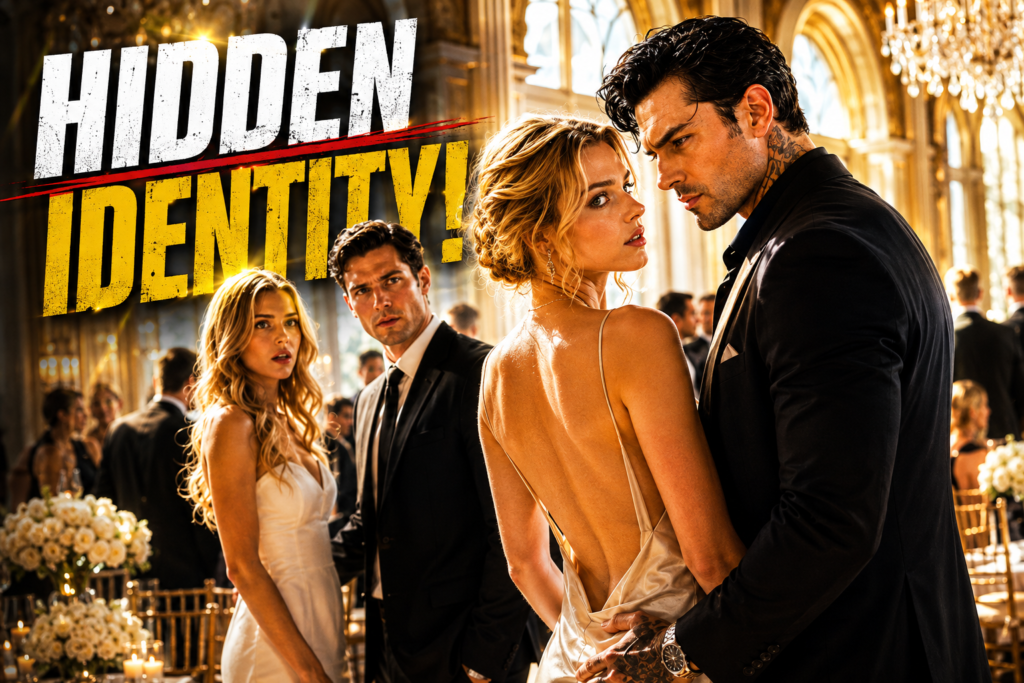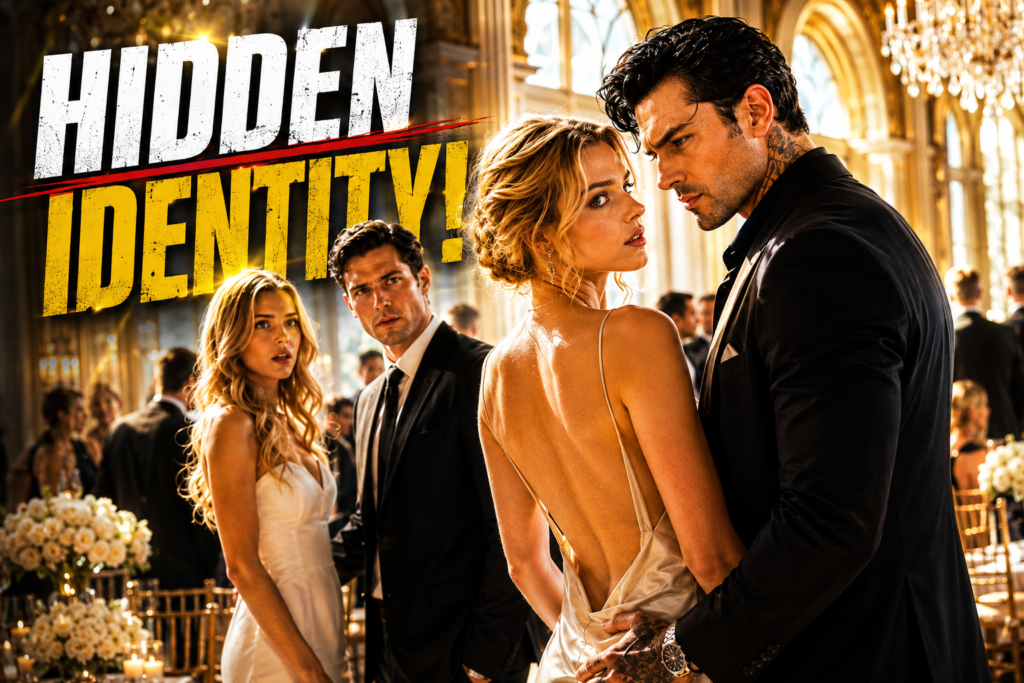
My name is Abigail Carter, and until last week, my life was painfully ordinary. I wasn’t born into wealth. I wasn’t famous. I wasn’t connected to politicians or billionaires. I restored antique books in a small preservation studio in Savannah, Georgia.
Most people never noticed my work. They only admired the centuries-old books displayed behind museum glass, never thinking about the person who spent months repairing every fragile page. I liked it that way. Quiet. Predictable. Safe.
The only luxury in my apartment was an old leather journal my late grandmother had left me. She had always told me one strange thing: “When the pages finally speak to you…don’t trust anyone who suddenly remembers your name.” I laughed every time she said it. After she passed away, the journal stayed locked inside my dresser. The pages were completely blank—or so I thought.
Life wasn’t easy. My preservation studio had announced layoffs, my landlord planned to raise my rent, and medical debt from my grandmother’s final illness still haunted me. Every month felt like choosing which bill would stay unpaid.
Then came the invitation that promised to change everything: the governor’s annual Heritage Gala. I wasn’t invited because of my career; I had been hired to restore an eighteenth-century family registry that would be displayed during the event. The registry supposedly documented the founding families of coastal Georgia. The project paid enough to keep my apartment for another six months, so I accepted immediately.
The gala took place inside the historic Ashcroft Manor overlooking the Savannah River. Politicians, corporate executives, television personalities, old-money families—everyone seemed to know everyone. Except me.
I spent most of the evening inside the exhibition room making final adjustments to the restored registry. That’s when I noticed something odd: one page had clearly been replaced decades ago. The paper texture didn’t match, nor did the ink. Someone had rewritten an entire branch of one family’s history.
Before I could examine it further, footsteps approached. A sharply dressed man entered without security announcing him. He looked around forty—calm, composed, wearing a dark charcoal suit, with no bodyguards visible. But everyone outside the room suddenly fell silent; even the governor’s security team subtly stepped aside. I had never seen that happen before.
He glanced at the registry, then at me. “You restored this?”
“I did.”
“You noticed the altered page.”
It wasn’t a question. I hesitated. “Maybe.”
A faint smile crossed his face. “Good.” He extended his hand. “Rowan Vescari.”
The name meant nothing to me until one of the museum directors rushed over, his face gone pale. “Mr. Vescari…” He sounded almost frightened. “…we didn’t know you were attending.”
Rowan nodded politely. “I wasn’t.” Then he looked back at me. “Protect that book.”
Before I could ask why, he disappeared into the crowd. The museum director quietly whispered, “You should forget he was ever here.”
The gala officially began an hour later. The restored registry stood inside a glass display case beneath bright lights as guests applauded speeches celebrating family legacy, philanthropy, and tradition. I couldn’t stop thinking about the altered page.
Then the lights briefly flickered—only for two seconds. When they returned, the registry was gone. The display case remained locked, but the book had vanished.
Security sealed every exit, and guests became witnesses; no one could leave. An investigator questioned everyone in the room. When my turn came, I admitted someone named Rowan Vescari had spoken with me earlier.
The investigator stopped writing. “You know him?”
“No.”
“You’ve never met before tonight?”
“No.”
His expression became unreadable. “I suggest you don’t repeat that name.”
Hours later I finally left the manor. Rain poured across the empty streets, my rideshare canceled twice, and my phone battery died. I began walking toward my apartment carrying only my satchel.
Halfway across River Street, headlights suddenly surrounded me as three black SUVs pulled up. The doors opened simultaneously and men in tailored suits stepped out—not police, not security. One of them approached carefully.
“Miss Carter.” His voice was respectful. “Mr. Vescari requests five minutes of your time.”
“I don’t know him.”
“He knows someone is trying to frame you.”
My stomach tightened. “What do you mean?”
The man handed me a tablet: Breaking News: Museum Employee Under Investigation After Priceless Historical Registry Disappears. My photograph filled the screen. Someone had leaked my employee file, my home address, my financial problems, and even my overdue hospital bills. The story painted me as a desperate thief.
“I didn’t steal anything.”
“We know.”
“Then who did?”
The man looked toward the SUV. “Our employer believes the person who stole the registry wasn’t interested in the book.”
“What were they after?”
“You.”
I almost laughed. “I’m nobody.”
Before he could answer, another vehicle sped around the corner—not an SUV, but a black pickup truck. Its driver accelerated directly toward us.
“Down!”
The suited men reacted instantly as gunfire shattered the rain-soaked silence. Windows exploded and people screamed from nearby restaurants. Someone was trying to eliminate me before I even understood why.
Within seconds I was pushed into the armored SUV. The convoy raced away through downtown Savannah while nobody spoke for several minutes.
Finally Rowan Vescari looked at me from across the cabin. His expression remained calm despite the bullet holes in the rear window. He placed an old brass key on the seat between us. “This belonged to your grandmother.”
I stared at it. “I’ve never seen this before.”
“I know.” He folded his hands. “Because she spent thirty years making sure you never would.”
Everything inside me froze. “How do you know my grandmother?”
His answer came quietly: “Because she once saved my life.”
Before I could process that impossible statement, he slid a faded photograph across the table. In it, my grandmother stood beside a much younger Rowan… and between them was the very historical registry that had disappeared tonight.
I looked up in disbelief. “What is this?”
Rowan met my eyes. “The beginning of a war your family lost decades ago.” He paused. “And unless we find that missing registry before sunrise… the next name erased from history will be yours.”
The words echoed inside the armored SUV: “…the next name erased from history will be yours.”
Rain hammered against the windows as we sped through the empty streets of Savannah. I gripped the faded photograph. My grandmother stood beside a much younger Rowan Vescari, both smiling in front of the same historical registry that had disappeared only hours earlier. Nothing made sense.
“You’ve known my grandmother all this time?”
Rowan nodded once. “Not the woman everyone else knew.”
“What does that mean?”
He looked out the window before answering. “Your grandmother wasn’t a librarian.”
I frowned. “She spent twenty years working for the National Archives.”
“Officially.” A pause. “Unofficially… she investigated stolen historical records connected to organized financial crime.”
I blinked. “What?”
“She discovered that certain powerful families had been rewriting public records for decades: birth records, property deeds, marriage licenses, inheritance documents. They weren’t stealing history; they were manufacturing it.”
The convoy arrived at an abandoned shipbuilding warehouse outside the Port of Savannah. The building looked deserted; inside, however, it was filled with surveillance screens, encrypted servers, and armed security. It wasn’t a criminal hideout; it looked more like an intelligence command center. One wall displayed newspaper headlines stretching back forty years, each involving powerful families whose fortunes had mysteriously multiplied after legal inheritance disputes.
Rowan noticed me staring. “Money can be stolen. So can identities.”
He led me into a conference room where a woman in her sixties stood waiting—silver hair, sharp blue eyes, simple navy suit. She introduced herself. “My name is Evelyn Brooks. I retired from the FBI twelve years ago.”
Retired, not forgotten. She placed a thick file in front of me. Across the cover were two words: ABIGAIL CARTER.
My stomach tightened. “You have a file on me?”
“No,” she corrected gently. “We have a file on someone using your name.”
Every page inside challenged my entire life: school records, medical records, tax history—everything appeared normal until the final page. My birth certificate. Evelyn slid another document beside it.
“They can’t both be genuine.”
The signatures differed, the hospital names differed, and even the dates were separated by three days. I stared at them.
“So…”
“So one document was forged.”
I looked at Rowan. “Which one?”
He answered quietly: “That’s what someone killed to keep hidden.”
Before anyone could continue, alarms echoed through the warehouse. One of Rowan’s security men rushed inside. “Sir, they found us.”
“Who?”
“The Black Ledger Group.”
The name meant nothing to me. Rowan’s expression darkened. “They don’t exist officially. They specialize in making people disappear… on paper.”
Within seconds, the warehouse lights shut off, backup generators activated, and computer monitors flickered as someone hacked the building. Gunfire erupted outside. Rowan calmly handed me a small emergency flashlight.
“No matter what happens… don’t let go of your grandmother’s journal.”
I froze. “The journal?”
He looked surprised. “You brought it.”
Only then did I realize my satchel was still over my shoulder, and inside was the old leather journal—the one filled with blank pages.
The attack lasted less than six minutes. Whoever assaulted the warehouse wasn’t trying to occupy it; they wanted one thing: the journal. When the shooting finally stopped, Rowan’s people secured the perimeter. One attacker had been captured alive.
Cole, Rowan’s chief of security, dragged the masked man into the conference room. Rowan asked only one question: “Who hired you?”
Silence. Then the attacker laughed. “You’ll never find Vault Seven.”
Everyone in the room became still. The man suddenly bit down on something hidden inside his mouth—a poison capsule. Within seconds he collapsed, dead. No further answers, only two words: Vault Seven.
Hours later, dawn began creeping across the harbor. I sat alone holding my grandmother’s journal: blank pages, nothing else. Frustrated, I flipped through it again. A folded piece of paper slipped onto the floor—one I had never seen before, somehow sealed between two pages. The note contained only one sentence: The pages answer only when exposed to the truth.
“What does that even mean?”
Rowan walked over carrying two mugs of coffee. Without saying anything, he picked up the journal and held it beneath a portable ultraviolet examination lamp used for authenticating historical documents. Invisible writing slowly appeared across every page.
My breath caught. The journal had never been blank; it had been encrypted. Line after line emerged in pale blue ink: names, dates, coordinates, bank account numbers, and one title repeated over and over: The Meridian Trust.
Evelyn’s face lost color. “I thought those records were destroyed.”
Rowan shook his head. “So did everyone else.”
The journal wasn’t a diary; it was evidence. For over twenty-five years, my grandmother had secretly documented how the Meridian Trust had manipulated inheritance cases throughout the Southeast: children declared dead while alive, false heirs inserted into wealthy families, property transferred through fabricated bloodlines, and entire fortunes redirected by forged identities. Every scheme relied on one thing: historical records, the very registry stolen from the gala.
Then Evelyn stopped turning pages. “Rowan…”
He looked over. She pointed toward a photograph hidden inside the journal showing a younger version of my grandmother standing beside three people: one was Rowan, the second was an unidentified federal prosecutor, and the third was my mother. Except… I had never seen that woman before.
I frowned. “That’s not my mother.”
Rowan looked directly at me. “No, it isn’t.”
Silence filled the room.
“The woman who raised you wasn’t your biological mother.”
My pulse hammered. “What?”
“You were adopted before your first birthday.”
“No.” I shook my head instinctively. “My parents would’ve told me.”
“They believed they were protecting you.”
Every memory from my childhood suddenly felt unstable. “If that’s true… who am I?”
Nobody answered, because nobody knew.
Cole rushed back into the room carrying a satellite phone. “Sir, we intercepted a transmission.”
He activated the speaker as a distorted voice filled the room: “You have until sunset. Return the journal, or we’ll release the DNA results.”
The transmission ended. I stared at Evelyn. “What DNA results?”
She slowly closed the journal. “I was hoping we had more time.”
“What DNA?”
She looked at Rowan before answering. “The FBI quietly collected your DNA years ago.”
My knees nearly gave out. “You tested me?”
“No,” she corrected softly. “We tested evidence from an unsolved investigation. And yesterday… we finally found a match.”
I whispered, “To who?”
Neither Rowan nor Evelyn spoke. Instead, Evelyn slid one sealed envelope across the table. Printed across the front were three words: CONFIDENTIAL DNA MATCH.
My hands trembled as I opened it. I read the first line, then the second. The room began spinning. Because according to the report, I wasn’t connected to the Carter family at all, nor was I connected to any of the powerful families listed in my grandmother’s journal. Instead… my biological father was the very federal prosecutor who had vanished while investigating the Meridian Trust twenty-six years earlier.
And according to every official record in America… he had died three months before I was born.
I read the DNA report three times. The words never changed: Probability of paternity: 99.998%. My biological father was Daniel Hayes, the federal prosecutor who had officially died three months before I was born.
“That’s impossible,” I whispered. “I’ve seen his obituary.”
“So have I,” Rowan replied. “That’s because someone wanted the country to believe he was dead.”
The room fell silent. For the first time since all of this began, Rowan looked genuinely unsettled.
“I spent twenty years believing Daniel Hayes was murdered.”
Evelyn slowly shook her head. “We never found a body.”
There was only one person left who might know the truth: an elderly hospice doctor named Dr. Leonard Pierce. According to Evelyn, he had signed Daniel Hayes’s death certificate twenty-six years earlier. If the certificate had been forged, he would know.
We reached the small hospice outside Charleston just before sunset. The nurse recognized Rowan immediately.
“He isn’t seeing visitors.”
Rowan calmly placed the brass key from my grandmother on the counter. “Tell him Abigail Carter is here.”
The nurse’s expression changed. Minutes later we were led into a quiet room overlooking the marsh. Dr. Pierce looked exhausted. He studied me for a long moment before whispering, “You have your mother’s eyes.”
I felt my throat tighten. “You knew my parents?”
“I helped them disappear.”
He told us everything. Twenty-six years ago, Daniel Hayes uncovered a secret organization known as The Meridian Trust. It wasn’t a mafia family; it wasn’t a corporation. It was something far more dangerous: a hidden alliance of wealthy law firms, private banks, judges, and inheritance specialists. They never robbed banks; they rewrote ownership. If an heir stood in the way of billions of dollars, the Trust simply changed history. Birth certificates disappeared, new heirs appeared, old wills were replaced, and entire bloodlines vanished from public records.
Daniel had gathered enough evidence to destroy them. Then his pregnant wife was targeted. To protect both of them, Dr. Pierce falsified Daniel’s death certificate. Another family agreed to raise me under a new identity. My parents disappeared separately; Daniel continued investigating in secret while my mother carried evidence across the country. Neither ever came home.
I looked down. “So…they’re both dead?”
Dr. Pierce didn’t answer immediately. Instead, he opened an old desk drawer. Inside was a small cassette recorder. “Daniel left this for you.”
The recording crackled before a man’s calm voice filled the room: “If you’re hearing this, Abby… then I couldn’t finish what I started.”
Tears blurred my vision.
“I never wanted you to inherit my war. You deserved a normal life. I failed to give you one.”
He explained that every major piece of evidence against the Meridian Trust had been divided into three parts: the historical registry, my grandmother’s journal, and one final archive hidden behind a lock that required the brass key Rowan had carried for decades.
Daniel ended the recording with one sentence: “Don’t expose them in court. Expose them where they buy their power.”
The brass key fit a forgotten safety deposit vault inside an abandoned coastal bank. The room had been sealed for over twenty-five years. Inside were dozens of hard drives, financial ledgers, handwritten confessions, and original inheritance contracts bearing authentic judicial seals. More importantly, there were payment records—not just names, but amounts, account numbers, everything needed to prove the conspiracy.
Evelyn stared in disbelief. “This is enough.”
“No,” Rowan answered. “It’s more. It ends them.”
News traveled fast. Before we could leave the bank, black SUVs surrounded the building—not gunmen this time, but lawyers, private security, and corporate representatives. Leading them was a man in an expensive navy suit: Victor Langford, Chairman of Meridian Trust. The public knew him only as one of America’s most respected philanthropists.
He smiled politely. “Miss Carter. I’ve spent years looking for you. You should feel honored.”
I laughed bitterly. “You erased my parents. You erased my identity. And you think I’m honored?”
His smile never faded. “We can make everything disappear.” He opened a briefcase filled with legal contracts, property deeds, and wire transfer confirmations. “I’ll transfer fifty million dollars today. Walk away. No investigation. No headlines. No trial.”
Rowan quietly stepped beside me. Victor looked at him. “You’ve survived because you stayed neutral.”
Rowan’s voice remained calm: “I was never neutral. I was waiting.”
Instead of accepting the offer, I reached into my bag and removed the old leather journal, the brass key, and the original registry. Then I looked directly into Victor’s eyes.
“You’ve spent decades rewriting history.” I smiled. “Today history writes you.”
Outside, television vans suddenly surrounded the street. FBI vehicles arrived from every direction, as did state investigators. Not because we had called a press conference, but because Daniel Hayes had—twenty-six years earlier.
The final hard drive contained an encrypted file programmed to send every document automatically to multiple federal agencies and major news organizations the moment the vault was opened. Daniel had planned for the possibility that he would never survive; the truth no longer depended on any single witness. It had already been released.
Victor realized it at the exact same moment. His confidence disappeared, and for the first time… he looked afraid.
The following months became the largest inheritance fraud investigation in modern American history. Federal judges resigned, senior partners at prestigious law firms were indicted, private bankers were arrested, and corporate executives lost companies built on forged ownership. The Meridian Trust collapsed, not because of violence, but because the paper trail finally caught up with them.
The historical registry returned to the museum, this time accompanied by a new exhibit explaining how easily history can be manipulated when power goes unchecked. My grandmother’s journal became part of the National Archives, her name, once forgotten, finally recognized.
Rowan refused every television interview. When reporters asked why he had risked everything, he answered only once: “Some debts can’t be repaid with money.”
Months later, I received a package with no return address. Inside was a single photograph of my parents standing together beside a lighthouse. On the back, in my father’s handwriting, were six words: Truth outlives everyone who fears it.
There was no explanation, no confirmation that either of them had survived beyond that moment. Perhaps they hadn’t; perhaps the photograph had simply waited years to find me. Oddly enough, I no longer needed every answer. Some mysteries belonged to the people who sacrificed everything to protect others.
I visited the museum one final time. Children wandered through the history exhibit, stopping in front of the restored registry. This time, every page was authentic—no missing names, no erased lives, no rewritten bloodlines. Only the truth.
As I stood there, Rowan quietly joined me. “What will you do now?” he asked.
I smiled. “For years, I repaired damaged books.” I rested my hand on the glass case. “Now I think I’ll help repair damaged histories.”
He nodded. “That’s much harder.”
“I know. But unlike lies… the truth doesn’t need anyone to keep rewriting it.”
And for the first time in twenty-six years, the story of my family no longer belonged to those who tried to erase it. It finally belonged to the people willing to remember it.