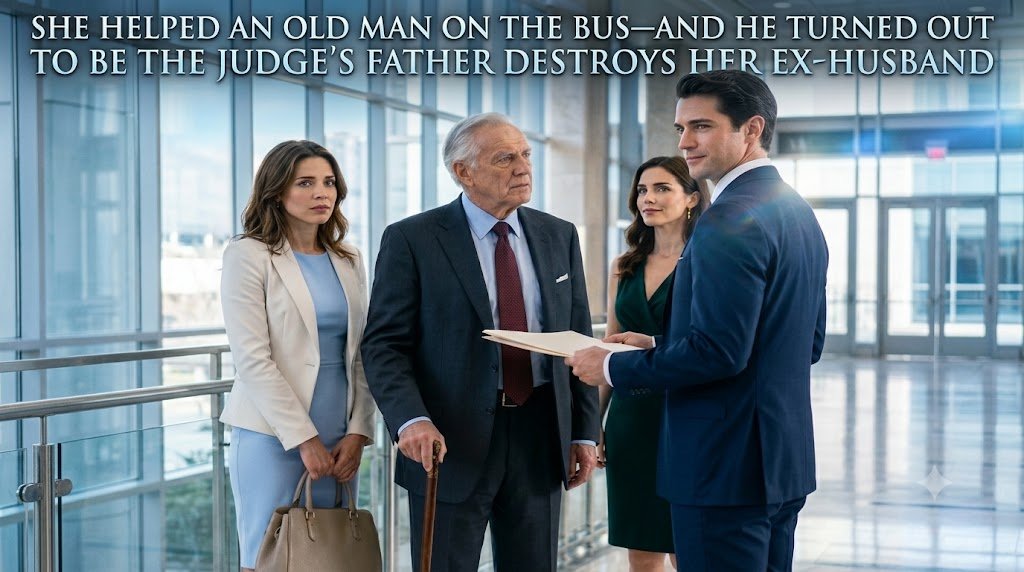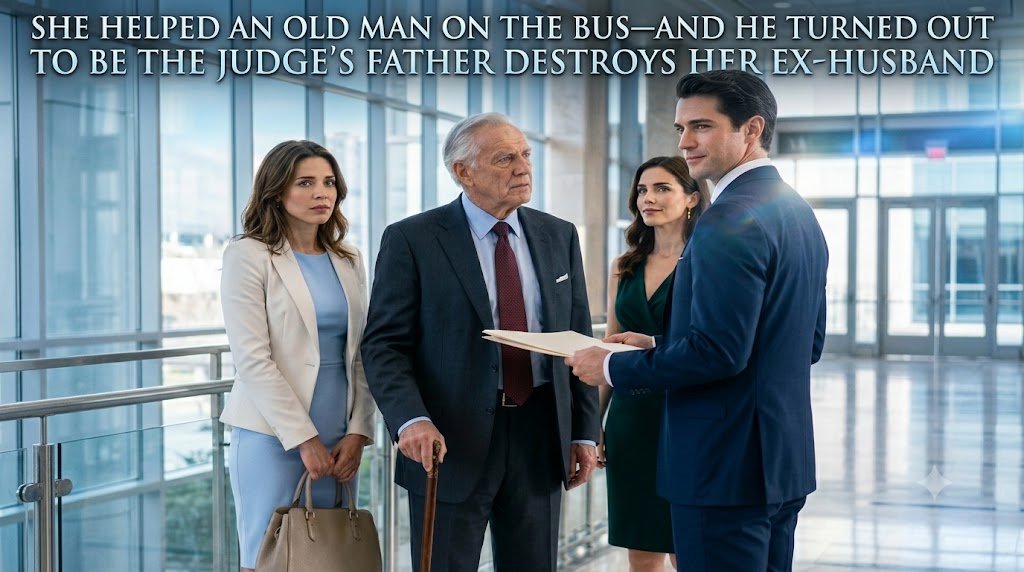
I woke up knowing my marriage was over. Not because we’d had one final screaming match. Because a plain manila envelope from the courthouse sat waiting on the kitchen table of the small apartment my husband and I once called home. Inside was the date, the time, and the courtroom where a judge would officially end the life we’d spent years building together. My husband, Daniel, didn’t even call. He sent a text. You got the notice. Be there. Don’t make this harder than it has to be. No greeting. No concern. Just another order. I remembered the young man I’d fallen in love with years earlier. We used to eat cheap takeout on the floor because we couldn’t afford furniture. I worked extra shifts and stayed up late mending his clothes so he could focus on finishing law school. Now he was a successful attorney with expensive suits, luxury clients, and a new car. Suddenly, I wasn’t good enough for the world he’d built. He made that painfully clear. He would arrive at court with one of his polished coworkers. I’d arrive alone. And if I challenged him over the divorce settlement, he’d make sure I walked away with nothing. The worst part was… I believed he could. That morning, I didn’t even have a car. Daniel had already taken the one we’d shared, and somehow my access to our joint bank account had mysteriously stopped working. So I put on the nicest dress I still owned, wrapped an old scarf around my neck, and walked to the nearest bus stop. As I passed my neighbors, I heard their whispers. “Isn’t that Daniel’s wife?” “I heard they’re getting divorced.” “Poor thing… he’s doing so well, and she’s riding the bus.” I kept walking without looking back. By the time the crowded city bus arrived, my chest felt so tight I could barely breathe. The aisle was packed with commuters. Just as we reached downtown, the driver stopped to pick up another passenger. An elderly man slowly climbed the steps, his frail hands gripping the rail. Before he reached the top, the bus lurched forward. His body pitched backward. People gasped. Nobody moved. I did. I shoved through backpacks and shoulders and caught his arm before he crashed onto the pavement. His full weight slammed into me, sending pain shooting through my shoulder, but I refused to let go. “I’ve got you,” I whispered. “You’re okay.” Once he settled into a seat, he looked up at me with clear, steady eyes that seemed to hold a lifetime of experience. “Thank you, young lady,” he said warmly. “Where are you headed all dressed up?” For a moment, I almost lied. Instead, I sighed. “Family court,” I admitted. “Today’s my divorce hearing.” He listened quietly as I explained everything. How I’d sacrificed my dreams to help Daniel build his career. How he now treated me like an embarrassment. When I finished, the old man smiled gently. “Then your husband doesn’t recognize real value,” he said. “People who throw away something precious because they’re distracted by something shiny usually realize their mistake far too late.” His words settled deep inside me. When the bus stopped, we discovered we were both heading to the courthouse. “I know that building well,” he said, pointing toward the entrance. “Allow me to walk in with you. It’s the least I can do after your kindness.” Together we entered the courthouse. We sat side by side outside the courtroom while he reminded me to breathe and hold my head high. Then I heard familiar footsteps. Daniel appeared in his tailored suit, his coworker smiling beside him. His eyes swept over my worn handbag, my simple dress, and the elderly man sitting next to me. “You actually took the bus?” he laughed loudly enough for everyone nearby to hear. “That’s exactly where you belong.” He shoved a thick stack of legal papers toward me. “Sign these. You’re leaving this marriage with your clothes… and your memories.” When I refused, his smile disappeared. He leaned close enough that only I could hear the cruel words meant to destroy what little confidence I had left. Before I could respond, the elderly man beside me slowly rose to his feet. He planted his cane firmly against the courthouse floor and looked Daniel directly in the eyes. “Son,” he said calmly, his voice echoing through the silent hallway, “are you absolutely certain you want to speak to your wife that way… in this courthouse?”
Daniel didn’t answer right away. He simply blinked, his arrogant smile freezing into a tight, uncomfortable line. His eyes flicked down to the elderly man’s worn tweed jacket, then to the wooden cane gripped in his hands, before snapping back to his face with thinly veiled irritation.
“Excuse me, old man,” Daniel said, his voice dropping into the icy, dismissive tone he used when cross-examining an unrepresented witness. “This is a private family matter. Step away, or I’ll have courthouse security escort you out for loitering.”
The coworker standing beside Daniel let out a nervous, sycophantic chuckle, eager to back up his boss.
The elderly man didn’t flinch. He didn’t drop his gaze. Instead, a quiet, knowing smile touched the corners of his mouth, and he slowly stood up to his full height, leaning heavily on his cane.
“Security?” the old man repeated, a dry humor in his voice. “Son, I helped design the security protocol for this entire building back when you were still wetting your bed. I don’t think we need to trouble them quite yet.”
Daniel’s jaw tightened. He assumed the old man was just another confused, senile local taking up bench space. “Look, I don’t have time for this geriatric nonsense. Sign the papers, Clara, or I’ll motion the judge to grant the default judgment right now.”
He turned sharply on his heel, motioning for his coworker to follow him toward the courtroom doors.
“Wait,” the elderly man said softly.
Daniel paused, annoyed, throwing a sharp glare back over his shoulder. “What?”
“You dropped something, counselor,” the old man replied.
Before Daniel could demand an explanation, the heavy oak doors of Courtroom 4B swung open. A towering bailiff stepped out into the hallway, scanning the crowd.
“Judge Vance?” the bailiff called out loudly. “Counsel for the petitioner? We’re ready for the proceedings.”
Daniel straightened his tie, puffed out his chest, and flashed a triumphant grin down at me. “Come along, Clara. Let’s not keep His Honor waiting. Try not to embarrass me too much inside.”
He marched into the courtroom as if he owned the building.
I stood there, paralyzed by a sudden surge of nausea. I had no lawyer, no money, and no defense against the formidable legal machine Daniel had quietly constructed against me.
The elderly man gently touched my elbow.
“Shall we go in, my dear?” he asked warmly.
“I… I don’t even have a formal defense,” I whispered, tears blurring my vision.
“Let’s just see what His Honor has to say first,” he smiled, offering me a reassuring nod.
We walked side by side into the courtroom. It was a cavernous space with high ceilings, dark mahogany paneling, and an imposing raised bench. Daniel was already seated at the petitioner’s table, whispering smugly to his coworker and laying out a pristine leather portfolio filled with financial assets he planned to keep entirely for himself.
I took my seat at the opposite table, feeling completely exposed and terribly small.
The elderly man slowly lowered himself into the wooden bench in the front row of the public gallery, leaning his chin on the handle of his cane to watch.
“All rise!” the bailiff announced. “The Family Court of Cook County is now in session, the Honorable Judge Vance presiding.”
The side door near the bench opened, and a tall, silver-haired judge in black robes stepped out, his face etched with decades of legal experience. He settled heavily into his high-backed leather chair, adjusted his reading glasses, and glanced down at the case file open before him.
“Good morning, counselors, parties,” Judge Vance said, his deep, resonant voice filling the quiet room. “We have Case Number 8472-CV, Daniel Sterling versus Clara Sterling. Petitioner is represented by counsel… ah, Mr. Hayes. And respondent is… unrepresented?”
Judge Vance looked up from the file, his eyes sweeping over the courtroom before landing squarely on me sitting alone at the defense table.
Then, his gaze drifted past me, fixing on the front row of the gallery.
The color drained entirely from Judge Vance’s face.
He froze, his mouth parting slightly in shock. He quickly stood up from his leather chair, pressing his hands flat against the mahogany bench.
“Father?” Judge Vance blurted out, the title slipping past his professional composure before he could stop it.
The entire courtroom went dead silent.
Daniel, who had been lazily flipping through his legal pad, snapped his head around in confusion. He looked at the judge, then whipped his head back toward the front row of the gallery where the elderly man sat quietly smiling.
The old man—the man I had caught on the city bus, the man I had saved from falling onto the pavement—raised a wrinkled hand and gave his son a polite, little wave.
“Good morning, Thomas,” the old man said calmly, his voice echoing clearly across the hushed courtroom. “Sorry to drop in unannounced. But I had a rather fascinating morning observing how my esteemed son and his brilliant legal colleagues treat people who ride public transportation.”
The silence in the courtroom was so absolute you could hear the faint hum of the fluorescent lights overhead.
Daniel looked as though he had just been struck by lightning. His jaw hung slack, his eyes darting frantically between the silver-haired judge on the bench and the elderly man sitting calmly in the front row of the gallery.
“F-Father?” Daniel choked out, his voice cracking with sheer, unadulterated panic. He stood up from his chair so fast it scraped loudly against the linoleum floor. “What… what are you doing here? This is an active family court proceeding!”
Judge Thomas Vance slowly lowered his gaze from his father down to the trembling lawyer standing before him. The warmth and familiarity that had momentarily flickered in the judge’s eyes were entirely gone, replaced by an expression of cold, judicial fury.
“Mr. Sterling,” Judge Vance said, his voice dropping into a low, terrifying register. “Sit down.”
Daniel swallowed hard, his knees feeling remarkably weak. He sank back into his chair, sweat instantly beading along his hairline. “Your Honor, I—I didn’t know he was your—”
“Clearly,” Judge Vance interrupted sharply. “Because if you had possessed even a fraction of the basic human decency required to know your own family, you would recognize the man who built this courthouse brick by brick. That is retired Judge Arthur Vance, my father.”
A collective gasp rippled through the courtroom gallery.
Arthur Vance—the legendary former chief judge of the district, a man whose portrait hung in the main lobby downstairs—slowly stood up using his cane, walked through the swinging gate into the well of the courtroom, and took a seat in the empty chair directly beside me at the defense table.
I sat frozen, staring at him in utter disbelief. The “elderly stranger” from the bus. The kind old man I had saved from falling. He wasn’t just a passenger; he was the patriarch of the very judicial dynasty presiding over my divorce.
Arthur gave my hand a gentle, reassuring pat. Then he turned his sharp, intelligent eyes toward the bench.
“Son,” Arthur said calmly, addressing the judge. “Before you hear arguments on this petition, I believe there are a few glaring omissions in the petitioner’s financial disclosures that the court needs to examine.”
Daniel jumped up again, frantic and desperate. “Objection, Your Honor! He has no legal standing! He’s not a party to this case!”
“Overruled, Mr. Sterling,” Judge Vance snapped, slamming his gavel down with a sharp thack that made Daniel flinch. “When an officer of the court attempts to railroad an unrepresented respondent and strip her of her rightful assets using fraudulent financial omissions, my father has every standing to intervene. Proceed, Judge Vance.”
Arthur opened a slim leather folder he had carried into the courtroom.
“For the past three years,” Arthur stated clearly, looking directly at his son on the bench, “my grandson—or rather, the petitioner—has systematically hidden three commercial real estate properties, a secondary offshore account, and a multi-million-dollar inheritance from his wife, while intentionally cutting off her access to joint marital funds to force her into destitution.”
Daniel turned the color of a sheet of paper. “That’s a lie! You have no proof!”
“I have the audited bank ledgers, the property deeds, and the corporate filings right here,” Arthur replied smoothly, sliding the folder across the table toward the bailiff, who carried it up to the judge. “Furthermore, my grandson threatened to leave her with nothing more than her clothes and her memories, which constitutes clear-cut economic coercion and bad-faith bargaining under state family law.”
Judge Vance opened the folder, flipping through the pages. The more he read, the darker his expression became. The veins in his temples throbbed visibly.
“Mr. Sterling,” Judge Vance said, his voice deadly quiet. “Is it true that you failed to disclose over two million dollars in marital assets?”
Daniel looked like a cornered animal. He stared at his grandfather, then at me, realizing with absolute horror that his arrogant cruelty on the courthouse steps had just been witnessed by the one man on earth he could never manipulate.
“I… I can explain…” Daniel stammered, sweating through his expensive tailored suit.
“You can explain it to the state bar disciplinary committee,” Judge Vance interrupted, his voice ringing with absolute finality. “Because as of right now, this petition for divorce is dismissed with prejudice due to fraudulent asset concealment.”
Daniel staggered back against his chair, his legal portfolio sliding off the table and scattering papers across the floor.
“Furthermore,” the judge continued, picking up his pen, “I am issuing an immediate emergency injunction freezing all of the petitioner’s personal and corporate accounts pending a full forensic financial audit. And Mr. Sterling? You are ordered to pay all of the respondent’s legal fees, retroactive spousal support, and a housing allowance, effective immediately.”
Thack.
The gavel came down, sealing Daniel’s professional and financial nightmare in less than ten minutes.
The bailiff immediately began clearing the courtroom. Daniel stood frozen at his table, utterly ruined, his career and his arrogance shattered into a million pieces. He didn’t even look at me as he gathered his scattered papers with trembling hands and rushed out the side exit.
I sat in my chair, completely overwhelmed, staring down at the polished wooden table.
Arthur slowly stood up, leaning on his cane, and offered me his hand.
“Come along, my dear,” the old man said with a warm, comforting smile. “Let’s get out of this gloomy building. I know a wonderful little diner down the street that serves the best pancakes in Chicago. And this time, lunch is entirely on me.”
I looked up into his kind, twinkling eyes, finally feeling the heavy weight lift off my chest.
I took his hand, stood up tall, and walked out of the courthouse into the bright afternoon sunlight—ready to start a brand-new life.