COLD OPEN
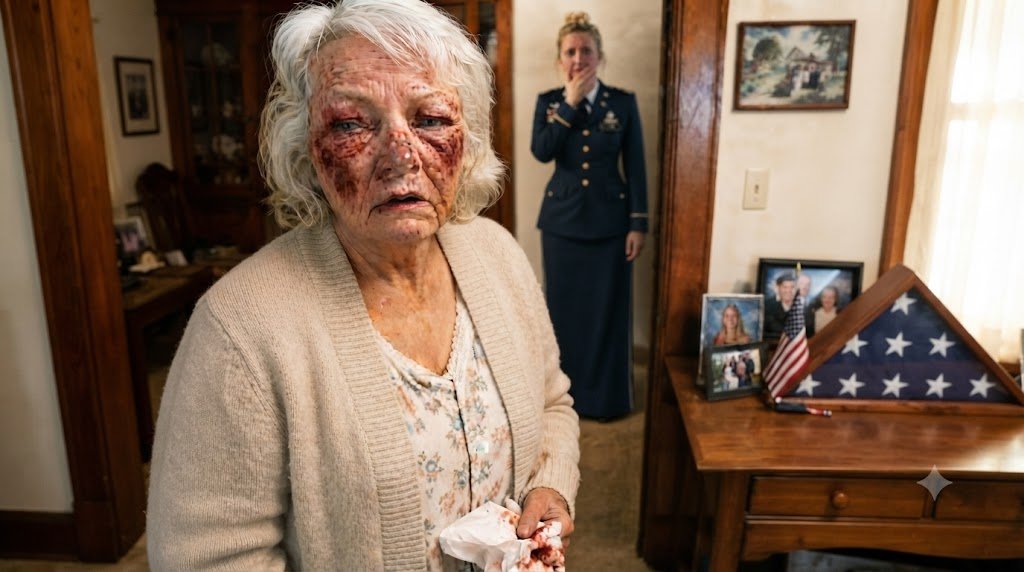
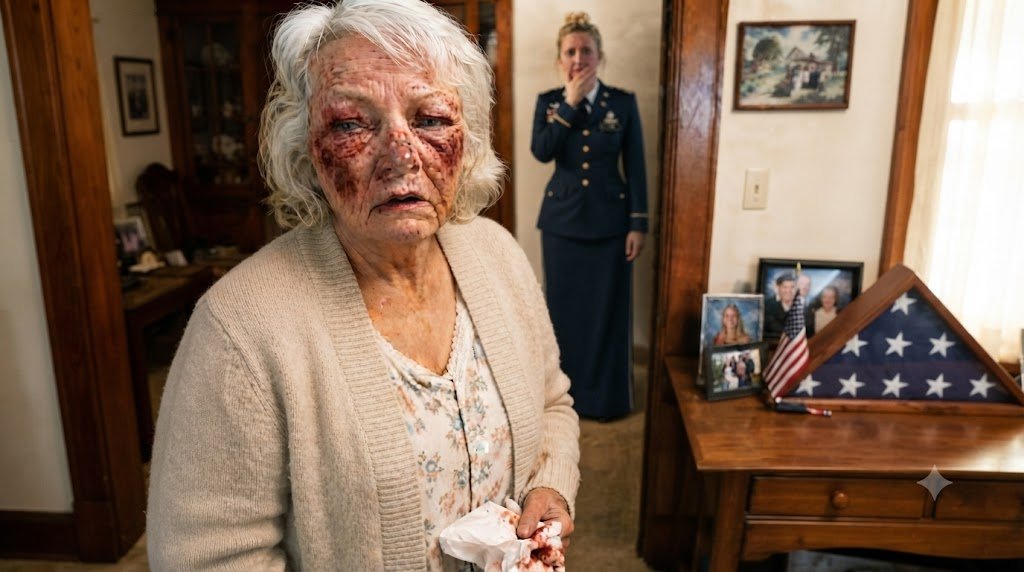
Three days after my son’s funeral, his widow drove me to an abandoned farmhouse and told me, “You have no place in our lives anymore.” She thought she had left me with nothing. But before sunrise, a loose stone beneath the fireplace revealed a secret my son had spent years hiding.
PART 1 — THE HOUSE AT THE END OF THE ROAD
My name is Maribel Dawson, and I was sixty-eight when my only son, Caleb, died.
I had spent the previous thirty years believing that no matter how complicated life became, there would always be one place where I belonged.
My son’s home.
That belief lasted exactly three days after his funeral.
Caleb’s wife, Diane, waited until the last relatives had driven away before she came to me carrying two cardboard boxes.
“Pack what belongs to you.”
I looked at her, confused.
“My things?”
“Yes.”
Her answer was so cold that I almost laughed.
Caleb had been gone less than seventy-two hours.
I was still wearing the small black ribbon from his funeral.
“Diane, I’m not asking for anything,” I said. “I just need some time.”
She crossed her arms.
“You’ve had plenty of time.”
Then she told me the house had been left to her.
I didn’t argue.
Maybe because I was too tired.
Maybe because some part of me still expected Caleb to walk through the door and tell her to stop.
But Caleb wasn’t coming back.
So I packed two suitcases.
Before I left, I noticed a framed photograph of Caleb on the hallway table.
He was twenty-six in that picture, standing beside me beside the lake where his father had proposed to me.
I reached for it.
Diane stepped between us.
“Leave that.”
I stared at her.
“It’s my son.”
“And he’s my husband.”
Her voice lowered.
“You need to understand something, Maribel. This is my home now.”
I picked up my suitcase.
“Then at least tell me where I’m going.”
She gave me an address.
An old farmhouse nearly two hours outside town.
“It’s technically yours,” she said. “Caleb mentioned it once.”
I remembered the place.
Caleb had bought the property years earlier but never told me why.
He always changed the subject whenever I asked.
I thought it was simply another unfinished project.
I was wrong.
The drive took me deep into northern Kentucky, along narrow roads bordered by bare trees and frozen fields.
By the time I arrived, the sun was already disappearing.
The farmhouse looked as though nobody had lived there in decades.
Its roof sagged.
The porch leaned toward one side.
The windows were cloudy with age.
There was no nearby house.
No streetlight.
No neighbor I could see.
Just wind moving through the trees.
I carried my suitcases inside.
The smell of dust and damp wood hit me immediately.
There was an old kitchen, a tiny bedroom, and a living room dominated by a stone fireplace.
I put my bags down and sat on the floor.
For the first time since Caleb’s death, I allowed myself to cry.
I cried for my son.
For the years I had spent believing he was happy.
For the final conversation we never had.
And for the fact that the woman who had promised to love him had sent me away before I had even finished grieving.
That night, I placed the only photograph of Caleb I had managed to bring with me on the mantel.
Then I whispered,
“You should have told me what was happening.”
The house answered with silence.
I slept badly.
Just before dawn, a violent gust rattled the windows.
I got up to close one of them and noticed how filthy the room had become.
So I started cleaning.
It gave my hands something to do.
I swept the floor.
Opened the curtains.
Moved old boxes.
Behind the fireplace, I discovered a small wooden cabinet covered by a sheet.
I pulled the sheet away.
Inside was a collection of things Caleb had apparently stored there years ago.
An old baseball glove.
A school photograph.
A broken pocket watch.
And a handwritten note with my name on it.
My hands began to shake.
MARIBEL.
I opened it.
There were only six words.
“If you’re reading this, look below.”
Below what?
I searched the cabinet.
Nothing.
I checked beneath the drawers.
Nothing.
Then I noticed something strange.
The stone floor directly in front of the fireplace was uneven.
I knelt down.
One stone was darker than the others.
I pressed my palm against it.
It moved.
My heart began pounding.
I grabbed an iron poker from beside the fireplace and carefully pushed against the stone.
It shifted several inches.
Underneath was darkness.
And inside that darkness was a small metal box.
I stared at it.
Why had Caleb hidden a box beneath the floor?
Why had he written my name?
And why had Diane been so eager to get me out of the house before I could ask questions?
I reached into the opening.
My fingers touched cold metal.
Then I noticed something carved into the underside of the stone.
Three initials.
C.D.M.
Caleb Dawson Maribel.
My son’s initials.
And mine.
I pulled the box into the light.
There was no lock.
Only a thin envelope taped across the lid.
My name was written on it in Caleb’s handwriting.
I opened it.
Inside was a single sentence:
“Mom, Diane will tell you I abandoned you. Please don’t believe her.”
I stopped breathing.
Because beneath that sentence was a date.
A date from six months before Caleb died.
And suddenly, I realized my son’s death might not have been the tragedy I thought it was.
It might have been the beginning of the truth.
PART 2 — THE BOX UNDER THE FIREPLACE
I read Caleb’s note three times.
Each time, the same sentence seemed more frightening.
Diane will tell you I abandoned you. Please don’t believe her.
I sat on the cold floor with the metal box in my lap, afraid of what might be inside.
For years, I had defended Diane whenever Caleb complained about arguments at home.
Now I wondered how much I had failed to notice.
I lifted the box lid.
Inside were three things.
A small flash drive.
Several bank statements.
And a sealed envelope marked:
FOR MOM — ONLY IF I DON’T COME HOME.
My hands trembled as I opened it.
Caleb had written the letter only six months earlier.
“Mom,
If you’re reading this, something happened before I could explain everything to you.
Diane has been telling people that I’m sick, unstable, and incapable of managing my finances. She has also convinced me to sign documents I didn’t fully understand.
I discovered that money has been disappearing from an account I opened years ago.
I confronted her.
She denied everything.
Then she threatened to make sure you never saw me again.”
I stopped reading.
My eyes filled with tears.
Caleb had been asking me to visit him that spring.
I remembered now.
Three times.
And each time, Diane had called afterward, saying he was exhausted and needed rest.
I had believed her.
I continued reading.
“Mom, I don’t know who I can trust.
But there is one person who helped me investigate.
His name is Arthur Bell.
If anything happens to me, find him.”
Arthur Bell.
The name meant nothing to me.
Until I saw the final line.
“He knows why Diane wanted the farmhouse.”
I looked around the room.
The farmhouse.
Suddenly it didn’t feel abandoned anymore.
It felt like a hiding place.
I inserted the flash drive into an old laptop Caleb had left in a cabinet.
There were dozens of files.
Bank records.
Property documents.
Photographs.
And audio recordings.
I clicked the first recording.
Caleb’s voice filled the room.
“I’m making this recording because I don’t trust my memory anymore. Diane says I’m imagining things. I’m not.”
I covered my mouth.
His voice sounded exhausted.
The next recording was even worse.
A woman’s voice.
Diane.
“You don’t need to tell your mother anything.”
Caleb answered quietly.
“She deserves to know.”
“She deserves to stay out of our marriage.”
Then Diane said something that made my blood run cold.
“If you keep digging, you’ll lose everything.”
The recording ended.
I sat motionless.
Then someone knocked on the farmhouse door.
Three times.
I nearly dropped the laptop.
Nobody knew I was there.
At least, nobody should have.
I stood slowly and looked through the window.
A black pickup was parked beside the porch.
An older man stood outside.
He raised his hands where I could see them.
“Mrs. Dawson?”
I didn’t answer.
“My name is Arthur Bell.”
My heart stopped.
I opened the door only a few inches.
“How do you know I’m here?”
“Because Caleb asked me to find you if he died.”
I stared at him.
“Did you know my son?”
“For almost four years.”
“What was he investigating?”
Arthur glanced toward the road.
“Not here.”
“Then where?”
He looked at the house.
“Inside is exactly where we need to be.”
I hesitated.
Then I let him in.
Arthur placed a thick folder on the kitchen table.
“Caleb discovered that Diane wasn’t simply taking money.”
“What was she doing?”
“She was transferring ownership of several properties.”
I looked at the farmhouse.
Arthur nodded.
“This property was supposed to be sold years ago.”
“By whom?”
“Caleb’s father.”
My breath caught.
My husband had died fifteen years earlier.
Arthur opened the folder.
“Your husband purchased this land under a company name. Caleb discovered the company was still active.”
I stared at the documents.
“That doesn’t make sense.”
“It gets worse.”
Arthur slid another paper toward me.
The signature belonged to my late husband.
But the date was impossible.
It was dated three years after his death.
Someone had forged it.
I looked at Arthur.
“Who?”
“We don’t know yet.”
He pulled out a photograph.
It showed Diane standing beside a man I didn’t recognize.
The picture had been taken outside a courthouse.
Arthur pointed to the man.
“That’s the person who handled the property transfers.”
“Who is he?”
Arthur lowered his voice.
“Diane’s brother.”
I felt dizzy.
“So this was planned?”
Arthur nodded.
“Caleb discovered the scheme and tried to stop it.”
“And then he died.”
Arthur didn’t answer.
He didn’t need to.
The silence said enough.
Then my phone rang.
Diane.
I stared at the screen.
Arthur shook his head.
“Don’t answer.”
I declined the call.
Seconds later, a message appeared.
You need to leave that farmhouse immediately.
Then another.
Caleb left nothing there for you.
I looked at Arthur.
He had gone pale.
“What’s wrong?”
He pointed toward the window.
A second vehicle had just entered the driveway.
Someone was coming.
And this time, they weren’t carrying an envelope.
They were carrying a shovel.
PART 3 — THE SECRET CALEB LEFT BEHIND
The man with the shovel stopped beside the porch.
Arthur moved toward the back door.
“Don’t confront him,” he whispered.
I grabbed the metal box.
“What do we do?”
“Take the drive. Nothing else matters.”
We slipped through the kitchen and stepped into the freezing woods behind the farmhouse.
Branches scratched my coat as we moved.
Then we heard the farmhouse door slam open.
Someone shouted my name.
“Maribel!”
I recognized the voice.
Diane’s brother, Victor.
Arthur led me toward an old maintenance shed hidden behind the trees.
Inside, he pulled out his phone.
“I already sent copies of Caleb’s files to an attorney.”
“Then why are we running?”
“Because copies don’t protect you from people who think they have nothing left to lose.”
We waited until the vehicle finally disappeared.
Then Arthur drove me straight to the county sheriff’s office.
For the next several hours, everything Caleb had hidden came to light.
The bank records showed that money had been moved from Caleb’s accounts into companies controlled by Victor.
The forged property documents connected Diane to the transfers.
And the recordings proved Caleb had confronted them before his death.
But there was one final file on the flash drive.
I almost didn’t open it.
The title was simple:
FINAL MESSAGE FOR MOM.
Caleb appeared on the screen.
He looked tired.
But he was smiling.
“Mom, if you’re watching this, I’m sorry.”
I began crying before he finished the sentence.
“I should have told you everything sooner. I kept thinking I could fix it myself.”
He explained that he had discovered the financial scheme months before his death.
He had also learned that the farmhouse was the safest place to hide the evidence because Diane didn’t know his father had placed the property in Caleb’s name.
Then Caleb said something that broke me.
“Mom, please don’t blame yourself. You trusted people because you loved them. That’s not a weakness.”
He paused.
“If I don’t make it, take care of yourself. Don’t spend the rest of your life protecting people who wouldn’t protect you.”
The recording ended.
I covered my face.
For months, I had thought my son died leaving me nothing.
Instead, he had left me the truth.
The police arrested Victor after investigators found forged documents and financial records linking him to the scheme.
Diane was arrested several days later.
The investigation revealed that she had been secretly moving family assets for years.
But the farmhouse remained mine.
The hidden box became the evidence that finally connected everything.
Months later, I returned there alone.
The place no longer looked frightening.
I repaired the windows.
Painted the walls.
Fixed the porch.
And placed Caleb’s photograph above the fireplace.
The stone floor remained exactly where I had found it.
I kept the hidden compartment.
Not because I needed a hiding place anymore.
Because it reminded me that even when I thought my son had left me alone, he had been trying to protect me.
One evening, Arthur visited.
He stood beside the fireplace and smiled.
“You made this place beautiful.”
I looked at Caleb’s photograph.
“He always wanted to.”
Arthur nodded.
“He would have been proud.”
I touched the frame.
“I wish he could see it.”
“He probably knew you would.”
For the first time since Caleb’s death, I smiled.
Diane had believed she could erase me by taking the house.
She was wrong.
She had given me the one thing I didn’t know I needed:
a place where I could finally stop living in someone else’s shadow.
And every morning after that, when sunlight crossed the old fireplace, I remembered the lesson Caleb had left behind.
Sometimes the truth doesn’t disappear.
Sometimes it waits quietly beneath the floor until the right person is finally brave enough to uncover it.
THE END.