COLD OPEN
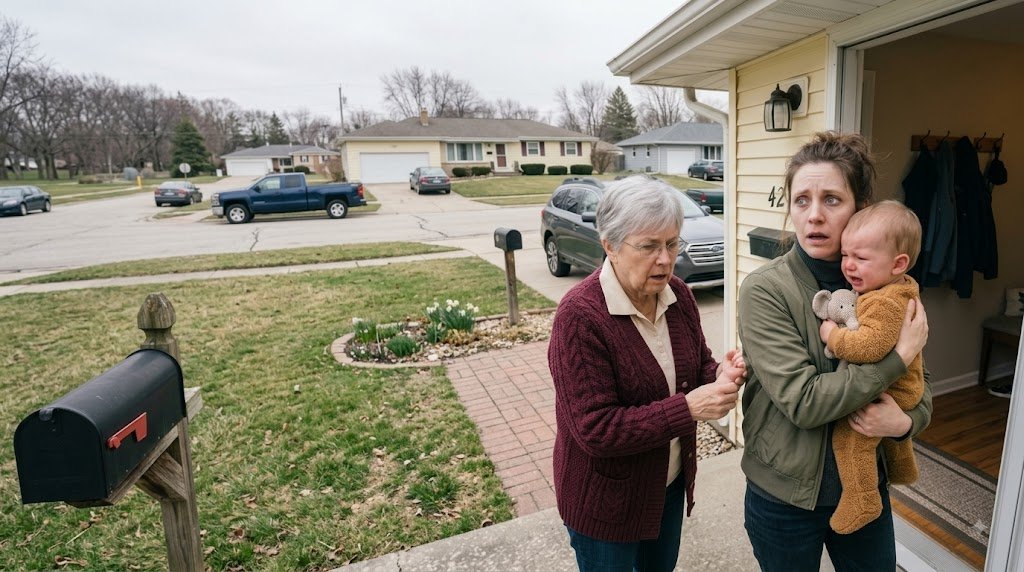
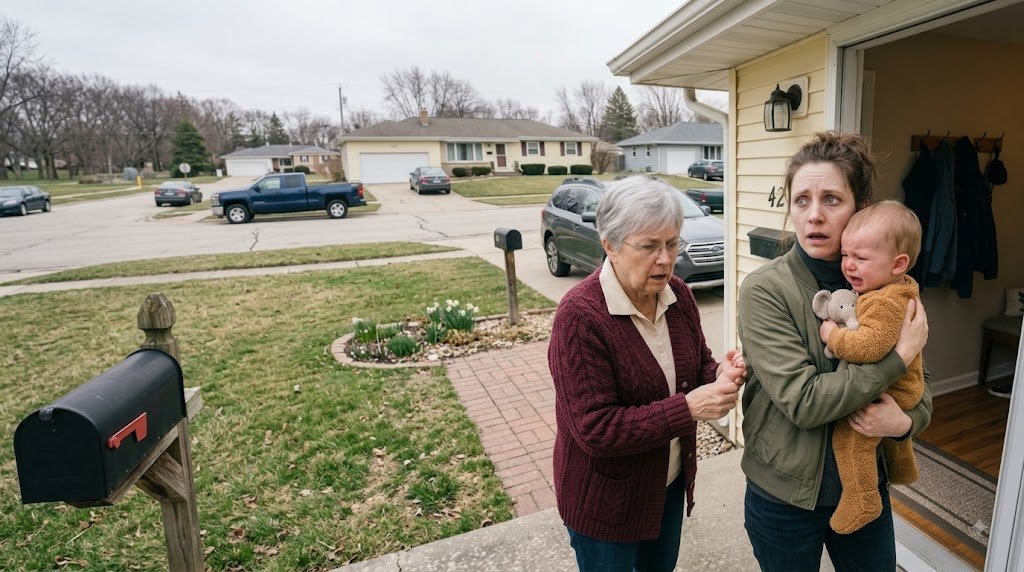
When I finally brought my one-year-old son to meet my mother, I expected her to cry with happiness.
Instead, the instant her fingers touched his wrist, her face went completely white.
She pulled away and shouted, “Get this child away from me—right now!”
I froze.
“Mom, what are you talking about?”
She pointed at my son’s wrist with trembling fingers.
“Look closely,” she whispered. “Those marks… they aren’t from playing.”
And what she told me next made me question everything I thought I knew about my own home.
PART 1
At 10:07 on a cold Sunday morning, I turned my car into my mother’s driveway with my son, Eli, asleep in the back seat.
His little blue blanket was tucked beneath his chin, and his favorite stuffed fox rested against his cheek.
I had waited nearly fourteen months to bring him there.
It wasn’t because my mother and I had a bad relationship.
Quite the opposite.
Margaret was the kind of mother who kept every handmade card I had ever given her. She remembered exactly how I liked my coffee and always left the hallway light on whenever I told her I might arrive late.
She had simply been dealing with serious health problems for months.
Every time I planned to bring Eli over, something happened.
A doctor’s appointment.
A difficult night.
Another week when she wasn’t feeling strong enough.
So I kept telling myself there would be a better time.
There never seemed to be.
Having a baby had not made life calmer.
It had simply made the noise different.
And Eli had always been an unusually quiet child.
Gentle.
Patient.
Almost too easy to care for.
Friends constantly told me how lucky I was.
I agreed because I had no reason to question it.
My husband, Caleb, stayed home with Eli while I worked morning shifts at a small medical clinic across town.
I trusted Caleb completely.
He was Eli’s father.
He was the man I believed would protect our son before anyone else.
Not once had I left for work wondering whether Eli was safe with him.
So when Mom opened her front door and saw my son for the first time, I expected exactly what I had imagined for more than a year.
Tears.
A smile.
Maybe even a trembling laugh.
And she gave me all three.
“Oh, sweetheart…”
Mom covered her mouth as tears filled her eyes.
Then she reached toward Eli.
“Let me see my grandson.”
I lifted him from the car seat and brought him closer.
Eli blinked sleepily.
Mom smiled.
For one beautiful second, everything felt exactly right.
Then her fingers touched his hand.
Eli immediately stiffened.
His tiny body pressed against my chest.
He didn’t cry.
He didn’t make a sound.
He simply pulled his hand away.
Mom’s expression changed.
Her fingers stopped moving.
Then she recoiled as though she had touched something hot.
The smile vanished from her face.
Her skin became pale.
“Get him away from me.”
I stared at her.
“What?”
“Take him inside. No—wait.”
Her voice trembled.
“Just… get him away from me.”
I tightened my arms around Eli.
“Mom, you’re scaring me. What happened?”
She didn’t answer.
Her eyes were fixed on my son’s wrist.
She reached for his hand again, but this time she moved slowly.
“Let me see.”
I hesitated.
“Why?”
“Please.”
I turned Eli’s wrist toward her.
At first, I couldn’t see anything.
Then Mom stepped closer to the living-room window, where the morning light was brighter.
She gently rotated his wrist.
And that’s when I saw them.
Thin, pale lines.
Several of them.
They formed faint circles around the skin.
Not the kind of random scratches a baby gets from crawling across the floor.
Not a mark from a toy.
Not something that looked accidental.
They appeared to wrap around his wrist.
Like something had been pressed against it.
Or held tightly around it.
My stomach twisted.
“Those weren’t there yesterday,” I whispered.
Mom looked at me.
“Are you sure?”
“Yes.”
“Look at his other wrist.”
My heart began pounding.
I carefully moved Eli’s sleeve.
There were marks there too.
Fainter.
But unmistakably similar.
Mom’s hands began trembling.
She had spent years volunteering around pediatric patients during her recovery program.
She knew what bruises looked like.
She knew what frightened children looked like.
And she knew the difference between an ordinary childhood injury and something that deserved immediate attention.
She looked at Eli.
Then at me.
Then back at Eli.
“Sweetheart…”
Her voice had changed.
“What?”
“When I touched him, he didn’t react like a shy child.”
I swallowed.
“He pulled away because he’s tired.”
“No.”
Mom shook her head.
“That wasn’t shyness.”
She lowered her voice.
“That was fear.”
I felt a chill move through me.
“Fear of what?”
Mom looked toward the hallway.
For several seconds, she said nothing.
Then she asked quietly,
“Who takes care of Eli when you’re working?”
“Caleb.”
Her face tightened.
“Every day?”
“Most days.”
“Does anyone else come into your house?”
I frowned.
“Mom, what are you trying to say?”
She reached for my hand.
Her palm was cold.
“I’m not accusing anyone.”
“Then why are you asking me these questions?”
“Because I’ve seen this before.”
My heart began racing.
“Seen what?”
She glanced at Eli’s wrist again.
“Marks like these.”
She paused.
“On children who were afraid to tell their parents what was happening.”
I couldn’t breathe for a moment.
“Mom…”
She shook her head.
“Don’t panic yet.”
“How can I not panic?”
“Because we don’t know what caused them.”
She looked directly into my eyes.
“But we need to find out.”
Eli suddenly stirred against my shoulder.
Mom watched him carefully.
He looked toward the hallway.
The moment he did, his little fingers grabbed the front of my shirt.
Hard.
He buried his face against my neck.
Mom noticed.
Her expression became even more serious.
“Does he do that often?”
“What?”
“Hide behind you when someone enters the room?”
I thought about it.
“Yes.”
“How often?”
“Sometimes.”
Mom shook her head.
“No, honey.”
She gently touched my arm.
“You’ve been calling it being a quiet child.”
I stared at her.
She whispered,
“What if he’s been trying to tell you something without knowing how?”
Before I could answer, my phone buzzed.
A message from Caleb.
How’s Mom? Is Eli behaving?
I looked at the screen.
Then at my son.
Then at the faint marks around his wrist.
For the first time in fourteen months, I felt something I had never felt before when I thought about leaving Eli with his father.
Doubt.
And once that doubt entered my mind, I couldn’t make it disappear.
PART 2
I stared at Caleb’s message for several seconds.
How’s Mom? Is Eli behaving?
Normally, I would have answered immediately.
Instead, I locked my phone.
Mom noticed.
“What did he say?”
“Nothing important.”
She didn’t look convinced.
“Don’t confront him yet.”
I looked at her.
“You just told me my son might be afraid of someone.”
“I said we need to find out why.”
Mom took a slow breath.
“If you accuse the wrong person without evidence, you could make things worse.”
I hated that she was right.
So I did something I had never done before.
I started paying attention.
Not guessing.
Not imagining.
Watching.
That afternoon, Mom helped me examine Eli’s wrists again.
The marks were still there.
She took photographs with my phone and wrote down the time.
Then she noticed something else.
There was a faint bruise beneath Eli’s sleeve.
Small.
Yellowish around the edges.
Old enough that I hadn’t noticed it before.
My stomach turned.
“Mom…”
“I know.”
She looked at me carefully.
“Take him to his pediatrician tomorrow.”
“Tomorrow?”
“Today if you can.”
I nodded.
But before I could stand, Eli began crying.
Not loudly.
It was a strange, frightened cry.
He kept looking toward the front window.
I turned.
A dark SUV had stopped across the street.
My heart jumped.
“Do you know that car?”
Mom looked outside.
“No.”
The SUV remained there for nearly a minute.
Then it drove away.
I immediately called Caleb.
He answered on the second ring.
“Hey, everything okay?”
“Where are you?”
“At home.”
“Eli and I aren’t there.”
A pause.
“I know. You’re at your mother’s.”
“I mean, what are you doing right now?”
Another pause.
“Cleaning up.”
Something about his voice sounded different.
“What kind of cleaning?”
“Why are you interrogating me?”
I felt my throat tighten.
“I’m not.”
“You’re acting strange.”
“I’ll be home later.”
“Okay.”
He hung up.
Mom watched me.
“You heard it too, didn’t you?”
I nodded.
His tone.
His impatience.
Something had changed.
Or maybe I was finally hearing what I had ignored before.
That night, I took Eli to an urgent pediatric clinic.
The doctor examined his wrists and back.
Then she asked me to step outside with her.
Her expression was professional but serious.
“These marks are concerning.”
My knees felt weak.
“Could they be accidental?”
“Possibly.”
She paused.
“But the pattern is unusual.”
I swallowed.
“Could something have been wrapped around his wrists?”
She didn’t answer immediately.
“We can’t determine that from these marks alone.”
“Then what should I do?”
“Document everything.”
She handed me a folder.
“Photographs. Dates. Any unusual behavior. Changes in sleep. Fear around certain people.”
I thought of what Mom had said.
Then I asked the question I was afraid to ask.
“What if it’s someone in the family?”
The doctor looked at me.
“Then you need to make sure your child is somewhere safe while you figure out what’s happening.”
I barely slept that night.
Eli slept beside me.
Every few minutes, I checked his breathing.
At 2:13 a.m., he suddenly woke up.
His eyes were wide.
“Mommy?”
“I’m here.”
He grabbed my shirt.
“No Daddy.”
My entire body went cold.
“What?”
He shook his head.
“No Daddy.”
It was the first time he had ever said those words.
He began crying.
I held him tightly.
“Why don’t you want Daddy?”
He didn’t answer.
He simply pointed toward the bedroom door.
Then he whispered something so softly that I almost missed it.
“Lock.”
I froze.
“Lock the door?”
He nodded.
I got out of bed and locked it.
The next morning, I called Mom.
She arrived within twenty minutes.
I told her everything.
She didn’t say “I told you so.”
She simply hugged me.
Then she asked,
“Does Caleb know you’re suspicious?”
“I don’t know.”
“Then don’t let him know yet.”
That afternoon, I checked our home security system.
There were cameras outside the house.
But strangely, the indoor camera in Eli’s playroom had been disconnected for nearly three weeks.
I stared at the screen.
“Why would Caleb turn this off?”
Mom looked at me.
“Maybe he didn’t.”
We checked the system history.
The camera had been manually disabled.
From Caleb’s phone.
My hands began shaking.
Then we found something worse.
At 11:47 p.m. three nights earlier, the camera had briefly turned back on.
The recording lasted only thirty-two seconds.
I pressed play.
At first, there was nothing.
Then someone entered the room.
A man.
He wasn’t Caleb.
Mom covered her mouth.
The man walked toward Eli’s crib.
Then the video ended.
I stared at the frozen screen.
“Who is that?”
Mom shook her head.
“I don’t know.”
My phone buzzed.
A message from Caleb.
Why did you access the security system?
I stared at the words.
He knew.
Somehow, he knew.
Before I could respond, another message arrived.
Bring Eli home. We need to talk.
Then a third.
And don’t involve your mother.
I looked at Mom.
She had already read the messages over my shoulder.
Her expression hardened.
“No.”
“What?”
“You are not taking Eli back there.”
My phone buzzed again.
This time, there was an attachment.
A photograph.
It showed our front door.
Taken from outside.
And beneath it was a message:
You should have listened to me.
My blood ran cold.
Mom immediately called the police.
But before we could explain everything, another notification appeared.
This one came from our home security system.
Front door unlocked.
I stared at the screen.
Caleb wasn’t supposed to be home.
Mom grabbed my hand.
“Don’t go back.”
I looked at Eli.
Then at the photograph.
Someone was inside our house.
And for the first time, I realized the question wasn’t simply who had hurt my son?
It was:
What exactly had Caleb been hiding from me?
PART 3 — THE TRUTH BEHIND THE LOCKED DOOR
The police arrived within minutes.
I showed them the photographs, the security footage, the messages from Caleb, and the medical report.
Two officers immediately went to my house.
Another stayed with Mom and me.
I could barely breathe.
Then one of the officers came back.
“Ma’am, your husband isn’t inside.”
My heart sank.
“Then who was there?”
“We found evidence that someone had entered through the back door.”
He handed me a clear evidence bag.
Inside was a small black glove.
Mom stared at it.
“That wasn’t there before.”
The officer nodded.
“We also found something else.”
He showed us a photograph.
It was a picture of Eli’s bedroom.
Taken from inside the house.
On the wall beside his crib was a small electronic device.
A hidden camera.
My knees nearly gave out.
Someone had been watching my son.
For how long, we didn’t know.
Then my phone rang.
It was Caleb.
I answered.
“Where are you?”
He was breathing heavily.
“Listen to me, Nora.”
My name sounded strange coming from him.
“You need to stay with your mother.”
“Why?”
“Because someone is coming after you.”
“Who?”
“I don’t know.”
“Then tell me the truth.”
Silence.
“Caleb, I’m done being afraid.”
He finally spoke.
“The man in that video is my brother.”
I froze.
“You told me you were an only child.”
“I know.”
“Who is he?”
“His name is Darren.”
Mom’s face went pale.
Caleb continued.
“Darren has been involved with people I worked with years ago. I thought I could keep him away from our family.”
“Then why was he watching Eli?”
“I don’t know.”
“You’re lying.”
“No.”
His voice cracked.
“I swear to you, Nora, I never hurt our son.”
I wanted to believe him.
But there were too many unanswered questions.
“Why did you disable the camera?”
“Because Darren found out about it.”
“What?”
“He was using it to watch the house.”
My stomach turned.
“Then why didn’t you tell me?”
“Because I was trying to protect you.”
I almost laughed.
“Everyone keeps saying that.”
He went silent.
Then he said,
“I made a terrible mistake.”
“What mistake?”
“I owed Darren money.”
The room went quiet.
“How much?”
“Thirty thousand dollars.”
Mom shook her head.
Caleb continued.
“He threatened to take Eli if I didn’t pay.”
I felt my blood run cold.
“You let him into our house?”
“No!”
His voice broke.
“I never let him near Eli. I was trying to keep him away.”
“Then explain the marks.”
“I can’t.”
“You’d better start.”
“I noticed them two weeks ago.”
My heart stopped.
“You noticed them?”
“Yes.”
“And you said nothing?”
“I thought they were from his crib.”
“That’s impossible.”
“I know.”
His voice became quieter.
“I was scared.”
“Of what?”
“That if I told you, you’d realize how badly I’d failed both of you.”
I closed my eyes.
Then I heard something in the background.
A door slammed.
Caleb whispered,
“I have to go.”
“Caleb!”
The call ended.
The police immediately began tracing the number.
Twenty minutes later, they located him at an abandoned warehouse outside town.
Officers found Caleb inside.
And they found Darren.
But Darren wasn’t alone.
He had been arrested before, and detectives discovered that he was connected to a group involved in identity theft and financial fraud.
The hidden camera had been installed because Darren believed Caleb possessed financial records that could expose the group.
Caleb had been trying to retrieve those records.
Instead, he had allowed fear to control him.
He had lied.
He had hidden the danger.
And worst of all, he had failed to tell me that someone had been watching our son.
But the investigation uncovered one final truth.
The marks on Eli’s wrists had not been caused by Caleb.
They had been caused by Darren during one of the nights he entered the house.
The police found matching fibers on the hidden camera and inside the storage room.
Darren eventually confessed.
He had entered the house several times while Caleb was away.
He had watched Eli.
He had frightened him.
And he had used the child to control Caleb.
When I heard the confession, I cried.
Not because I hated Caleb.
Because I finally understood why Eli had been afraid.
He hadn’t been difficult.
He hadn’t been unusually quiet.
He had been trying to survive something he didn’t understand.
Weeks passed.
The investigation continued.
Darren was charged with multiple offenses.
Caleb cooperated fully with the police.
But our marriage was no longer the same.
One evening, Caleb came to see me.
He stood outside my mother’s house.
He looked exhausted.
“I don’t expect you to forgive me,” he said.
I looked at him.
“You lied to me.”
“I know.”
“You let fear decide everything.”
“I know.”
“You should have trusted me.”
His eyes filled with tears.
“I was ashamed.”
I didn’t answer.
He looked toward the living room.
“Is Eli okay?”
I nodded.
“He’s getting better.”
“Can I see him?”
I hesitated.
Then I said,
“Not tonight.”
He nodded.
“I understand.”
Before he left, I stopped him.
“Caleb.”
He turned.
“Thank you for finally telling the truth.”
He lowered his head.
“I should have done it sooner.”
“Yes.”
Then he walked away.
Months later, Eli’s wrist had completely healed.
He began laughing more.
He slept through the night.
He started playing with other children.
And whenever he became frightened, he knew he could come to me.
One Sunday morning, Mom sat beside us in the backyard.
Eli was chasing bubbles across the grass.
Mom smiled.
“He’s different.”
I smiled back.
“He finally feels safe.”
She reached over and squeezed my hand.
“You listened.”
I looked at my son.
“No.”
I shook my head.
“He finally found a way to make me listen.”
Eli ran toward us laughing.
“Mommy! Look!”
He held up a giant bubble floating between his hands.
I laughed.
For the first time in months, there was no fear in our house.
No secrets.
No hidden cameras.
No locked doors.
Just sunlight, laughter, and a little boy who no longer needed to hide.
I had spent so long believing that trusting someone meant never questioning them.
I was wrong.
Real trust isn’t ignoring warning signs.
Real trust is having the courage to face the truth together.
And sometimes, the smallest warning—a frightened child, a strange mark, a single unanswered question—can save a life.
That gray Sunday morning, my mother had touched my son’s wrist and immediately known something was wrong.
I almost dismissed it.
I almost told myself she was overreacting.
But she didn’t.
She listened to what my son couldn’t say.
And because she did, we found the truth before it was too late.
Sometimes children don’t have the words to ask for help.
Sometimes, they ask with their eyes, their silence, and the way they reach for your hand.
And if we love them enough to notice…
we can hear them.
THE END.