COLD OPEN
My children stood barefoot on a freezing sidewalk, wrapped in smoke-stained blankets, with our house still glowing behind them. We had lost nearly everything in a fire, but when I brought my two kids to my parents’ door, they refused to let us stay even one night. They were more worried about protecting my younger brother’s picture-perfect life than sheltering their own daughter and grandchildren. Then, just before dawn, Grandma arrived carrying an old leather folder—and within hours, the secret inside it would tear our family apart.
PART 1
My son, Caleb, had turned seven only two months earlier. My daughter, Wren, was five.
They stood beside the curb shivering while firefighters continued blasting water through the charred remains of what had once been our living room.
Their pajamas were streaked with soot.
Wren’s fingers trembled beneath the oversized blanket I had wrapped around her, while Caleb hugged his stuffed bear against his chest. One ear of the bear had been scorched black by the flames.
At exactly 1:26 a.m., another section of the second floor collapsed with a deafening crash.
I flinched.
My husband, Daniel, was still at the medical center working an overnight shift, so I had been the one to wake the children, get them outside, and drive through the dark toward my parents’ house.
I had left wearing one shoe properly tied and the other half-laced.
I hadn’t even realized until I was halfway there.
Wren had fallen asleep against my shoulder in the passenger seat.
Caleb hadn’t stopped staring through the window at the orange glow behind us.
When I pulled into my parents’ driveway, I thought I was finally somewhere safe.
I was wrong.
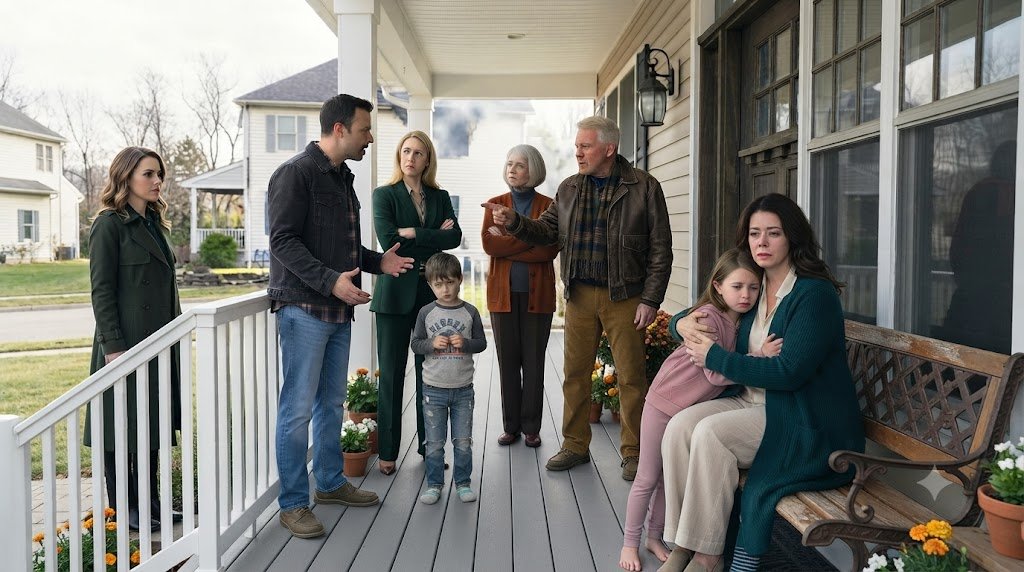
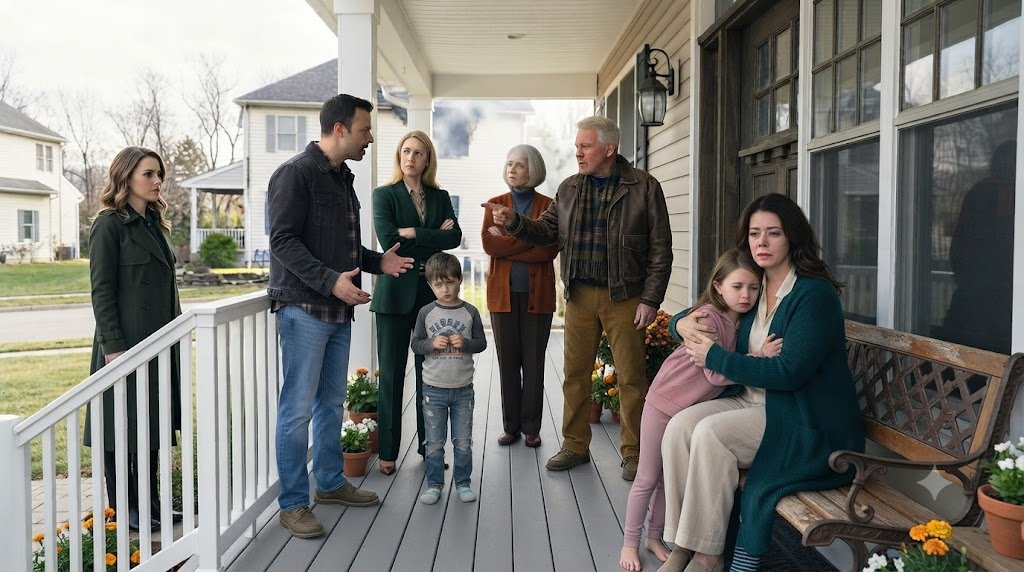
My mother, Marjorie, opened the front door.
Her eyes went immediately to the children.
Then to the ash covering my coat.
Her expression wasn’t concern.
It was irritation.
“Oh, Tessa,” she said quietly. “What on earth happened?”
“Our house burned,” I said.
My voice cracked.
“We got everyone out. Please, Mom. We just need a place to sleep until morning.”
My father, Harold, appeared behind her wearing a gray robe.
His first question wasn’t whether the children were hurt.
“Everyone made it out?”
“Yes.”
“Then you’re fine.”
Caleb began coughing.
Wren buried her face against my coat.
I tightened my arms around her.
Mom stepped backward.
“Your brother and his wife are coming tomorrow morning.”
I stared at her.
“So?”
“They’ve been planning this family weekend for months.”
She lowered her voice.
“I don’t want the children sickening everyone.”
For several seconds, I couldn’t understand what I was hearing.
“Our house just burned down.”
Dad sighed.
“Don’t make this more dramatic than it needs to be.”
I looked behind them at the warm hallway.
The lights were on.
The fireplace was burning.
There were clean blankets upstairs.
Beds.
Food.
Everything my children needed.
Everything we had just lost.
“Mom,” I whispered, “they’re five and seven. They’re freezing.”
She glanced toward the street.
“Your brother is expecting a quiet morning. His wife has been exhausted lately.”
My younger brother, Grant, was coming with his pregnant wife, Melanie.
They lived in a renovated estate across town, drove matching luxury SUVs, and had become my parents’ favorite topic whenever relatives gathered.
Everything about their life looked perfect.
My parents protected that image like it was sacred.
Apparently, even from their own grandchildren.
I swallowed hard.
“Are you really telling me we can’t stay here tonight?”
Dad crossed his arms.
“There’s a roadside inn about fifteen minutes away.”
“My wallet was inside the house.”
Mom looked uncomfortable for half a second.
Then she said the words that finally broke something in me.
“Tessa, please don’t turn this into a family crisis.”
I looked down.
Ash covered Caleb’s pajama sleeve.
Wren’s lips were turning pale from the cold.
Behind us, smoke continued rising into the black sky.
I nodded.
“Okay.”
Mom seemed relieved.
I carried Wren back to the minivan.
Caleb climbed in behind her, still clutching his damaged stuffed bear.
I started the engine.
Neither of my parents came outside.
We spent the rest of the night parked near the emergency shelter, with the heater barely working.
The children slept curled together in the back seat.
I stayed awake.
At 5:37 a.m., headlights swept across the windshield.
A dark green sedan pulled into my parents’ driveway.
An elderly woman stepped out.
It was my grandmother, Evelyn.
She was still wearing the wool coat she usually wore to Sunday service, thrown hastily over house clothes.
In one hand, she carried a battered leather folder.
She stopped when she saw my children asleep in the van.
Then she slowly turned toward my parents’ house.
Her face hardened.
She walked straight to the front door.
Three sharp knocks echoed through the quiet neighborhood.
My mother opened it.
“Mom?”
Grandma didn’t answer.
She held up the leather folder.
“I came for Tessa.”
Mom’s face changed.
Grandma looked past her toward the dark hallway.
“After what you just did to your daughter and those children, you should be ashamed.”
My father appeared behind Mom.
“Evelyn, this isn’t the time.”
Grandma finally looked at him.
“Oh, Harold.”
Her voice was calm.
Almost too calm.
“You still don’t understand what your wife’s decision tonight has just cost this family.”
Dad frowned.
“What are you talking about?”
Grandma opened the folder.
“I’m talking about the promise your late father made to me twenty-nine years ago.”
She pulled out a sealed document.
“And I’m talking about the inheritance you were never supposed to control.”
My mother went completely still.
For the first time that night, I saw fear in her eyes.
Grandma turned toward the minivan.
“Wake the children.”
I stepped out slowly.
“Grandma… what is this?”
She looked at me with tears gathering in her eyes.
“It’s the reason I told your mother years ago that she should never choose appearances over family.”
Then she handed me the folder.
“Your grandfather left something for you, Tessa.”
I looked down at the seal.
It carried a name I hadn’t seen in decades.
And beneath it was a date.
August 14, 1997.
I opened the folder.
My hands began to shake.
Because the first page contained a photograph of my grandfather standing beside a house I had never seen before.
And underneath the photograph were six words:
PROPERTY TRANSFERRED TO TESSA MORGAN.
PART 2
I stared at the photograph for so long that the words beneath it blurred.
The house in the picture was enormous.
White stone.
Tall windows.
A circular driveway.
And behind it, a line of trees stretching toward what looked like a lake.
I had never seen the place before.
“Grandma,” I whispered, “what is this?”
Evelyn glanced toward my parents.
“Not here.”
My father stepped onto the porch.
“You need to leave.”
Grandma gave him a cold smile.
“No, Harold. You need to listen.”
Mom suddenly grabbed the edge of the door.
“Evelyn, please.”
That single word told me more than any explanation could have.
My mother knew.
She had always known.
I turned toward her.
“You knew about this house?”
She didn’t answer.
Dad did.
“It doesn’t matter.”
Grandma laughed once.
“It matters very much.”
She opened the folder again.
“The property was purchased by your grandfather in 1996. He put it into a protected family trust the following year.”
She pointed to my name.
“Tessa Morgan.”
My stomach tightened.
“But why?”
“Because your grandfather didn’t trust Harold.”
My father’s face darkened.
“That is enough.”
“No,” Grandma said. “It isn’t.”
She pulled out another document.
“Your grandfather believed his son would eventually gamble away everything he inherited.”
Dad stepped forward.
“That was thirty years ago.”
“And yet here we are.”
Silence.
I looked at my father.
“Did Grandpa leave this to me?”
He looked away.
That was my answer.
Grandma continued.
“The trust was designed so that you would receive the property when you turned thirty-two, provided you had children.”
I blinked.
“I turned thirty-two last spring.”
“Yes.”
“And I have two children.”
“Yes.”
“Then why am I just hearing about it now?”
Grandma looked at my mother.
“Because your mother asked me to wait.”
I felt something cold settle in my chest.
“Why?”
Mom finally spoke.
“Because I thought you would understand.”
I almost laughed.
“Understand what?”
“That Grant needed us.”
I stared at her.
“Grant?”
She nodded.
“He has a family now. Melanie is pregnant. They need stability.”
I looked toward the huge house behind her.
“And I don’t?”
Mom’s eyes filled with tears.
“That isn’t what I meant.”
“It is exactly what you meant.”
Dad stepped between us.
“This isn’t productive.”
I held up the document.
“Did you know I owned this property?”
He hesitated.
“Yes.”
The word hit me harder than the fire had.
“You knew?”
“It was complicated.”
“No.”
My voice became steadier.
“You knew I had an inheritance, and you never told me.”
Dad rubbed his forehead.
“We were protecting you.”
“From what?”
He didn’t answer.
Grandma did.
“From them.”
She pointed toward my parents.
I looked back at the document.
There was another page behind it.
A bank statement.
I scanned the figures.
My breathing stopped.
There was an investment account attached to the trust.
The balance was $3.8 million.
I looked at Grandma.
“Is this real?”
She nodded.
“And there is more.”
She removed another sheet.
“Your grandfather also established a second account. That one becomes available once you take possession of the property.”
“How much?”
“Just over two million.”
I couldn’t speak.
My children were asleep in the van.
Our home had burned hours earlier.
My parents had just refused to give us a bed.
And all this time, there had been a home—and millions of dollars—legally waiting for me.
Dad’s voice softened.
“Tessa, listen to me. We can fix this.”
I looked at him.
“Fix what?”
“Your house. The insurance will cover part of it. We can help.”
I shook my head.
“You had the chance to help.”
He looked wounded.
I almost felt guilty.
Almost.
Then Grandma pulled out one final envelope.
“This is why I came.”
The envelope was addressed to me.
In my grandfather’s handwriting.
To my granddaughter, Tessa. Open only when you have been abandoned by the people who should have protected you.
My hands trembled as I opened it.
Inside was a short letter.
Tessa,
If you are reading this, then you have learned the hardest lesson a person can learn.
Blood does not guarantee loyalty.
If your parents ever choose comfort, reputation, or another child over you and your children, do not beg them for a place at their table.
You already have a home.
You simply need the courage to claim it.
I had to stop reading.
Tears blurred the page.
Grandma placed a hand on my shoulder.
“You don’t have to sleep in that van.”
I looked at her.
“Where do we go?”
She smiled faintly.
“Home.”
At 6:24 a.m., we drove away from my parents’ house.
Grandma followed behind us.
The children woke as the sun began to rise.
Caleb looked at me through the rearview mirror.
“Mommy, where are we going?”
I looked at the photograph sitting beside me.
“To a new house.”
“Is Daddy coming?”
“Yes,” I said.
“And is it ours?”
I looked at my daughter’s sleepy face.
“Yes.”
For the first time since the fire began, I believed the answer.
But I didn’t know one thing.
As we drove toward the property, my father was standing in his driveway with my mother beside him.
He was holding his phone.
And someone on the other end was telling him that the trust had just been activated.
My inheritance was no longer a secret.
And my parents were about to discover exactly how much they had lost by choosing Grant over me.
PART 3 — THE FINAL RECKONING
By 7:11 a.m., we reached the property.
The iron gates opened automatically after Grandma entered the access code.
Caleb sat up in the back seat.
“Mom, this is a castle.”
Wren pressed her face against the window.
I couldn’t blame them.
The house from the photograph looked even more beautiful in person.
A wide stone staircase led to the front entrance.
There was a garden along the eastern side.
Beyond the trees, sunlight glittered across a private lake.
I parked near the front steps.
For several seconds, nobody moved.
Then Caleb whispered, “Is this really our house?”
I looked at my children.
“Yes.”
Wren smiled for the first time since the fire.
That smile nearly broke me.
Inside, the house had been maintained for years.
The furniture was covered in protective cloth.
The electricity worked.
The kitchen was stocked.
There were bedrooms upstairs.
And on the mantel stood a framed photograph of my grandfather holding me as a baby.
Grandma walked into the room behind us.
“He wanted you to have this place when you were old enough to understand what it meant.”
I touched the photograph.
“Why didn’t anyone tell me?”
“Because your parents were afraid.”
“Of me?”
“Of losing control.”
That sentence stayed with me.
Then my phone rang.
Dad.
I stared at the screen.
I almost ignored it.
But I answered.
“What?”
His voice was strained.
“Tessa, we need to talk.”
“We’ve talked.”
“No. You don’t understand what happened.”
I looked around the house.
“I understand plenty.”
“Your grandfather’s trust was never supposed to activate like this.”
“Apparently it was.”
“You’re making a terrible mistake.”
I laughed softly.
“Dad, our house burned down last night.”
Silence.
“You refused to let your grandchildren sleep in your home.”
“I was trying to protect the family.”
“You were protecting Grant.”
He didn’t deny it.
Then he said something I wasn’t expecting.
“Grant knew about the trust.”
I froze.
“What?”
“Your brother knew.”
My grip tightened around the phone.
“Since when?”
“Almost two years.”
I closed my eyes.
The betrayal suddenly felt much bigger.
“Why?”
Dad hesitated.
“Because he wanted the property.”
Of course he did.
My father’s voice continued.
“He believed if you never claimed it, the trust would eventually be renegotiated.”
“Renegotiated by whom?”
He didn’t answer.
I knew.
My parents.
I hung up.
A few minutes later, another call came.
Grant.
I answered.
“What do you want?”
His voice was quiet.
“Tessa, I’m sorry.”
“No, you’re not.”
“I didn’t know things would go this far.”
“You knew about my inheritance.”
“Yes.”
“And you said nothing.”
“I was afraid.”
“Afraid of what?”
“That Dad would cut me off if I told you.”
I stared at the lake through the window.
“You chose him.”
Grant sighed.
“I chose my family.”
I looked at my children.
“So did I.”
I ended the call.
Daniel arrived around 10:30 a.m.
He had barely slept after finishing his hospital shift.
When he saw the children safe, he hugged them both.
Then he looked at me.
“What happened?”
I told him everything.
The fire.
My parents.
Grandma.
The trust.
The property.
The money.
He listened without interrupting.
When I finished, he walked to the window.
“This belongs to you?”
I nodded.
“And the kids?”
“They’re protected by the trust too.”
Daniel looked at me.
“Then maybe the fire didn’t take everything.”
I started crying.
Not because I was sad.
Because for the first time since the night began, I felt safe.
Two weeks later, the insurance investigation determined that the fire had started because of faulty wiring in the kitchen.
Our old house was a total loss.
But we were no longer homeless.
The trust covered temporary expenses, and I used part of the investment account to rebuild—not the same house, but something better.
I also hired an attorney to review every document connected to my parents’ handling of the trust.
That investigation uncovered something disturbing.
For years, my father had been charging expenses to an account that belonged to the estate.
Not millions.
But enough to prove he had treated the inheritance as if it were his.
The money was recovered.
My father was forced to resign from the family business.
Grant eventually apologized.
I accepted his apology.
But I didn’t give him access to my finances.
There was a difference between forgiveness and trust.
I learned that from my grandfather.
Six months after the fire, we held a small housewarming dinner.
Grandma sat at the head of the table.
Caleb was telling Daniel an elaborate story about building a treehouse.
Wren was drawing pictures beside the fireplace.
I walked to the window.
The lake reflected the evening sky.
I thought about that night again.
The smoke.
The cold.
My children trembling beside the road.
My mother’s closed door.
My father’s refusal.
For a long time, I had believed losing our house was the worst thing that had happened to us.
I was wrong.
The worst thing was realizing that the people I trusted most would choose appearances over us.
But the fire had also revealed something else.
I didn’t need their permission to build a life.
I didn’t need to beg for a place in a family that had already decided I didn’t belong.
My grandfather had understood that decades before I did.
Grandma came to stand beside me.
“You all right?”
I smiled.
“I’m better than all right.”
She looked toward the children.
“He’d be proud.”
I knew who she meant.
I looked at the framed photograph above the fireplace.
My grandfather holding me as a baby.
Underneath it, I had placed a small brass plaque.
SOMETIMES LOSING A HOME IS HOW YOU FIND YOUR PLACE.
I took Grandma’s hand.
The children laughed behind us.
And for the first time, I didn’t think about what my parents had taken from me.
I thought about what they could never take again.
My children.
My future.
And the home I had finally chosen for myself.
THE END.