COLD OPEN
The number was burned into my memory before the wedding photographer even arrived.
Thirty-four empty seats.
Not “a few people.”
Not “most of my relatives.”
Thirty-four.
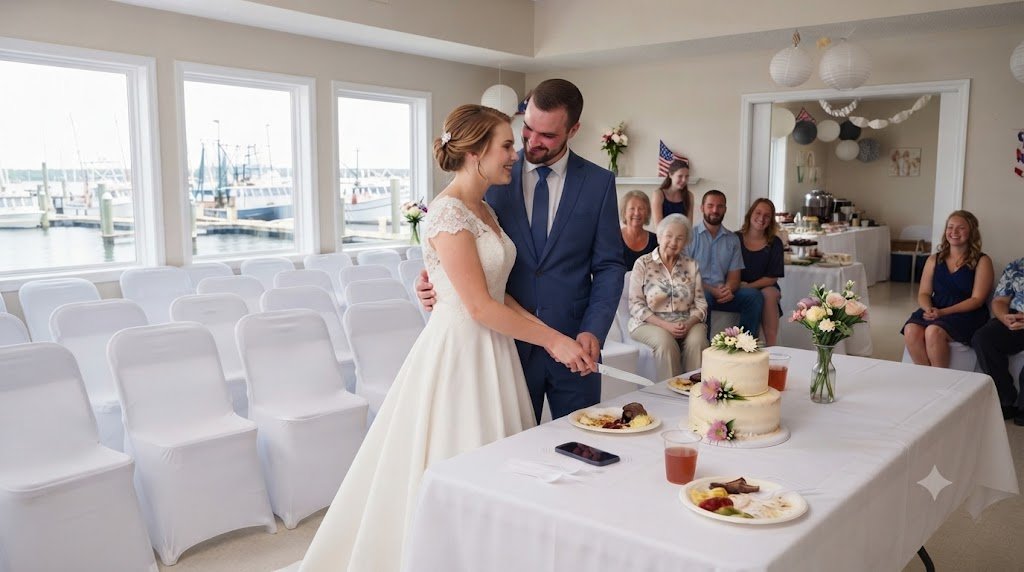
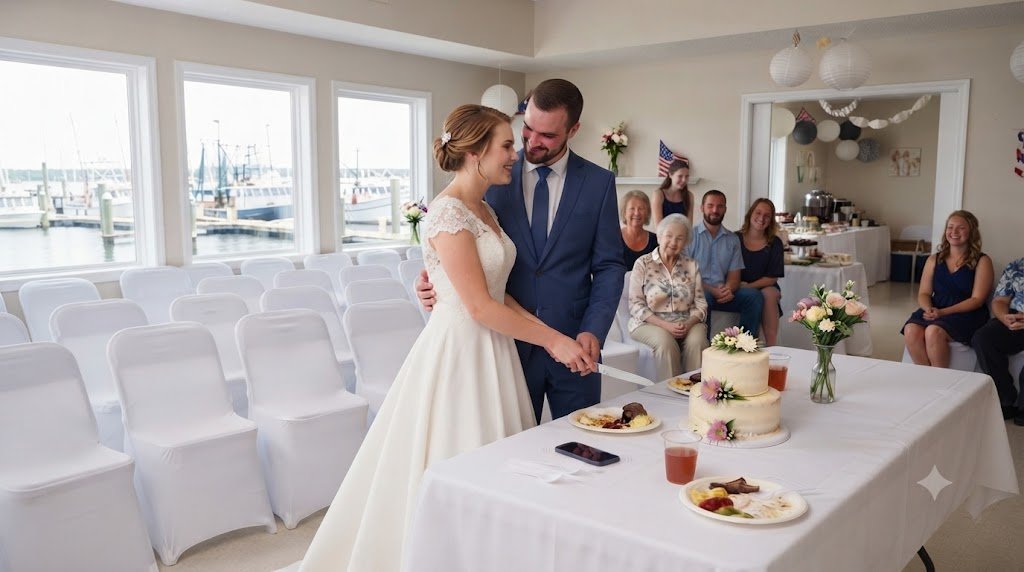
They stood in perfect rows inside a weathered glass pavilion overlooking the harbor, each one covered in ivory fabric, each one waiting for someone who had decided they had somewhere more important to be.
I knew the exact number because I had counted them myself.
Twice.
And while my new husband, Caleb, and I stood beside a cake that was beginning to lean, my phone suddenly came alive with missed calls from the very people who had abandoned our wedding.
My mother.
My father.
My brother.
Aunts.
Cousins.
Messages arrived one after another.
Call me now.
Something has happened.
Where are you?
Please answer.
I stared at the screen.
Then I looked at Caleb.
He wasn’t surprised.
That frightened me more than the messages.
He reached over, gently took the cake knife from my hand, and said quietly,
“They finally realized which party they chose.”
And that was when I understood.
Whatever had happened at my brother’s spectacular celebration across the city was no longer my problem.
Not this time.
PART 1 — THE THIRTY-FOUR EMPTY CHAIRS
I had counted every empty chair before the ceremony began.
Thirty-four.
They were arranged in straight rows inside the Harborview Conservatory, an old glass building on the edge of a fishing district in Port Alder.
Beyond the windows, dark water moved beneath a pale afternoon sky.
Small tugboats drifted near the pier.
Wind pushed against the glass walls hard enough to make the metal frames creak.
I had spent the entire previous evening preparing the room.
I carried every chair into position.
Wrapped ivory covers around the backs.
Placed tiny candles inside glass jars.
Bought flowers from a roadside market and trimmed their stems over my apartment sink.
Nothing was luxurious.
Nothing was extravagant.
But it was ours.
And I kept repeating the same sentence while I worked.
It doesn’t have to be expensive to be beautiful.
For a while, I believed it.
My dress had cost less than four hundred dollars.
I had found it at a small bridal outlet after trying on nearly twenty dresses.
Caleb’s charcoal suit had been tailored by a local shop, though the sleeves still looked slightly tight whenever he bent his arms.
His hands were rough.
They always were.
Even after washing them, a faint smell of metal and grease seemed permanently embedded in his skin.
Caleb repaired commercial fishing equipment.
He owned a small mechanical workshop near the southern docks, employed eight people, and had spent nearly a decade building the business from nothing.
He wasn’t flashy.
He didn’t talk about money.
He didn’t arrive anywhere expecting people to notice him.
If something broke, Caleb fixed it.
If someone needed help, he showed up.
That was the man I loved.
Unfortunately, my family had never understood his value.
To them, success had always needed to look expensive.
Especially because of my younger brother, Adrian.
Adrian was twenty-six and had spent most of his life being treated like the fragile center of our family.
When he made a mistake, someone cleaned it up.
When he needed money, Dad opened his wallet.
When he changed careers, Mom called it “finding himself.”
And when he met Serena Vale, my parents acted as though Adrian had finally won the lottery.
Serena was thirty-one.
She drove a silver imported coupe, wore watches that cost more than my car, and spoke casually about investments, private clubs, and people she called “contacts.”
She claimed to run a property development firm.
Every time my mother mentioned her name, her voice changed.
She sounded impressed.
Proud.
Almost dazzled.
Dad was no different.
He would sit across from Serena at dinner, listening carefully whenever she discussed a new development project.
Meanwhile, Caleb could explain exactly how many employees he had, how much inventory was sitting in his warehouse, and which equipment leases had been paid off.
He owned his workshop.
He owned the property beneath it.
He carried no business debt.
But he wore work boots.
So somehow, in my family’s eyes, Serena looked successful while Caleb looked like the man who serviced successful people’s machines.
Then our wedding invitations went out.
And three weeks later, Adrian and Serena announced their engagement.
I was happy for them.
At least I tried to be.
Until Mom called me one Tuesday evening.
“Sweetheart,” she said, “there’s been a little complication.”
I already knew that tone.
“What kind of complication?”
She hesitated.
Then she explained that Serena’s family had organized a huge engagement celebration at the Grand Meridian Club.
It would be held on the same Saturday as my wedding.
Not the morning.
Not the evening.
The exact same afternoon.
The exact same hours.
And the club was nearly ninety minutes from Harborview.
Mom called it unfortunate.
I called it intentional.
“They’ve already paid the deposit,” she said.
“I understand.”
“And Serena has several important business associates coming.”
I said nothing.
Mom continued.
“People are traveling in for this.”
Still, I said nothing.
Then came the part she had been working toward.
“Would you consider moving your ceremony?”
For a moment, I honestly thought I had misunderstood her.
“My wedding?”
“Just the date, darling.”
“You want me to change my wedding date?”
“Well, perhaps not the whole date. Maybe move the reception. Or have something smaller.”
I looked across my apartment at the wedding invitations stacked neatly beside the window.
“We’ve already paid for everything.”
“I know.”
“People have booked hotels.”
“I know.”
“Caleb has arranged time away from the workshop.”
“I know, Audrey.”
Her voice became softer.
That gentle, careful tone she used whenever she expected me to sacrifice something without making a scene.
“Your wedding is sweet,” she said. “Serena’s family is hosting something very significant. You understand the difference.”
Yes.
I understood perfectly.
My wedding was considered optional.
My brother’s party was important.
So I refused.
After that conversation, the cancellations started.
My aunt, Marlene, said she had developed a sudden problem with her car.
My cousin Jonah claimed his supervisor had changed his schedule.
Another relative said the drive was too difficult.
One by one, people vanished.
Mom and Dad still promised they would “do their best to attend both.”
I had known what that meant.
They weren’t coming.
By the morning of my wedding, the guest list looked like someone had erased half of it.
Thirty-four people were missing.
Thirty-four chairs remained empty.
I stood near the entrance while the first guests arrived.
Six people came.
Only six.
Mrs. Hartley, our seventy-two-year-old neighbor, arrived leaning heavily on a cane because she refused to let sore knees keep her away.
Caleb’s foreman, Rick, brought a cooler full of drinks and joked that he was prepared to rescue anyone who disliked wedding champagne.
Two of Caleb’s oldest friends arrived with their wives.
And Caleb’s younger cousin, Mason, drove three hours before sunrise to be there.
They smiled.
They hugged us.
They took pictures.
They made jokes.
They tried to make the room feel full.
And somehow, that kindness hurt more.
Because strangers and friends had made an effort.
My own family had made a choice.
After the ceremony, we ate grilled chicken from disposable plates.
The cake had arrived with one side slightly crushed after the delivery driver hit a pothole.
Mrs. Hartley immediately took charge.
“Give me a knife,” she announced.
She pressed the frosting back into place with the seriousness of a surgeon.
Caleb watched her for a moment.
“I think she’s more qualified than the baker.”
Mrs. Hartley pointed the knife at him.
“Don’t insult the woman who can still save your marriage before dessert.”
Everyone laughed.
Even me.
I hadn’t expected to.
For the first time that day, the empty chairs disappeared from my thoughts.
Caleb leaned closer.
“You okay?”
“No.”
He nodded.
“Fair enough.”
That was all.
He didn’t tell me to stop being upset.
He didn’t say my family didn’t deserve me.
He didn’t turn my wedding into a lecture about toxic relationships.
He simply stayed.
That was Caleb.
He knew when words helped.
And when silence was kinder.
A few minutes later, Rick tapped his fork against a plastic cup.
“Bride and groom!”
Everyone turned toward us.
“The cake isn’t going to cut itself.”
I smiled and picked up the knife.
Caleb stepped beside me.
His hand covered mine.
The frosting smelled strongly of vanilla and butter.
For a tiny moment, everything felt normal.
Then my phone vibrated.
Once.
I ignored it.
Twice.
Then again.
The phone was lying beside the cake plates.
It shook against the table hard enough to make the forks tremble.
I glanced at it.
I almost left it alone.
I wanted one uninterrupted moment.
Just one.
But the vibration continued.
Finally, I turned the screen toward me.
Three missed calls from Mom.
Two from Dad.
Five from Aunt Marlene.
Then the messages appeared.
Audrey, answer me.
Please call your father.
Something is wrong.
Where are you?
Adrian is losing it.
My chest tightened.
That old family instinct returned immediately.
Something had gone wrong.
Someone needed help.
And somehow, I was expected to fix it.
I had spent my entire childhood learning that lesson.
If Adrian broke something, I helped repair it.
If he owed money, I found a solution.
If he fought with someone, I became the mediator.
If my parents were angry with him, I was somehow responsible for calming everyone down.
So when I saw those messages, my first instinct was to stand up.
Then I looked around.
At the damaged cake.
At Caleb’s hand resting beside mine.
At Mrs. Hartley laughing with Rick.
At the six people who had actually shown up.
And finally, at those thirty-four empty chairs.
Something inside me changed.
I didn’t feel victorious.
I didn’t feel angry.
I didn’t even feel satisfied.
I felt tired.
Deeply, completely tired.
Caleb noticed.
He took the phone gently from my hand and looked at the screen.
His expression changed.
Not into shock.
Not confusion.
Recognition.
As though he had been expecting this moment long before I had.
I frowned.
“What?”
He handed the phone back.
“Nothing.”
“That doesn’t look like nothing.”
He glanced toward the windows.
Outside, a fishing boat knocked softly against the dock.
Another message appeared.
AUDREY, YOU HAVE TO COME. NOW.
My heart began pounding.
“What happened?” I asked.
Caleb looked at me for several seconds.
Then he gave me a strange little smile.
Not cruel.
Not smug.
Almost sympathetic.
The kind of smile a person gives when they hear an engine making one final terrible noise and already know what is about to happen.
He leaned closer.
His voice dropped so only I could hear.
“Your brother’s big celebration didn’t go the way they planned.”
I stared at him.
“What do you mean?”
His eyes moved toward the phone again.
Then back to me.
And just before I answered the latest call from my mother, Caleb whispered the words that changed everything:
“They didn’t leave your wedding for a better party, Audrey. They left because they thought Adrian’s future was more valuable than yours.”
He paused.
“And now I think they’re about to find out how expensive that decision was.”
PART 2 — THE PARTY ACROSS TOWN
For several seconds, I couldn’t move.
The phone was still in my hand.
My mother’s name continued flashing across the screen.
Mom.
The same woman who had asked me to move my wedding.
The same woman who had told me Adrian’s engagement celebration was “too important” to miss.
Now she was calling me repeatedly.
I finally answered.
“Mom?”
There was no greeting.
No apology.
No congratulations.
Just breathing.
Fast, uneven breathing.
Then I heard my father shouting somewhere in the background.
“Where is he?”
Another voice answered.
“I don’t know!”
My mother’s voice cracked.
“Audrey, where are you?”
“At my wedding.”
Silence.
It lasted only two seconds.
But somehow those two seconds told me everything.
Then she whispered,
“I know.”
I closed my eyes.
Caleb stood beside me.
His hand rested lightly against my back.
“What happened?”
Mom started crying.
Not softly.
Not gracefully.
The kind of crying that makes every word break apart.
“The party is over.”
I frowned.
“What do you mean, over?”
“Everyone left.”
“That doesn’t explain anything.”
She inhaled sharply.
“Serena’s investors found out.”
“Found out what?”
Another silence.
Then Dad’s voice came through the phone.
“She’s gone.”
I opened my eyes.
“Who?”
“Serena.”
My stomach dropped.
“Where did she go?”
“We don’t know.”
I looked at Caleb.
He was watching me carefully.
I lowered my voice.
“Dad, what happened?”
He didn’t answer immediately.
Instead, I heard something crash in the background.
A glass.
Someone swore.
Then Dad said,
“Her company doesn’t exist.”
I felt the room suddenly become very quiet.
“What?”
“Not the way she said it did.”
Mom started crying harder.
Dad continued.
“The property company. The development projects. The investment accounts. Half of it was fabricated.”
My fingers tightened around the phone.
“Are you saying Serena lied?”
“No.”
His voice sounded hollow.
“I’m saying we don’t know how much was a lie.”
I stared through the glass walls of the conservatory.
The harbor looked almost peaceful.
A gull landed on the railing.
Somewhere behind me, Rick was laughing about something.
Everything felt completely disconnected from the conversation happening inside my head.
I looked at Caleb.
“Why would she do that?”
He didn’t answer.
He didn’t need to.
Because I suddenly remembered every dinner.
Every expensive story.
Every conversation about properties Serena supposedly owned.
Every time Dad had looked at Adrian with pride.
Every time Mom had told me I should be more like my brother because he was “finally thinking bigger.”
Then another thought struck me.
“Where’s Adrian?”
My father went silent.
That silence was worse than anything he’d said.
“Dad?”
“He’s at the club.”
“Is he okay?”
“No.”
“What happened to him?”
“He found out this morning that the account he transferred the money into doesn’t belong to Serena’s company.”
My heart stopped.
“How much money?”
Dad didn’t answer.
“Dad.”
Finally, he said the number.
I felt cold.
It was more money than I had ever seen in one place.
More than Caleb and I had spent years building together.
More than my parents could afford to lose.
And suddenly, I understood why they were calling me.
Not because they missed me.
Not because they were sorry.
Because something had exploded.
And they wanted me close enough to help clean up the pieces.
I swallowed.
“Where is Mom?”
“She wants you to come here.”
“Why?”
“She thinks Adrian needs family.”
I almost laughed.
Instead, I asked,
“Why me?”
Dad hesitated.
Then he said the sentence that finally made the entire day make sense.
“Because you’re the one who always knows what to do.”
I stared at the phone.
There it was.
The role I had been assigned since childhood.
The responsible daughter.
The fixer.
The backup plan.
Even on my wedding day.
Especially on my wedding day.
Caleb gently touched my elbow.
“You don’t have to go.”
I looked at him.
His expression was calm.
Certain.
He wasn’t telling me what to choose.
He was reminding me that I actually had a choice.
My mother spoke again.
“Audrey, please.”
I closed my eyes.
For years, that word had been enough.
Please.
Please help.
Please understand.
Please be the bigger person.
Please don’t make things harder.
Please give Adrian another chance.
Please sacrifice just this once.
And every time, I had done it.
But this time, I was standing beside my husband.
At our wedding.
With thirty-four empty chairs behind me.
And six people who had chosen us.
I opened my eyes.
“I can’t come.”
Mom stopped crying.
“What?”
“I said I can’t come.”
“But Audrey—”
“No.”
My voice shook.
But it didn’t break.
“I just got married.”
She was silent.
“I’ve spent the entire day watching people choose Adrian over me. I’m not leaving my husband and the people who came here for us so I can help rescue a party you chose instead.”
“Audrey, this isn’t about the party!”
“It became about the party when you asked me to move my wedding.”
“That was different.”
“No, Mom.”
I looked at Caleb.
He gave me the smallest nod.
“It wasn’t.”
Then I heard Dad take the phone.
His voice was colder now.
“You’re making this personal.”
I almost smiled.
“Dad, you made it personal when you decided my wedding wasn’t important enough.”
“That isn’t fair.”
“Neither was what you did.”
Silence.
Then he said,
“We’re still your parents.”
I looked around the room.
Mrs. Hartley was packing leftover cake into a container.
Rick was helping clean the tables.
Caleb’s cousin was gathering the empty cups.
Six people.
Six people who had no reason to care about me more than my own family did.
And yet they were still there.
I took a slow breath.
“And I’m still your daughter.”
My voice softened.
“But being your daughter doesn’t mean I have to keep rescuing everyone.”
Nobody spoke.
Finally, Mom whispered,
“Adrian has lost everything.”
I looked at Caleb.
Then at the empty chairs.
“No.”
I shook my head.
“He hasn’t lost everything.”
“What do you mean?”
“He still has you.”
I ended the call.
My hand trembled afterward.
Caleb didn’t say anything.
He simply pulled me into his arms.
I pressed my face against his shoulder.
For the first time that day, I allowed myself to cry.
Not because my family had abandoned me.
But because I was finally beginning to understand how long I had been abandoning myself for them.
Ten minutes later, my phone buzzed again.
This time, it wasn’t Mom.
It was an unfamiliar number.
The message contained only one sentence.
You don’t know who Serena really is.
I stared at it.
Then another message appeared.
And neither does your family.
My skin prickled.
I looked at Caleb.
“Do you know this number?”
He shook his head.
Another message arrived.
Ask your father about the Harbor Ridge documents.
My heartbeat accelerated.
“What are Harbor Ridge documents?”
Caleb’s expression changed.
He reached for the phone.
“Show me.”
I handed it over.
He read the messages twice.
Then he looked at me.
“Audrey, I’ve heard that name before.”
“Where?”
He hesitated.
“From one of my suppliers.”
My stomach tightened.
“What did they say?”
“That someone was trying to buy several properties around the old shipyard.”
“And?”
“And one of the companies involved had a name connected to Serena.”
I stared at him.
The wedding suddenly felt very far away.
The empty chairs.
The cake.
The harbor.
Everything that had seemed like the end of something now felt like the beginning.
My phone buzzed again.
This time there was a photograph.
A contract.
A signature.
And at the bottom of the page was my father’s name.
I stopped breathing.
Because whatever had happened at that engagement party was bigger than Adrian’s missing money.
Much bigger.
And for the first time, I wondered whether my family had been invited to Serena’s party because they were guests…
or because they had been part of the plan all along.
PART 3 — THE TRUTH LEFT BEHIND
I stared at the photograph until the letters blurred.
My father’s name was unmistakable.
Beneath it was the name of a company I had never heard before.
Northstar Harbor Holdings.
“What is this?” I whispered.
Caleb zoomed in on the photograph.
The document appeared to be a purchase agreement involving several parcels of waterfront property near the old shipyard.
At the bottom were two signatures.
My father’s.
And Serena’s.
But the date made my stomach turn.
It had been signed four months before Adrian and Serena announced their engagement.
“How could Dad be involved in this?”
Caleb didn’t answer immediately.
Instead, he asked,
“Does your father own property near the shipyard?”
“Not that I know of.”
He looked at me.
“Then we need to find out.”
My phone rang again.
This time it was Adrian.
I almost didn’t answer.
Then I did.
His voice sounded nothing like the confident man I had known.
“Audrey?”
“Yes.”
“I’m sorry.”
Two words.
They nearly broke me.
Not because they fixed anything.
Because they were the first words anyone in my family had said all day that didn’t ask me for something.
I sat down.
“What happened?”
Adrian exhaled shakily.
“Serena left before noon.”
“Did she take the money?”
“I don’t know.”
“What do you mean, you don’t know?”
“I mean I don’t know where anything is anymore.”
His voice cracked.
“She emptied the apartment. Her clothes are gone. Her car is gone. Her phone is disconnected.”
I closed my eyes.
“Adrian, what did you sign?”
He went silent.
“Adrian.”
“A few things.”
“What things?”
“Investment papers. Property documents. Loans.”
My heart sank.
“Did you read them?”
“I thought Dad had checked them.”
That sentence landed harder than anything else.
I stood.
“Dad knew?”
“I don’t know.”
“You just said you thought Dad had checked them.”
“I did!”
Adrian started crying.
“I trusted him.”
I didn’t know what to say.
Because suddenly this wasn’t about a spoiled younger brother getting caught in a foolish romance.
He had been used.
But so had my father.
And perhaps my entire family.
Caleb motioned toward the door.
“We should go.”
I looked at him.
“To the club?”
He shook his head.
“To your parents’ house.”
I understood immediately.
If Dad’s signature was on those documents, we needed answers.
Not tomorrow.
Tonight.
We drove across Port Alder as the sun disappeared behind the warehouses.
Neither of us spoke much.
The city lights reflected across the windshield.
My wedding dress was still folded awkwardly beneath a jacket in the back seat.
My bouquet sat beside it.
I had gotten married less than three hours earlier.
And instead of celebrating with my husband, I was driving toward the family crisis I had spent my entire life trying to escape.
But something was different now.
I wasn’t going because they demanded it.
I was going because I wanted the truth.
When we reached my parents’ house, Dad was standing in the driveway.
He looked twenty years older than he had that morning.
Mom sat inside the living room with Adrian.
Boxes of documents covered the coffee table.
Dad looked at Caleb.
Then at me.
“You came.”
I nodded.
“But I’m not here to fix this.”
He lowered his eyes.
“I know.”
That was the first time I had ever heard my father say those words.
We went inside.
Adrian looked broken.
His expensive suit was wrinkled.
His eyes were red.
He stood when I entered.
“I really am sorry.”
I nodded.
“I believe you.”
Mom started crying again.
But I didn’t move toward her.
Instead, I pointed at the documents.
“Tell me everything.”
Dad sat down.
For nearly an hour, he explained.
Serena had approached him about the Harbor Ridge redevelopment project.
She convinced him that several waterfront parcels were about to become extremely valuable.
He invested family savings.
Then he encouraged Adrian to invest.
Then Serena began introducing them to other investors.
The numbers grew.
The promises became larger.
And the paperwork became more complicated.
My father had stopped asking questions because the returns looked too good.
Until that morning.
Then the bank called.
The accounts were frozen.
Several companies listed in the documents were registered to temporary addresses.
Some had already been dissolved.
Others had no real employees.
Serena had built an entire identity around companies that barely existed.
But there was one thing my father still couldn’t explain.
The Harbor Ridge property.
“What happened to it?” I asked.
Dad looked at Caleb.
Then at me.
“We don’t know.”
Caleb pulled the photograph from his pocket.
“This says Northstar Harbor Holdings owns part of it.”
Dad stared at the page.
His face went pale.
“Where did you get that?”
“Someone sent it to Audrey.”
“Who?”
“We don’t know.”
Dad took the phone.
He studied the photograph.
Then slowly shook his head.
“This isn’t my signature.”
I frowned.
“What?”
He pointed at the page.
“I signed documents with Serena.”
He tapped the signature.
“But this isn’t how I sign.”
The room went silent.
Caleb leaned forward.
“Then someone forged it.”
Dad looked sick.
And suddenly the mystery became much larger.
The next morning, the authorities were contacted.
Bank records were reviewed.
Property transfers were investigated.
Emails were recovered.
Within days, the truth began coming apart piece by piece.
Serena had not simply disappeared with Adrian’s money.
She had been running an elaborate fraud operation involving several shell companies and multiple investors.
My father had been manipulated.
Adrian had been manipulated.
Dozens of other people had been deceived.
But there was one final discovery that changed everything.
The Harbor Ridge documents had been created using information from my father’s office.
Someone inside the family business had provided confidential files.
It wasn’t my father.
It wasn’t Adrian.
It was Dad’s longtime financial manager.
The man everyone trusted.
The man who had recommended Serena in the first place.
He disappeared two days before Serena did.
Months later, the investigation was still ongoing.
Some money was recovered.
Some wasn’t.
Serena was eventually located outside the country and arrested.
My father’s reputation suffered.
Adrian had to sell his apartment.
And for the first time in his life, he had to learn how to rebuild without someone constantly saving him.
As for me?
I went home with Caleb.
Not to my parents’ house.
Not to the family business.
Home.
Our little house near the water.
The wedding decorations stayed up for another week.
The cake was gone by Tuesday.
Mrs. Hartley came over on Wednesday and complained that she had been forced to eat too much leftover frosting.
And the thirty-four empty chairs?
I never saw them again.
A week after the wedding, my father came to our house.
He stood on the porch holding a small envelope.
“I owe you something,” he said.
I thought it would be money.
It wasn’t.
Inside was a photograph.
It had been taken during our wedding ceremony.
Caleb and I were standing beneath the flowers.
Behind us were all those empty chairs.
But in the front row, six people were smiling.
My father had written one sentence on the back.
I finally understand what I failed to see.
I looked at him.
He swallowed.
“You were never the less important child.”
I didn’t answer.
“You were the child we thought would always understand.”
That hurt.
Because it was true.
He continued.
“And we confused your strength with permission to hurt you.”
My eyes filled with tears.
“I don’t know if I can forget this.”
“I don’t expect you to.”
That was the first apology from my father that didn’t come with an excuse.
So I hugged him.
Not because everything was fixed.
It wasn’t.
Not because the past disappeared.
It never would.
I hugged him because forgiveness, I realized, wasn’t the same thing as pretending nothing had happened.
Sometimes forgiveness meant allowing someone to become better without giving them permission to hurt you again.
Months later, Caleb and I renewed our vows.
Not in a ballroom.
Not at a country club.
Not surrounded by people impressed by expensive decorations.
We stood on the same harbor pier where we had taken our first walk together after getting engaged.
Mrs. Hartley sat in the front row.
Rick brought the drinks.
Adrian came alone.
My parents came quietly.
No speeches.
No grand entrance.
No competition.
Just people.
Real people.
When Caleb took my hands, he smiled.
“You know,” he whispered, “we could have saved money and skipped the second wedding.”
I laughed.
“Probably.”
“Then again…”
He looked at the people standing around us.
“I think this one has better chairs.”
I looked behind me.
Every seat was occupied.
Not one was empty.
And for the first time, I understood something I should have known years earlier.
The empty chairs had never been the tragedy.
They were the answer.
They showed me who had chosen not to come.
And the people who stayed showed me who actually belonged in my life.
I squeezed Caleb’s hands.
The harbor breeze moved through my hair.
The sun was setting over Port Alder.
And somewhere behind us, laughter rose from the people who had stayed.
I didn’t need thirty-four missing relatives anymore.
I didn’t need my family’s approval.
I didn’t need to be the daughter who fixed every disaster.
I had a husband who stood beside me.
A small circle of people who showed up.
And a life that finally belonged to me.
Sometimes the greatest gift isn’t discovering who loves you.
It’s discovering that you can stop begging people who don’t to prove that they do.
And when the last light disappeared across the water, I looked at Caleb and smiled.
This time, there were no empty chairs.
Only people who had chosen to stay.
THE END.