COLD OPEN
My parents sued me for the luxury apartment I had spent years paying for, claiming my younger brother deserved it more. But when the judge watched the footage from my building, my mother stopped pretending to cry—and my father suddenly asked for a recess.
PART 1 — THE HOME THEY THOUGHT THEY COULD TAKE
My name is Harper Whitlock, and I was thirty-four when my parents decided that everything I had built belonged to my younger brother.
The irony was that they had never shown much interest in my life until they discovered the view from my apartment.
I lived on the twenty-first floor of a glass tower overlooking the Chicago River.
I had bought the place after years of working in cybersecurity, taking overtime shifts, refusing expensive vacations, and putting almost every spare dollar into savings.
It wasn’t just an apartment.
It was proof that I had survived.
Growing up, my younger brother Dylan had always been the favorite.
If Dylan wanted a new phone, my parents found the money.
If he wanted to change colleges, they paid another semester.
If he crashed their car, Dad called it an accident.
When I needed something, I was told to figure it out myself.
I learned early that asking for help usually meant being reminded how much trouble I was causing.
At nineteen, I worked nights at a hotel while attending community college during the day.
Dylan was living at home without a job.
Mom called him “finding himself.”
Nobody used that phrase for me.
When I received a scholarship to finish my degree, my parents congratulated me for exactly ten minutes.
Then they asked whether I could lend Dylan some money.
I said no.
That became another story they told about me.
Harper was selfish.
Harper thought she was better than everyone.
Harper cared more about money than family.
Years later, when my career finally took off, those accusations became even louder.
I didn’t care.
I bought my apartment.
I furnished it slowly.
A sofa one month.
A dining table six months later.
Artwork only after I had paid off the last major loan.
I didn’t inherit anything.
I built it.
Then came the mistake.
I invited my parents to dinner.
Mom walked through the apartment taking photographs.
Dad stood beside the windows and asked how much the property was worth.
When I told him, his eyebrows rose.
“That’s a ridiculous amount of space for one person.”
I smiled.
“I like it.”
He didn’t smile back.
A few minutes later, Dylan arrived.
He looked around for less than a minute before saying,
“You’ve got two guest rooms?”
“Yes.”
“You could let me stay here.”
“I have an office in one.”
“You could move the office.”
I thought he was joking.
He wasn’t.
Over the next hour, my parents kept making suggestions.
Dylan needed stability.
Dylan had debts.
Dylan was under pressure.
I had “more than enough.”
Finally, Mom said something that made the room go silent.
“You could give him the apartment for a few years.”
I laughed because I genuinely thought she was joking.
She wasn’t.
“Mom, I paid for this place.”
“You’re doing well.”
“That’s not an answer.”
She looked offended.
Dad leaned forward.
“Family helps family.”
I looked at Dylan.
He was already staring at the apartment as though he had mentally rearranged the furniture.
“No,” I said.
That should have ended it.
Instead, it began everything.
Three weeks later, my building manager called.
“Harper, your parents are downstairs.”
“I didn’t invite them.”
“They’re insisting they’re authorized to collect some of your belongings.”
I immediately called security.
They were escorted outside.
That evening, I received a message from Mom.
You will regret embarrassing your family.
I didn’t respond.
Two days later, a process server came to my office.
My parents had filed a lawsuit.
They claimed they had contributed significantly to my apartment purchase and argued that I had a moral obligation to transfer ownership to Dylan.
Their attorney described my home as an asset my family had “helped make possible.”
There was one problem.
I had bank statements.
Every payment.
Every transfer.
Every mortgage record.
Every tax document.
Nothing came from my parents.
Still, we went to court.
The hearing took place in a downtown courthouse on a rainy Thursday morning.
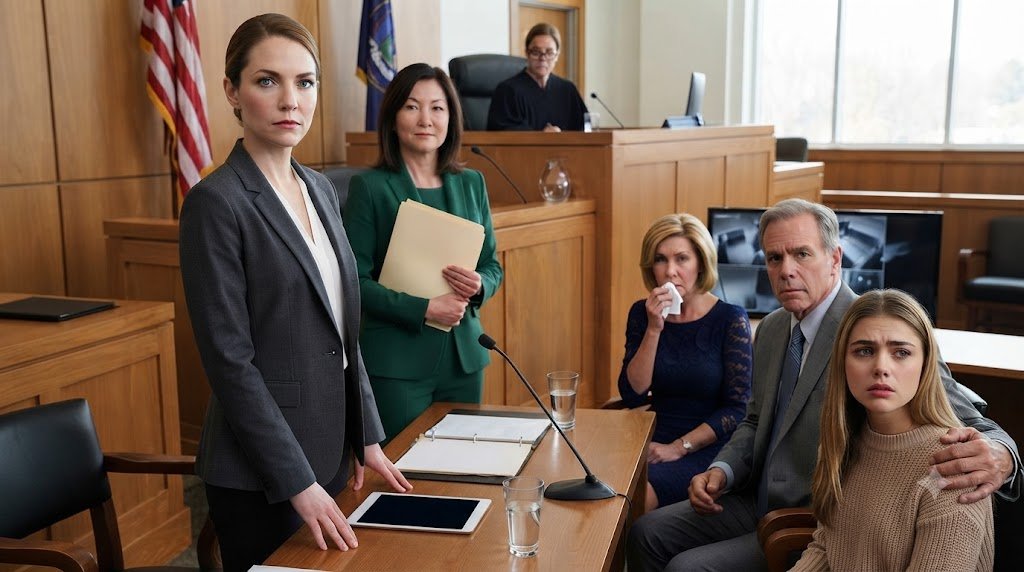
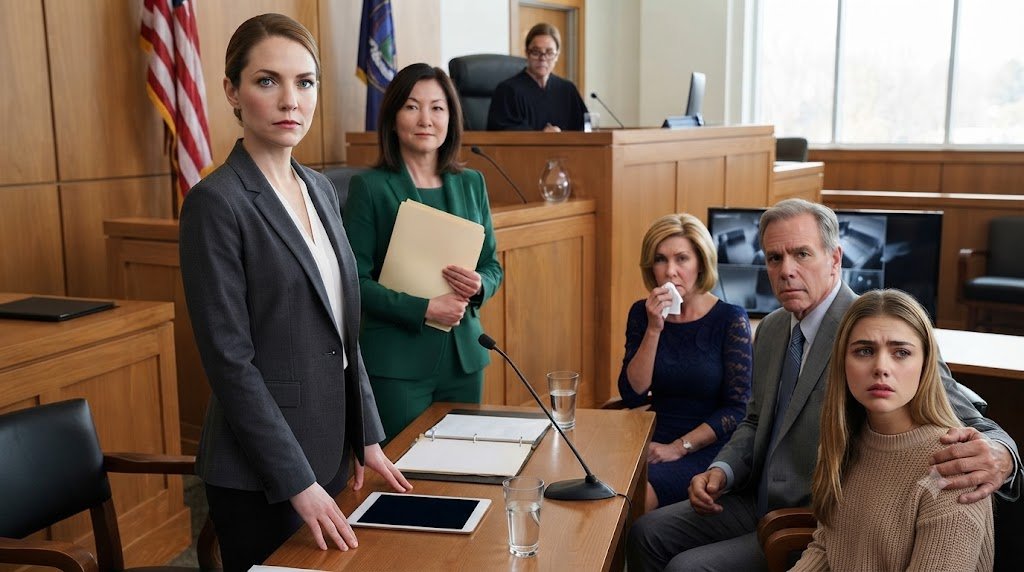
Mom sat beside Dad wearing a pale blue suit.
She had tissues in her hand.
Before the judge entered, she whispered something to Dylan.
He nodded.
Then the doors opened.
Judge Elaine Mercer took her seat.
My parents’ attorney immediately began presenting their case.
He talked about parental sacrifices.
Family responsibility.
Dylan’s financial hardship.
He made it sound as though I had somehow stolen a home from my own family.
I sat beside my attorney, Mara Ellison, listening quietly.
Then Judge Mercer interrupted.
“Counsel, where is the documentary evidence showing that your clients funded this property?”
The attorney paused.
“We believe the financial contribution can be established through testimony.”
“Testimony is not the same as proof.”
Dad shifted in his chair.
Mom pressed the tissue against her eyes.
Mara stood.
“Your Honor, we have complete financial records demonstrating that Ms. Whitlock independently funded the purchase.”
She placed a thick folder on the evidence table.
Then she turned toward me.
“There’s also another matter.”
I looked at her.
She nodded toward the courtroom monitor.
My stomach tightened.
I hadn’t known she planned to show the footage.
The screen came alive.
It showed the entrance to my apartment building.
The date was two weeks before the lawsuit.
At 11:43 p.m., Dylan walked into view.
He wasn’t alone.
He looked around carefully before approaching the security desk.
Then the video switched to another camera.
Dylan was standing beside the private elevator.
In his hand was a keycard.
A keycard that should never have been in his possession.
Mom’s expression changed.
Dad leaned forward.
The judge watched silently.
Mara paused the video.
“Your Honor, this recording is important because the plaintiffs claim my client unlawfully prevented Mr. Whitlock from accessing property he supposedly had a right to use.”
She pressed play.
The footage continued.
Dylan entered my floor.
He walked directly to my apartment.
Then he tried the door.
It opened.
I felt the courtroom disappear around me.
Because I had never given Dylan a key.
Not once.
The footage showed him entering my home alone.
He stayed for nearly twenty minutes.
When he finally came out, he was carrying a small black case from my office.
Mom’s fake tears had completely disappeared.
Judge Mercer looked toward Dylan.
“Mr. Whitlock, what exactly did you remove from that apartment?”
Dylan opened his mouth.
Nothing came out.
Then Mara placed another document on the evidence table.
“Your Honor, we can explain exactly what was inside that case.”
I looked at my parents.
For the first time since the lawsuit began, none of them looked angry.
They looked frightened.
And I suddenly realized the apartment had never been the real reason they wanted access to my home.
The next piece of evidence was about to reveal what they had actually been searching for.
PART 2 — WHAT DYLAN TOOK FROM MY OFFICE
The courtroom remained silent.
Judge Mercer looked directly at Mara.
“What was inside the case?”
Mara opened a second folder.
“Documents belonging to my client, Your Honor. More specifically, records concerning a private investment account.”
My father suddenly leaned toward his attorney.
“That’s irrelevant.”
Judge Mercer raised an eyebrow.
“Then why was the defendant’s brother recorded removing the documents?”
Dad had no answer.
Dylan finally spoke.
“I wasn’t stealing anything.”
I turned toward him.
“You entered my apartment without permission.”
“I had a key.”
“You weren’t supposed to have one.”
He looked at Mom.
That tiny glance told me everything.
Mom had given him access.
The judge noticed it too.
“Mrs. Whitlock,” she said, “did you authorize your son to enter the defendant’s residence?”
Mom swallowed.
“I thought he had permission.”
“You thought?”
Her voice became smaller.
“We’re family.”
Judge Mercer leaned back.
“Family is not a legal authorization.”
Mara placed another document before the judge.
“This is the access log from the building.”
The records showed that Dylan had entered my floor four times during the previous month.
Four times.
Every visit occurred when I was at work.
I stared at the screen.
I had assumed the strange notifications from my building’s security system were technical errors.
They weren’t.
Someone had been watching my schedule.
Judge Mercer looked at Dylan.
“What were you looking for?”
Dylan remained silent.
Then Dad suddenly said,
“He was trying to find evidence that Harper had been hiding family assets.”
I turned toward him.
“Family assets?”
Dad’s expression hardened.
“You’ve been receiving money that belonged to all of us.”
I almost laughed.
“There it is.”
“What?”
“The real story.”
My parents weren’t interested in the apartment.
They believed there was something else inside it.
Something valuable.
Mara nodded toward me.
“Harper, tell the court about the account.”
I took a breath.
“Three years ago, my former employer gave me a private equity grant. I sold part of it after the company went public.”
Dad interrupted.
“And you never told us.”
“I didn’t have to.”
He shook his head.
“You’ve always hidden money from this family.”
“No. I’ve protected it from this family.”
Mom’s face tightened.
Then Mara placed a printed email on the table.
“This message was sent to Mr. Whitlock by his sister.”
I looked at it.
The sender wasn’t Dylan.
It was my mother.
The subject line read:
FIND THE BLUE FILE.
My chest tightened.
The blue file.
I knew exactly what she meant.
Years earlier, my grandmother had given me a small folder containing documents related to an old family property.
I had kept it in a locked drawer because it included sensitive financial records.
I had never told my parents about it.
Dylan had been searching for that folder.
Judge Mercer read the email.
“When was this sent?”
“Six days before the defendant’s brother entered the apartment,” Mara answered.
Dad’s face changed.
Mom immediately protested.
“I was worried about my son!”
Judge Mercer looked at her.
“Then why did your message specifically instruct him to find a file?”
Mom couldn’t answer.
The judge turned toward Dylan.
“Where is the file now?”
He stared at the floor.
“Dylan.”
Still nothing.
Then Mara reached into her briefcase.
“We recovered it.”
My father stood abruptly.
“You did what?”
Mara placed a sealed evidence bag on the table.
Inside was the blue folder.
I recognized it immediately.
But there was something else inside the bag.
A small USB drive.
I had never seen it before.
Mara looked at me.
“This was attached to the folder when investigators recovered it.”
I frowned.
“I don’t know what that is.”
Judge Mercer ordered the drive examined.
Mara connected it to a courtroom computer.
A single video file appeared.
The recording was dated eight months earlier.
My grandmother appeared on screen.
She looked older and tired.
But her voice was steady.
“If you’re watching this, Harper, then something has gone very wrong.”
My breath caught.
My grandmother had died two years earlier.
She continued.
“I know your parents have been asking questions about the family property. I also know they believe your brother should inherit everything.”
Mom’s face went completely white.
Grandmother continued.
“They are wrong.”
She explained that the family property had never belonged to my parents.
It had been placed into a protected trust.
And I was the named beneficiary.
The apartment wasn’t the only thing my family wanted.
They had discovered the trust and believed they could force me to surrender it.
Then came the final revelation.
Grandmother said that years earlier, my father had attempted to alter the trust documents.
He had failed.
But he had never stopped trying.
The video ended.
Nobody moved.
Judge Mercer looked toward my parents.
“Is this accurate?”
Mom began crying again.
This time, there were real tears.
Dad’s lawyer whispered urgently in his ear.
Then Dad finally spoke.
“We can explain.”
Judge Mercer shook her head.
“You will explain under oath.”
The judge dismissed the civil claim against me and ordered an investigation into the alleged theft of documents and attempted interference with the trust.
As the bailiff approached Dylan, he suddenly looked at me.
“I didn’t know how far they were going to take it.”
I stared at him.
“You knew enough to break into my home.”
He lowered his eyes.
Then he whispered something that made my blood run cold.
“Harper, they weren’t trying to take your apartment.”
I looked at him.
“What were they after?”
Dylan glanced toward our parents.
Then he said:
“The trust is worth almost twelve million dollars.”
PART 3 — THE $12 MILLION SECRET
For several seconds, nobody in the courtroom moved.
Twelve million dollars.
That number explained everything.
The lawsuit.
The break-in.
The fake tears.
The sudden interest in my apartment.
My father looked at Dylan with a fury I had never seen before.
“Stop talking.”
Dylan’s face tightened.
“You told me it was yours.”
“I said enough!”
Judge Mercer struck the gavel.
“Mr. Whitlock, you will remain silent unless I ask you a question.”
Dad sank back into his chair.
Mara leaned toward me.
“Harper, did you know the trust was worth that much?”
I shook my head.
“No.”
And I meant it.
My grandmother had always told me the trust existed, but she never discussed the exact value.
I had assumed it was a modest inheritance.
Apparently, she had deliberately kept the amount hidden.
Until now.
Judge Mercer ordered the documents submitted for review.
Then something unexpected happened.
Dylan asked to speak.
The courtroom became quiet again.
“I want to tell the truth.”
Dad immediately objected.
But Dylan continued.
“Dad told me the trust was supposed to belong to him. He said Grandma had promised him everything.”
My father stared at him.
“You ungrateful idiot.”
Dylan flinched.
Then he looked at the judge.
“He told me if I could find the blue folder, we could prove Harper had stolen the money.”
Mom began crying.
But Dylan wasn’t finished.
“He also told me Mom had already changed some documents.”
My mother froze.
Judge Mercer looked at her.
“Changed what documents?”
Mom couldn’t answer.
Mara immediately requested the original trust documents be compared with the copies my parents had submitted in their lawsuit.
Within minutes, the discrepancy became obvious.
A signature had been altered.
The beneficiary information had been changed.
And the person who supposedly authorized the change had been dead for nearly two years.
The courtroom erupted in whispers.
My father finally understood that the case had collapsed completely.
But the biggest shock came when investigators examined the metadata from the altered document.
It had been created on my father’s laptop.
The same laptop he had used to prepare the lawsuit.
Dad’s attorney stopped defending him.
“I recommend that my client not answer further questions.”
Judge Mercer ordered the evidence preserved and referred the matter for criminal investigation.
My mother stared at me through tears.
“Harper, please.”
I looked at her.
For years, I had imagined what it would feel like if my parents finally admitted they had treated me unfairly.
I thought I would feel victorious.
Instead, I felt tired.
“You didn’t lose my apartment,” I said quietly.
“You lost me.”
Mom covered her mouth.
Dad looked away.
Dylan remained seated, staring at the floor.
The judge ruled in my favor and dismissed every claim against my property.
She also ordered that the trust remain under independent supervision until the investigation was complete.
Outside the courthouse, reporters gathered around the steps.
I refused every interview.
I wasn’t interested in becoming a headline.
I only wanted to go home.
When I reached my apartment that evening, I stood beside the windows and watched Chicago’s lights shimmer across the river.
For the first time in weeks, the place felt peaceful again.
Then my phone rang.
It was Dylan.
I almost ignored it.
Instead, I answered.
“Why are you calling?”
His voice was quiet.
“I owe you the rest of the truth.”
I said nothing.
“Dad didn’t start this because of the trust.”
My stomach tightened.
“What do you mean?”
“He found out Grandma had left something else to you.”
“What?”
“A letter.”
I froze.
“Where is it?”
“In the blue folder.”
I opened the folder again.
Behind the trust documents was a sealed envelope I hadn’t noticed before.
My grandmother’s handwriting was across the front.
FOR HARPER — WHEN YOU FINALLY STOP TRYING TO EARN THEIR LOVE.
My hands trembled as I opened it.
The letter was short.
She wrote that she had watched me spend my entire life trying to prove I was worthy of the same love Dylan received effortlessly.
Then came the sentence that broke me.
You were never the difficult child, Harper. You were simply the child they knew could survive without them.
I sat down beside the window and cried.
Not because I had lost my family.
But because I finally understood that I had never needed to win their approval.
I had already built a life they could not take from me.
The next morning, the trust lawyers contacted me.
The $12 million fund was legally mine.
But instead of keeping all of it untouched, I created a scholarship in my grandmother’s name for students who had to work their way through college.
Dylan eventually cooperated fully with investigators.
My parents faced legal consequences for the forged documents and attempted fraud.
And the apartment?
I kept it.
Not because it was worth three million dollars.
Because it represented every night I worked when nobody believed in me.
Every sacrifice.
Every rejection.
Every time I was told I couldn’t.
Months later, I stood on the balcony overlooking the city with my grandmother’s letter folded safely in my desk.
I thought about the courtroom.
The fake tears.
The security footage.
The blue folder.
And the moment the truth finally became impossible to hide.
My parents had tried to take my home because they believed I owed them everything.
But they had forgotten one thing.
I had spent my entire life building something they never gave me.
A life that belonged to me.
THE END.