COLD OPEN
I came home unexpectedly after three years working in Norway and found my wife hiding behind our garage, bald, dangerously thin, and eating leftovers from a trash bag. My father told me she had brought her illness upon herself and that I had no right to question the family. I didn’t shout. I simply told them I had just won a $1.4 million legal settlement—and watched their greed reveal everything they had been hiding from me.
PART 1
“Keep that sick woman out of sight before the guests arrive!”
I heard my younger brother, Caleb, shouting before I even reached the front gate.
I stopped.
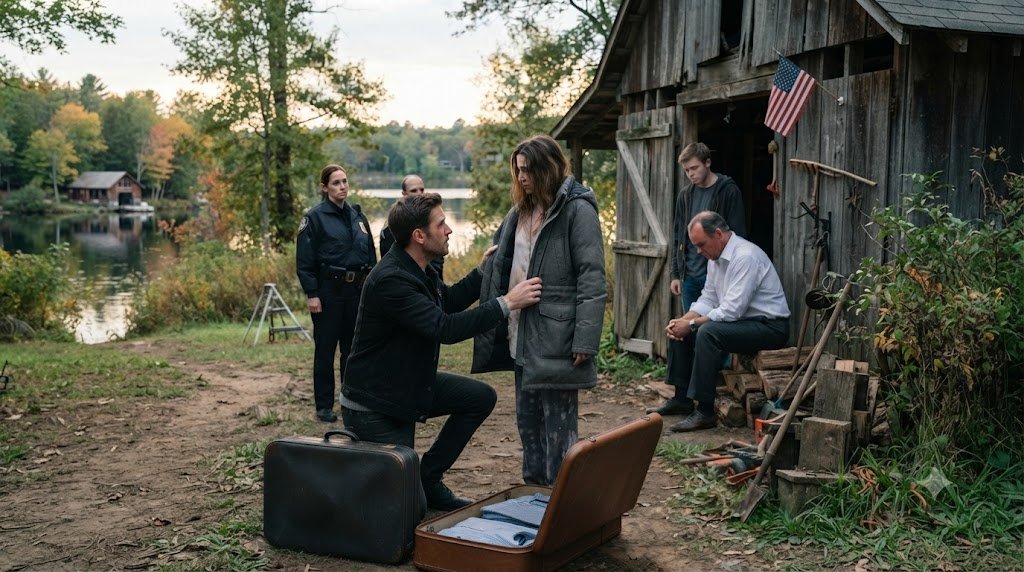
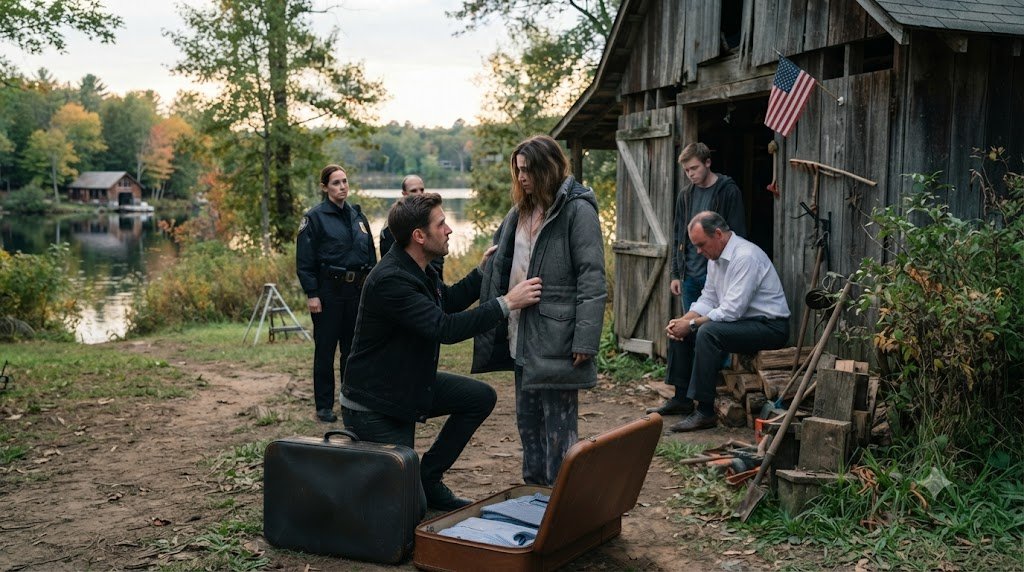
Through the narrow opening beside the garage, I saw my wife, Miriam, crouched on the concrete with a cracked plastic bowl between her hands.
Her head was completely shaved.
Her cheeks had sunk inward.
Her wrists looked frighteningly thin.
She was picking through cold food scraps with trembling fingers.
A plastic bucket filled with cloudy water sat beside her.
“Clean that mess up, Miriam,” my father, Harold, called from inside the house. “And don’t touch anything in the kitchen. If you make another mess, you’ll get nothing tonight.”
I stood behind the fence with my suitcase still in my hand.
They didn’t know I was home.
Three years earlier, I had left for Norway after accepting a job maintaining heavy equipment at a shipping facility outside Bergen.
I had expected to stay for only eighteen months.
Then the company offered overtime.
I kept saying yes.
Twelve-hour shifts became fourteen.
Winter followed winter.
I worked in freezing rain, slept in a cramped apartment with two coworkers, and sent money home almost every month.
Usually between two and three thousand dollars.
The money went to my father’s account because he had promised to manage the household expenses while I was overseas.
He told me he was paying the mortgage.
He said he was covering Miriam’s medical bills.
He said he was protecting our future.
I believed him.
I had no reason not to.
Miriam always reassured me during our calls.
“I’m okay, Daniel. Just focus on work.”
But about five months earlier, something changed.
She stopped appearing on video.
First, she blamed the internet.
Then she said her phone camera had broken.
Eventually, she stopped answering altogether.
My father told me she was exhausted and needed peace.
Now I understood why.
Miriam tried to stand.
Her knees buckled.
Caleb walked into the yard wearing a new black jacket, holding a glass of expensive whiskey.
“You’re still not finished?”
Miriam lowered her eyes.
“I feel weak.”
“You always feel weak.”
“I haven’t eaten since yesterday.”
Caleb laughed.
“Then maybe you should have thought about that before wasting everyone’s money.”
I felt something inside me snap.
I wanted to walk straight through the door.
I wanted to demand an explanation.
But years working around dangerous machinery had taught me to pause when something didn’t make sense.
A machine rarely failed without warning.
You listened first.
You found the damaged part.
Then you acted.
So I stayed where I was.
And listened.
Miriam whispered,
“Please let me call my husband.”
My father stepped outside.
He was wearing the expensive watch I had bought him for his sixtieth birthday.
“You’re not calling anyone.”
“I need him.”
“He’s working.”
“He needs to know I’m sick.”
Harold’s expression hardened.
“You’re not going to ruin his concentration because you’re feeling sorry for yourself.”
Miriam stared at him.
“The doctor said I need another round of treatment.”
My father waved his hand dismissively.
“Doctors always want money.”
“I can’t stop treatment.”
“You already cost this family enough.”
I looked at Miriam’s face.
She was trying not to cry.
Then Harold said something that made my stomach turn.
“My son sends the money to me. That means I decide where it goes.”
Miriam looked toward the driveway.
A brand-new SUV stood beneath the carport.
“Then where did the money go?”
Harold said nothing.
She pointed toward the house.
“The new kitchen.”
Then toward Caleb.
“His business.”
She touched the thin sleeve covering her arm.
“And my medicine?”
Harold folded his arms.
“You’ve had enough.”
Miriam’s voice broke.
“I’ve had two treatments in nine months.”
I froze.
Nine months.
I had been sending money every month for nearly three years.
How many times had my father told me her treatment was expensive?
How many times had I believed him?
Miriam looked toward the small detached shed behind the garage.
“I’ve been sleeping there.”
Caleb rolled his eyes.
“Because you refuse to appreciate anything this family does for you.”
“I just want to get better.”
“You should have thought about that before becoming a burden.”
My fingers tightened around the suitcase handle.
I couldn’t listen anymore.
I pushed open the gate.
It slammed against the metal post.
Everyone turned.
My suitcase slipped from my hand.
Caleb’s whiskey glass fell and shattered.
My father went completely still.
Miriam stared at me as if she were looking at someone who had returned from the dead.
“Daniel…”
I crossed the yard.
I knelt beside my wife.
She felt so light that my arms began shaking when I pulled her close.
Her hair smelled faintly of disinfectant.
Her clothes smelled of damp concrete.
“I’m home,” I whispered.
Miriam began crying.
She kept saying my name over and over.
My father recovered first.
“You misunderstood what you saw.”
I looked at him.
“Did I?”
“This woman has become impossible since she got sick.”
Caleb stepped forward.
“She lies constantly. She demands money. She breaks things.”
I glanced at the gold bracelet around Caleb’s wrist.
It was mine.
I had bought it for Miriam on our tenth anniversary.
I pointed at it.
“Where did you get that?”
Caleb’s face changed.
My father immediately stepped between us.
“Don’t start accusing people.”
Miriam shook her head.
“I tried to sell that bracelet to pay for my medicine.”
Harold looked away.
“He took it from me.”
I turned toward my father.
“And the money?”
“What money?”
“The money I sent.”
He sighed.
“You were gone for three years. You don’t understand what it costs to maintain a family.”
I looked around.
New furniture.
A remodeled kitchen.
A giant television.
A luxury SUV.
A home renovation I had never approved.
Then I looked back at Miriam.
Her shoes were cracked.
Her blouse was faded.
She was standing barefoot on cold concrete.
“How much of my money did you spend on her treatment?”
My father hesitated.
“Medical care isn’t simple.”
“That wasn’t my question.”
He finally muttered,
“A reasonable amount.”
Miriam interrupted him.
“Three appointments.”
I turned toward her.
“Three?”
She nodded.
“Three in nine months.”
Silence filled the yard.
My father immediately started explaining.
“She wasn’t responding well.”
“The doctors recommended more.”
“She refused.”
Miriam shook her head.
“No. You told me there wasn’t enough money.”
I looked at my father.
He had no answer.
I helped Miriam stand.
“We’re going to a hospital.”
Harold moved in front of the gate.
“You’re not taking her anywhere tonight.”
“She needs treatment.”
“She needs rest.”
“She needs a doctor.”
My father raised his voice.
“You abandoned your family for three years and now you come home acting like some hero?”
I slowly rolled up my sleeve.
Old scars crossed my forearm.
Burn marks.
Cuts.
Small injuries from years of working around machinery.
“I worked nights while you spent my money.”
I pulled out my phone.
“I slept four hours a day.”
I looked at Caleb.
“I missed birthdays.”
Then I looked at my father.
“I spent three Christmases thousands of miles away because you told me everyone here was safe.”
Harold’s jaw tightened.
“And they were.”
I turned toward Miriam.
“No.”
She lowered her eyes.
“She wasn’t.”
Miriam grabbed the front of my shirt.
I could feel her trembling.
She was waiting for me to explode.
I didn’t.
Instead, I unlocked my phone.
My father stared at the screen.
“What are you doing?”
I looked directly into his eyes.
“I think it’s time you all saw what I brought home from Norway.”
Then I pressed play.
PART 2
THE RECORDING THAT CHANGED EVERYTHING
The video began with a date.
Nine months earlier.
My father’s voice filled the backyard.
“Don’t send anything directly to Miriam. Put it in my account.”
I watched the screen.
Miriam covered her mouth.
Caleb stopped breathing.
Harold’s face turned pale.
The recording continued.
My father was speaking to someone I couldn’t see.
“She doesn’t need to know how much Daniel sends. Just tell him the treatment costs more than expected.”
A second voice answered.
Caleb.
“What if Daniel comes home?”
Harold laughed.
“He won’t. He’s making too much money over there.”
I stopped the video.
Nobody spoke.
I looked at my father.
“Where did you think I got this?”
He swallowed.
“You recorded us?”
“No.”
I held up my phone.
“This came from the bank’s investigation.”
That wasn’t entirely true.
But it didn’t matter.
The video was real.
And they didn’t know how much evidence I had.
Harold stepped toward me.
“You don’t understand what you’re doing.”
“I understand exactly what you’re doing.”
Caleb suddenly shouted,
“She was going to die anyway!”
Miriam flinched.
I turned toward him.
“What did you say?”
Caleb’s face changed.
My father grabbed his arm.
“Enough.”
But it was already too late.
I had heard him.
Miriam had heard him.
And the truth was finally out.
I called emergency services.
Within twenty minutes, officers arrived at the house.
I showed them the recordings.
Then I opened my banking app.
For three years, millions of small transactions told one story.
Money had been transferred from my overseas account to my father’s account.
From there, it had gone to renovation companies.
A luxury vehicle dealership.
A private business account belonging to Caleb.
And several cash withdrawals.
Almost nothing had gone toward Miriam’s medical treatment.
One officer looked at me.
“How much did you send?”
I stared at the screen.
“More than $180,000.”
Miriam began crying.
I took her hand.
“We’re getting you help.”
The ambulance arrived shortly afterward.
As the paramedics examined Miriam, my father suddenly became aggressive.
“You can’t take her!”
I stepped between them.
“She is my wife.”
“She belongs here!”
“No.”
My voice was calm.
“She belongs somewhere she can survive.”
Miriam was taken to the hospital.
I rode beside her.
Before the ambulance doors closed, I looked back.
Caleb stood beside my father.
Neither man looked sorry.
They looked angry.
That frightened me more than tears ever could.
At the hospital, doctors immediately began a full examination.
The results were devastating.
Miriam’s condition was much worse than I had imagined.
She was severely malnourished.
Her treatment had been interrupted repeatedly.
She had lost an alarming amount of weight.
But the doctors believed they could stabilize her.
I stayed beside her bed all night.
Around three in the morning, she finally opened her eyes.
“Daniel?”
“I’m here.”
She looked at me.
“I tried to tell you.”
“I know.”
“I was afraid.”
I squeezed her hand.
“You don’t have to be afraid anymore.”
She hesitated.
“There is something else.”
“What?”
Miriam looked toward the door.
“Your father wasn’t the one who started this.”
My stomach tightened.
“What do you mean?”
She whispered,
“Caleb.”
I stared at her.
“He came to me first.”
Miriam explained that Caleb had discovered how much money I was earning overseas.
He had convinced Harold that they could control the family finances if Miriam was kept isolated.
Then they discovered her illness.
Instead of helping her, they used it.
They told me she needed expensive treatment.
They kept the money.
When Miriam protested, they threatened to tell me that she was unstable and incapable of managing our household.
“And the shaved head?” I asked.
Miriam’s eyes filled with tears.
“Caleb did that.”
I felt sick.
“He said my hair made me look sick.”
The room went silent.
Then she reached beneath her pillow and pulled out a small envelope.
“I kept this.”
Inside were photographs.
Bank statements.
Medical records.
And copies of messages between Caleb and Harold.
I read them slowly.
One message made my blood run cold.
Daniel won’t come back until the money runs out.
Another said:
If Miriam dies, we’ll tell him she stopped treatment.
I looked at my wife.
“They were waiting for you to die.”
She nodded.
“But there’s more.”
She pointed to the final photograph.
It showed my father standing outside a law office with a stranger.
“When was this taken?”
“Three weeks ago.”
I looked closer.
The stranger was an attorney.
Miriam whispered,
“They were changing your inheritance documents.”
My heart stopped.
“Why?”
“So everything would go to Caleb.”
I sat back.
For three years, I had believed I was working to protect my family.
I had actually been financing the people destroying it.
The next morning, detectives returned.
They had obtained warrants for my father’s house and Caleb’s business.
The search uncovered forged signatures, hidden bank accounts, stolen jewelry, and dozens of documents connected to my finances.
But Caleb was gone.
His phone was off.
His car was missing.
And my father refused to say where he had gone.
Then, just before noon, my phone rang.
Unknown number.
I answered.
A man’s voice said,
“You should have stayed in Norway.”
My blood froze.
“Who is this?”
“You’re asking the wrong questions.”
Then I heard a woman’s voice in the background.
Miriam.
I stood so quickly that my chair fell backward.
“Where is my wife?”
The man laughed.
“She isn’t with you.”
I looked toward the hospital bed.
Miriam was still there.
My heart stopped.
Then I understood.
It wasn’t Miriam’s voice.
It was a recording.
The man spoke again.
“You have until midnight to withdraw the complaint.”
“What happens if I don’t?”
A pause.
Then he said,
“Your father won’t be the only one who loses everything.”
The call ended.
I immediately showed Detective Grace Holloway, forty-two, the recording.
She listened twice.
Then she looked at me.
“We need to move quickly.”
“Why?”
She pointed to the audio file.
“There is a location signal embedded in the original message.”
“Can you track it?”
“We already are.”
She turned her laptop toward me.
A red marker appeared on the map.
It was moving.
North of the city.
Toward an abandoned lakeside warehouse.
Detective Holloway stood.
“Your brother is taking something there.”
“What?”
She looked at the evidence photographs.
“The original documents.”
I stared at the map.
Then my phone vibrated again.
This time, it was a message.
One photograph.
Miriam’s gold wedding ring sat on a wooden table.
Under it were four words:
COME ALONE, DANIEL.
I looked at Detective Holloway.
She shook her head.
“You are absolutely not going alone.”
Outside the hospital windows, darkness was beginning to fall.
And somewhere across the city, Caleb was preparing for the final move.
I picked up my coat.
“Then let’s end this.”
PART 3
THE FINAL TRAP
The abandoned warehouse stood beside a frozen stretch of Lake Michigan.
It was nearly eleven o’clock when Detective Grace Holloway and her team arrived.
The building was dark.
No lights.
No cars.
No movement.
But the red signal on Grace’s tablet was still active.
“He’s inside,” she whispered.
I stared at the warehouse.
My hands were shaking.
Not from fear.
From anger.
Three years of sacrifice.
Three years of sending money home.
Three years of believing the people I loved were protecting my wife.
And now I finally understood what they had been doing.
Grace grabbed my shoulder.
“You stay behind us.”
I nodded.
The police moved toward the side entrance.
Then my phone rang.
Caleb.
I answered.
“Hello?”
His voice came through quietly.
“You actually came.”
“Where is my wife?”
“She isn’t here.”
“Then why did you send me her ring?”
A short laugh.
“To make sure you came.”
I looked at Grace.
She signaled the officers to continue.
Caleb spoke again.
“You always thought you were the smart one.”
“No.”
I said.
“I thought you were my brother.”
Silence.
Then Caleb replied,
“That was your mistake.”
The call ended.
At that exact moment, Grace’s team breached the warehouse.
“POLICE! SHOW YOUR HANDS!”
A crash echoed from inside.
Then someone ran.
Officers chased the figure through the building.
I followed Grace only as far as the entrance.
We found my father standing beside a wooden table.
His hands were raised.
Caleb was nowhere in sight.
On the table were the original financial documents.
Bank records.
Forged signatures.
Insurance papers.
And my wife’s medical records.
Grace immediately photographed everything.
“Where’s Caleb?”
My father looked at me.
“He took the back exit.”
“You knew about this?”
He lowered his eyes.
“I didn’t know he’d go this far.”
I stared at him.
“You watched him destroy my wife.”
“He said it was temporary.”
“Temporary?”
My voice broke.
“She almost died.”
My father started crying.
“I was trying to save the family.”
“No.”
I shook my head.
“You were saving yourself.”
Then Grace’s radio crackled.
“Suspect spotted near the lake.”
Everyone moved.
We rushed outside.
Snow covered the ground.
Caleb was running toward an old service road.
“Stop!”
He didn’t.
He slipped on the ice and fell hard.
Officers reached him seconds later.
He struggled briefly.
Then the handcuffs closed around his wrists.
I stood several feet away.
He looked at me.
“You ruined everything.”
I answered quietly.
“No.”
“You did that yourself.”
He looked toward the warehouse.
“What happens now?”
I stared at him.
“Now Miriam gets her life back.”
Caleb laughed bitterly.
“You think money fixes everything?”
“No.”
I looked at the officers.
“Truth does.”
Caleb was taken away.
My father was arrested shortly afterward.
The investigation lasted months.
The evidence was overwhelming.
My father and Caleb had diverted more than $200,000 of my earnings.
They had falsified medical expenses.
They had stolen jewelry.
They had forged financial documents.
And they had deliberately withheld Miriam’s treatment money while convincing me she was receiving proper care.
Caleb was convicted of fraud, financial exploitation, identity theft, and multiple charges connected to the abuse of Miriam.
My father accepted a plea agreement after the investigators uncovered his involvement.
But the most important part of the story happened somewhere else.
At the hospital.
Miriam was sitting by the window when I walked into her room.
She looked different already.
Still thin.
Still weak.
But her eyes were brighter.
“You came back,” she said.
I smiled.
“I promised.”
She looked at my empty hands.
“Where’s my ring?”
I sat beside her.
“I have it.”
I pulled the ring from my pocket.
Her eyes filled with tears.
“I thought I’d never see that again.”
I gently placed it on her finger.
“You’re not losing anything else.”
She leaned against my shoulder.
For a long time, neither of us spoke.
Then she whispered,
“I thought you believed them.”
“I did.”
She looked at me.
“Why?”
“Because I was far away.”
I took her hand.
“And because I trusted the wrong people.”
She shook her head.
“You didn’t abandon me.”
I looked at her.
“I should have come home sooner.”
“No.”
Her voice was firm.
“You came home when you finally had the chance.”
She squeezed my hand.
“And you believed me when it mattered.”
That sentence stayed with me.
Over the following months, Miriam underwent proper treatment.
Her weight slowly returned.
Her strength came back.
Her hair began growing again.
And the first time she looked into the mirror without hiding her head, she smiled.
“I still look like me.”
I stood behind her.
“You always did.”
We eventually sold the house.
Neither of us wanted to live there again.
We moved to a quiet coastal town in Maine, where nobody knew our family history.
Our new home was small.
No luxury furniture.
No expensive renovations.
Just sunlight, a little garden, and a kitchen where Miriam could cook without anyone telling her she didn’t deserve to eat.
One evening, almost a year after I came home from Norway, we sat together on the porch.
Miriam looked at the sunset.
“Do you ever miss your old life?”
I thought about it.
“No.”
She smiled.
“Not even a little?”
I shook my head.
“I miss the life I thought I had.”
Then I looked at her.
“But I don’t miss the lie.”
She rested her head against my shoulder.
For three years, I had believed that sending money was enough.
I thought providing was the same as protecting.
I learned otherwise.
Money can build a house.
It can buy furniture.
It can pay bills.
But it cannot tell you who truly loves you.
That lesson came from the woman who had almost disappeared while I was thousands of miles away.
Miriam survived because she refused to stop fighting.
I came home because something inside me told me that the story I had been hearing wasn’t true.
And my family lost everything because they believed I would never look closely enough to discover the truth.
The last time I saw my father, he was sitting behind glass during a prison visit.
He looked older.
Smaller.
“I am sorry,” he said.
I believed that he was sorry.
But forgiveness did not mean forgetting.
“I hope you become a better man,” I told him.
Then I walked away.
Outside, the afternoon sun was warm.
Miriam was waiting beside the car.
I opened the passenger door for her.
She smiled.
“Ready?”
I looked at her.
“For the first time in years.”
She took my hand.
We drove home together.
Not to the house I had spent years paying for.
Not to the family that had betrayed us.
But to the life we were finally choosing for ourselves.
And this time, nobody else controlled the future.
THE END.