COLD OPEN
My sixteen-year-old daughter had been hiding severe stomach pain for weeks.
My husband said it was stress.
I believed him—until I found her unconscious on the bathroom floor.
At the emergency clinic, the doctor stared at her scan and went completely silent.
Then she looked at me and asked:
“Has anyone in your family ever told you what really happened before your daughter was born?”
I had no answer.
Because suddenly, my daughter’s illness didn’t seem like an ordinary medical problem.
It looked like the beginning of a secret someone had spent sixteen years hiding.
PART 1 — THE WARNING I ALMOST IGNORED
The first warning came on a rainy Thursday morning.
My daughter, Maya Ellison, was sitting at the breakfast table in our house outside Portland, Oregon, staring at a bowl of oatmeal she hadn’t touched.
She was sixteen.
Normally, Maya complained about school, music, or her younger brother stealing her headphones.
That morning, she barely spoke.
I noticed her pressing her palm against her side.
“Does it hurt again?”
She looked up.
“A little.”
Across the table, my husband, Graham Ellison, continued scrolling through his tablet.
“She was up late studying,” he said.
I looked at him.
“You don’t think we should have her checked?”
Graham sighed.
“She’s sixteen, Claire. Teenagers get stomachaches.”
Maya lowered her eyes.
I hated that reaction.
Not the words themselves.
The certainty behind them.
Graham always sounded completely confident, even when he knew very little.
For twenty years, he had built his career as a corporate consultant by speaking as though every problem already had an answer.
At home, that confidence had gradually become something else.
Control.
“If we take her to another specialist,” he continued, “we’ll spend hundreds of dollars just to hear that it’s anxiety.”
Maya pushed her chair back.
“I don’t feel anxious.”
Graham finally looked at her.
“You’re overthinking it.”
She stood silently and walked upstairs.
I watched her disappear.
Something inside me tightened.
I had worked as a guidance counselor for almost fourteen years.
I knew what teenagers looked like when they were embarrassed.
I knew what they looked like when they were angry.
And I knew what they looked like when they were scared but didn’t believe anyone would listen.
Maya looked scared.
That afternoon, I found her sitting on the floor of her bedroom.
Her curtains were closed.
Her schoolbooks were open, but she wasn’t reading.
She was holding a heating pad against her abdomen.
I sat beside her.
“How bad?”
She hesitated.
“Maybe seven.”
“Seven out of ten?”
She nodded.
“Why didn’t you tell me?”
She shrugged.
“Dad says it’s nothing.”
The answer hit harder than I expected.
“Maya, your father isn’t a doctor.”
She gave me a tired smile.
“I know.”
Then she whispered:
“But he gets angry when I say I need help.”
I stared at her.
“What do you mean?”
She immediately shook her head.
“Nothing.”
“Maya.”
“I don’t want you two fighting.”
That was when I realized the problem wasn’t only physical.
She had begun protecting me from her father.
And that scared me more than the pain.
Over the next week, I started keeping notes.
When she felt sick.
What she ate.
How long the pain lasted.
Whether she had headaches.
Whether she slept.
The pattern became impossible to ignore.
The pain was getting worse.
Her appetite disappeared.
She lost nearly eight pounds.
And twice, she came home from school early because she felt dizzy.
Every time I brought it up, Graham had an explanation.
“She’s growing.”
“She’s stressed.”
“She isn’t sleeping enough.”
“Stop making everything medical.”
Then, one Monday evening, Maya collapsed.
I was folding laundry upstairs when I heard something hit the bathroom floor.
“Maya?”
No answer.
I ran down the hallway.
She was lying beside the bathtub.
Her eyes were open, but she wasn’t responding.
My hands shook as I called emergency services.
Graham appeared behind me.
“What happened?”
“I don’t know.”
He looked at Maya.
Then at me.
“We can’t panic.”
I turned toward him.
“She just collapsed.”
“We’ll take her to urgent care.”
“No.”
My voice surprised even me.
“We’re going to the hospital.”
Graham stared at me.
“Claire—”
“I said hospital.”
For once, he didn’t argue.
At the emergency department, doctors ran blood tests and ordered imaging.
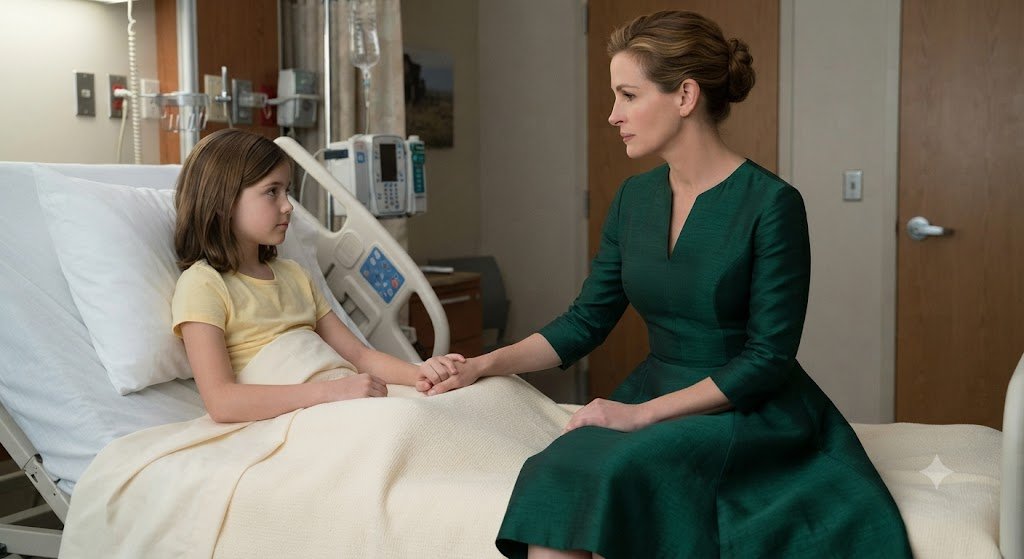
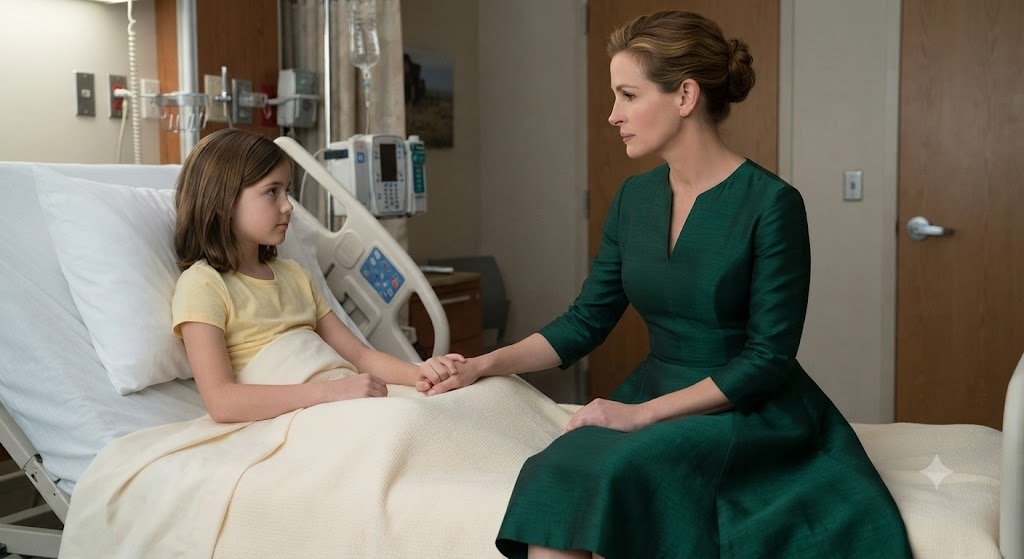
Maya was eventually moved into a private examination room.
Graham stayed outside, making phone calls.
I sat beside my daughter.
She squeezed my fingers.
“Mom?”
“Yes?”
“Don’t let Dad decide what happens.”
I felt a chill move through me.
“Why?”
She looked toward the door.
“Because he already knew.”
“Knew what?”
She swallowed.
“The pain.”
Before I could ask another question, the doctor entered.
Her name was Dr. Elena Shah.
She carried a tablet in one hand.
She didn’t sit down.
Instead, she looked at Maya.
“I’m going to ask you a few questions.”
Maya nodded.
Dr. Shah asked about the pain, when it started, whether anyone had dismissed it, and whether Maya had ever been prevented from seeing a doctor.
Maya looked at me.
Then she answered.
“Yes.”
My heart sank.
Dr. Shah turned toward me.
“We’ve found an abnormality on the scan.”
I stood.
“What kind of abnormality?”
She hesitated.
“We need another specialist to review it.”
Graham suddenly entered the room.
“What did you find?”
Dr. Shah looked at him.
Then at me.
Her expression changed.
“Mr. Ellison, I’d like to speak with your daughter and her mother privately.”
Graham frowned.
“I’m her father.”
“I understand.”
The nurse quietly closed the door behind him.
Dr. Shah returned to the scan.
“There is something here that doesn’t fit the medical history you’ve given us.”
I stared at the screen.
“What does that mean?”
She enlarged the image.
A small irregular mass appeared near the edge of the scan.
Maya grabbed my hand.
Dr. Shah lowered her voice.
“We need to investigate this immediately.”
My phone vibrated.
Graham was calling.
I ignored it.
Then another notification appeared.
This time, it was a message from an unknown number.
YOU SHOULD ASK YOUR HUSBAND WHY MAYA’S MEDICAL RECORDS WERE CHANGED LAST YEAR.
My blood ran cold.
I showed the message to Dr. Shah.
She read it once.
Then again.
Her expression became serious.
“Don’t delete that.”
I looked at Maya.
She was crying silently.
“Mom,” she whispered.
I squeezed her hand.
“What is it, sweetheart?”
She looked toward the closed door.
“I think Dad knows why I’m sick.”
The room went silent.
And suddenly, the scan on the monitor was no longer the only mystery I needed to solve.
PART 2 — THE MEDICAL RECORD HE TRIED TO ERASE
Dr. Shah asked me to sit down.
Maya kept holding my hand.
Outside the room, I could hear Graham speaking sharply to someone on the phone.
Dr. Shah lowered her voice.
“Claire, I need you to understand something. The scan doesn’t tell us why this happened. It tells us that we need answers.”
I nodded.
“What kind of answers?”
“Medical history. Previous imaging. Previous diagnoses. Anything that might explain why this was missed.”
I immediately thought of Maya’s pediatric records.
She had always been healthy.
At least, that’s what I believed.
Dr. Shah looked at the message on my phone again.
“Who sent this?”
“I don’t know.”
“Then don’t contact them yet.”
She turned toward Maya.
“Did you ever have medical testing you weren’t told about?”
Maya hesitated.
Then she nodded.
“Last year.”
I stared at her.
“What testing?”
“Dad took me somewhere.”
“Where?”
“I don’t know. It was a private clinic.”
Graham had told me Maya needed a routine blood panel for school athletics.
I remembered signing nothing.
He had said he would handle it.
My stomach tightened.
“Why didn’t you tell me?”
Maya looked down.
“Dad said you’d worry.”
Dr. Shah’s expression hardened.
“Did you receive any medication?”
“No.”
“Did anyone explain the results?”
Maya shook her head.
Dr. Shah stood.
“I’ll request the complete electronic record.”
She walked toward the door.
Before opening it, she turned around.
“One more thing.”
“What?”
“If someone altered her medical history, the hospital’s audit system should show when and where the changes were made.”
I felt my pulse quicken.
“Can you check?”
“Yes.”
The door opened.
Graham was standing immediately outside.
His face was tense.
“What is happening?”
Dr. Shah answered calmly.
“We’re reviewing Maya’s previous medical records.”
Graham looked at me.
“Why?”
“Because our daughter deserves answers.”
He stared at me for several seconds.
Then his expression softened.
“Claire, you’re frightened. I understand.”
“No.”
I shook my head.
“I’m thinking clearly.”
His jaw tightened.
“Maya has always been sensitive.”
Maya spoke from the bed.
“Stop saying that.”
Everyone froze.
She looked directly at him.
“I told you it hurt.”
Graham didn’t respond.
Instead, he walked out.
That was the moment I knew.
He was hiding something.
An hour later, a hospital records specialist entered the room.
She carried a printed report.
“Mrs. Ellison?”
“Yes?”
“There is an unusual access history associated with your daughter’s file.”
My heart dropped.
“What kind of access?”
“Someone accessed her records eleven months ago.”
“Who?”
The specialist looked at the document.
“A third-party medical office.”
I stared at her.
“Which one?”
She gave me the name.
Cedar Grove Women’s Clinic.
I had never heard of it.
Neither had Maya.
But Graham had.
Because when I returned to the waiting room, I found him standing alone beside the vending machines.
I held up the report.
“What’s Cedar Grove?”
His face changed.
Only for a second.
But I saw it.
“You went through my records?”
“No.”
I stepped closer.
“The hospital found an outside clinic accessing Maya’s file.”
He said nothing.
“Why?”
Graham looked around the hallway.
“Not here.”
“Then where?”
He lowered his voice.
“Claire, you don’t understand what you’re getting involved in.”
That sentence terrified me.
Not because it sounded threatening.
Because it sounded like a warning.
I stepped back.
“Tell me everything.”
He shook his head.
“I was trying to protect her.”
“From what?”
He looked toward Maya’s room.
“From something your family did.”
My blood ran cold.
“My family?”
He nodded.
“Before Maya was born, your father and I had a conversation.”
“My father died twelve years ago.”
“I know.”
“Then what are you talking about?”
Graham reached into his jacket.
For a moment, I thought he was going to show me something.
Instead, he pulled out his phone.
“Your father left information behind.”
“What information?”
He looked at me.
“About Maya’s birth.”
I couldn’t breathe.
Maya had been born sixteen years earlier.
My father had died four years after that.
There was no reason for Graham to have secrets involving her birth.
Unless—
I stopped him.
“What did my father know?”
Graham’s eyes filled with something I couldn’t identify.
Regret.
Fear.
Maybe both.
“He knew you weren’t supposed to have a child.”
I stared at him.
“What does that mean?”
Before he could answer, a nurse rushed toward us.
“Mrs. Ellison?”
I turned.
“Your daughter is awake.”
I followed her immediately.
Maya was sitting upright.
Her face was pale.
But she was conscious.
Dr. Shah stood beside the bed.
“We have another result.”
I looked at her.
“Is it cancer?”
She paused.
“We don’t know yet.”
My heart sank.
“But we found something else.”
She handed me a sealed report.
“Your daughter’s blood markers don’t match the medical history listed in her file.”
I looked at Maya.
“What does that mean?”
Dr. Shah’s voice became quieter.
“It means someone may have been treating her as though she had a completely different medical history.”
I stared at the report.
Then I remembered Graham’s words.
Your father knew.
My phone buzzed again.
Another unknown message.
This time there was an attachment.
A photograph.
I opened it.
It showed my father standing beside a younger Graham.
Behind them was a hospital entrance.
And beneath the photograph was a handwritten date.
October 14, 2010.
The day Maya was born.
I zoomed in.
There was one more person in the photograph.
A woman I had never seen before.
But Maya looked exactly like her.
My hands began to shake.
I showed the photograph to Dr. Shah.
She stared at it.
Then at Maya.
Then she whispered:
“Claire… I think you need to find out who that woman is.”
Behind us, the hospital door opened.
Graham stood there.
He looked at the photograph in my hand.
And for the first time that night, he didn’t try to explain anything.
He simply said:
“Now you know why I was afraid.”
PART 3 — THE TRUTH HE COULDN’T HIDE
By the time Dr. Patel finished explaining the scan, the room no longer felt like a hospital.
It felt like the place where my entire understanding of my family had been dismantled.
The mass required further testing, she explained, but there was something else in Chloe’s records that concerned her. Several symptoms had been documented months earlier, yet no proper follow-up had been completed.
“Who brought her to her previous appointments?” Dr. Patel asked.
“My husband.”
She looked at me carefully.
“And who received the results?”
I swallowed.
“My husband.”
Dr. Patel exchanged a glance with the nurse.
Then she opened the electronic file.
“There are several notes here indicating that additional imaging was recommended.”
My stomach dropped.
“Why didn’t anyone tell me?”
The nurse hesitated.
“According to the record, your husband requested that future communication go through him.”
I stared at the screen.
Julian had never told me.
Not once.
My phone vibrated again.
This time, it wasn’t a call.
It was a message.
Julian: Where are you?
A second message arrived seconds later.
Julian: Bring Chloe home. We’ll discuss this when I get back.
I showed Dr. Patel the screen.
Her expression hardened.
“Do not let anyone pressure you into delaying Chloe’s care.”
Those words were all I needed.
I called Sarah.
Within an hour, she was sitting beside me in the consultation room, reviewing every document the hospital had provided.
When she saw the previous medical notes, her face changed.
“Your husband knew she needed further evaluation.”
I nodded slowly.
“And he kept you from knowing.”
Sarah closed the folder.
“This isn’t just about your marriage anymore.”
I looked through the glass toward Chloe, who was sleeping beneath a blanket.
“No,” I whispered. “It’s about my daughter.”
The following morning, Chloe underwent additional testing.
The results were serious, but treatable.
There would be surgery, months of recovery, and difficult days ahead. But Dr. Patel was confident that we had found the problem before it became far more dangerous.
For the first time in months, I saw hope in Chloe’s face.
Then Julian arrived.
He walked into the hospital wearing an expensive suit, carrying his briefcase as though he were entering a business meeting.
His eyes immediately went to me.
“You went behind my back.”
I stood.
“I took our daughter to a doctor.”
“You were specifically told not to create unnecessary expenses.”
I stared at him.
“Unnecessary?”
His voice dropped.
“You have no idea how much damage you’re causing.”
Sarah stepped between us.
“Mr. Mercer, I suggest you choose your next words carefully.”
Julian looked at her, then at Chloe.
He seemed surprised that I was no longer alone.
“I am her father,” he said.
“And I’m her mother,” I replied. “Neither title gives us the right to ignore her pain.”
For once, Julian had no immediate answer.
Then Dr. Patel entered.
She explained the diagnosis, the treatment plan, and the urgency.
Julian listened in silence.
When she finished, he asked one question.
“Could this have been prevented?”
Dr. Patel’s expression became very still.
“Earlier intervention would have been preferable.”
Julian looked at me.
I saw the moment he realized I knew about the hidden records.
His face lost its color.
“You knew?” I asked.
He said nothing.
“Did you know she had been referred for additional testing months ago?”
Still nothing.
Sarah placed copies of the medical notes on the table.
“You withheld medical information from your wife,” she said. “That decision will now be part of the legal record.”
Julian finally sat down.
“I thought it was stress.”
“You didn’t even ask,” I said.
His eyes filled with shame, but I could no longer mistake shame for responsibility.
Over the next several weeks, Chloe began treatment.
There were frightening mornings and exhausting nights. There were moments when she cried because she was tired of hospitals and moments when I cried in the bathroom so she wouldn’t see me.
But she never again had to wonder whether someone believed her.
I believed every word.
And Sarah helped me uncover something even more disturbing.
Julian had deliberately controlled access to several of Chloe’s medical records. He had also lied about the cost of treatment because he feared the expenses would affect his investment plans.
He hadn’t simply dismissed my concerns.
He had protected his lifestyle at our daughter’s expense.
The marriage ended quietly.
There was no dramatic courtroom confrontation.
There didn’t need to be.
The documents spoke for themselves.
Months later, Chloe came home after her final major treatment.
She walked through the front door carrying a small backpack and stopped in the middle of the living room.
“Mom?”
“Yes?”
“Can we change my room?”
I smiled.
“Of course.”
She looked toward the empty wall.
“I want bright colors.”
“Then we’ll paint it bright.”
She smiled.
It was the first completely carefree smile I’d seen from her in a very long time.
That evening, we sat together on the porch as the sun disappeared behind the trees.
Chloe rested her head against my shoulder.
“Thank you for listening to me.”
I kissed the top of her head.
“You should never have had to thank me for that.”
She was quiet for a moment.
Then she said, “Dad didn’t believe me.”
I looked at the fading sky.
“No.”
“Do you think he’ll ever understand?”
I took her hand.
“Maybe. But understanding his mistake isn’t your responsibility.”
She squeezed my fingers.
For years, I had believed keeping a family together meant enduring uncomfortable truths.
I finally understood the opposite.
Sometimes protecting your family means refusing to remain silent.
Julian had wanted me to trust his certainty instead of my instincts.
He had wanted Chloe to doubt her own body.
He had wanted everything inconvenient hidden behind a beautiful house and a successful man’s reputation.
But the truth had survived anyway.
And the day I chose to listen to my daughter, everything changed.
Not because I became stronger than my husband.
Because I finally understood that being a mother sometimes means standing alone in a room full of people who insist you’re wrong—and refusing to stop listening to the person who needs you most.
THE END.