COLD OPEN
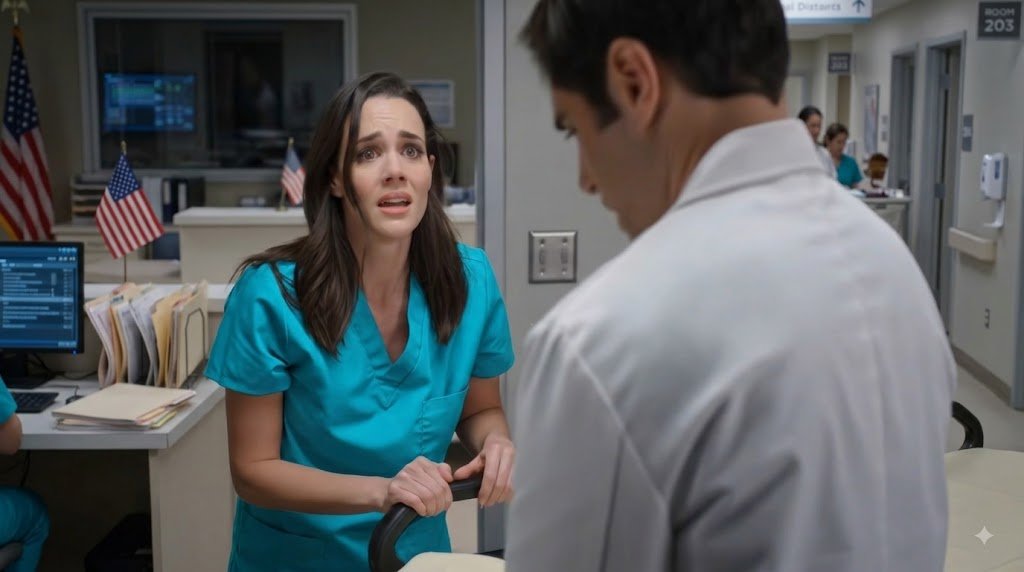
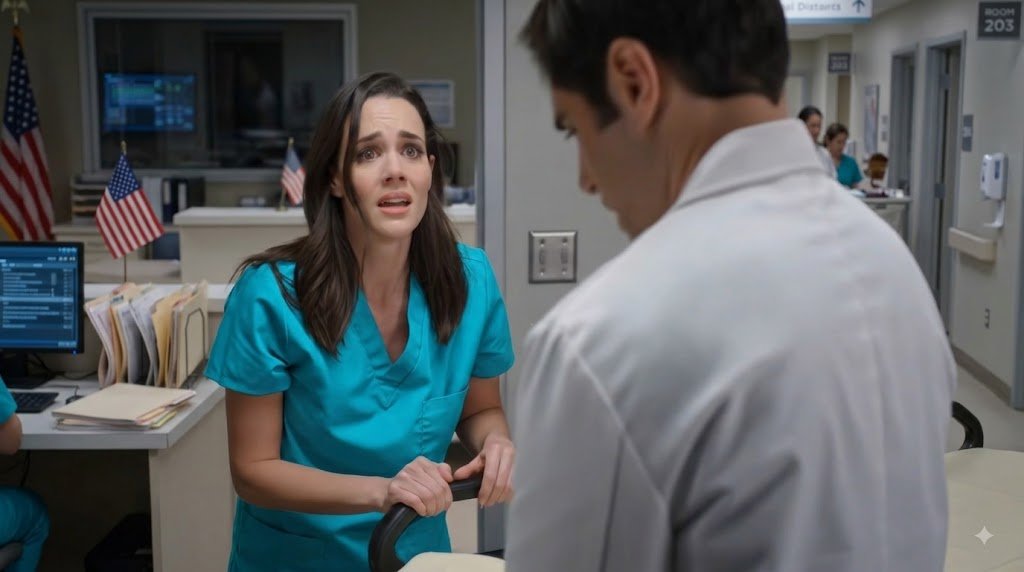
When I rushed my four-year-old daughter into a Denver emergency room with a 104-degree fever, I never expected the doctor walking toward us to be the man I had mourned for six years—the father my daughter had never known. He stared at her face, then at mine, as if something buried inside him had suddenly awakened.
Then my daughter whispered, “Mommy… why does he look like the man in my picture?”
The doctor went completely still.
And then he asked the question that shattered everything I thought I knew.
PART 1 — THE DOCTOR WHO WAS SUPPOSED TO BE DEAD
The emergency department at Pine Ridge Medical Center was washed in harsh white light.
I barely noticed.
My four-year-old daughter, Sophie, felt frighteningly light in my arms as I hurried through the automatic doors. Her skin was burning against my shoulder. Damp curls clung to her forehead, and every breath she took seemed shallow.
“Please,” I told the receptionist. “Her fever is almost one hundred four. She’s been throwing up, and she can barely keep her eyes open.”
A triage nurse came rushing over.
Within minutes, Sophie was lying on a narrow examination bed while I stood beside her, still wearing the gray housekeeping uniform from my shift at the Riverside Hotel.
“Mommy…”
“I’m right here, sweetheart.”
I brushed the hair away from her face and forced myself to sound calm.
Then the examination-room door opened.
“I’m Dr. Nathan Cole.”
My entire body went cold.
I turned around.
And there he was.
Nathan.
Older than the twenty-four-year-old man I remembered, but unmistakably him.
His dark hair was neatly trimmed. A thin scar disappeared into his left eyebrow. His shoulders were broader, his face sharper.
But his eyes—
Those were the same.
Hazel-green.
The exact eyes Sophie had.
For six years, I had believed Nathan Cole was dead.
I had mourned him while carrying his child.
I had abandoned my plans for medical school, returned to my mother’s small town in western Pennsylvania, and taken whatever work I could find while raising the daughter he had never known existed.
And now he stood only a few feet away, wearing a white coat and looking at me like I was a complete stranger.
“Ma’am?” he asked gently. “Are you okay?”
I tightened my grip on the bedrail.
“Please help my daughter.”
Whatever had happened to Nathan could wait.
Sophie couldn’t.
He immediately moved beside her.
He checked her temperature, listened to her chest, examined her throat, and asked when the vomiting had started.
“103.9,” he said quietly. “She’s dehydrated. We need fluids, fever medication, and blood work.”
A nurse entered with an IV tray.
Sophie whimpered when the needle went into her arm.
I leaned close and softly hummed the lullaby I’d sung to her since she was an infant.
Nathan stopped for the briefest moment.
His pen hovered above the chart.
Then he continued.
“Any medication allergies?”
“No.”
“Previous medical problems?”
“None.”
“Vaccinations current?”
“Yes.”
His eyes kept returning to my face.
Not recognition.
Not yet.
More like he was standing outside a locked room and somehow hearing something moving inside.
He glanced down at the chart.
“And her father?”
My throat tightened.
“Is he available for medical history?”
I almost laughed.
“Her father isn’t around.”
Nathan’s expression softened.
“I’m sorry.”
I looked at my daughter.
“So am I.”
He explained that Sophie appeared to have a severe throat infection combined with dehydration and would likely need to stay overnight for observation.
I nodded.
When he finally left, I sat beside Sophie’s bed and watched the IV slowly drip.
Six years earlier, Nathan had left his family’s estate after telling his parents that I was pregnant and that he intended to marry me.
Two hours later, his mother, Vivian Cole, found me at the hospital.
She told me Nathan had died in a highway crash.
She wouldn’t let me see the body.
She told me the accident happened because of me.
Then she called me a gold digger and offered me fifteen thousand dollars if I terminated my pregnancy and disappeared.
I refused.
A week later, a lawyer representing the Cole family sent me a letter warning me never to contact them again.
I was twenty-two.
Pregnant.
Heartbroken.
And completely powerless against a family that owned half the private medical facilities in the county.
So I left.
I never stopped loving Nathan.
I simply learned how to live without him.
Or at least, I thought I had.
Because now he was standing in the same hospital where I had brought our daughter.
Alive.
The scar near his eyebrow told me there had been a crash.
The confusion in his eyes told me there had been something worse.
An hour later, Nathan returned carrying two cups of coffee.
“One of these is for you.”
I hesitated before taking it.
“Parents forget to eat and drink when their kids are sick,” he said.
I wrapped both hands around the cup.
They were shaking.
He noticed.
“You’re exhausted.”
“I’ve had a long night.”
He pulled a chair closer.
“Sophie is a beautiful name.”
“Thank you.”
“What does it mean?”
“Wisdom.”
He smiled faintly.
“Family name?”
“No.”
I stared at the sleeping child.
“Her father and I used to talk about names before she was born.”
Nathan’s expression changed.
“Was he important to you?”
I swallowed.
“He was everything.”
Nathan lowered his eyes.
For several seconds, neither of us spoke.
Then he slowly looked back at me.
“This is going to sound strange.”
I said nothing.
“Have we met before?”
My heart slammed against my ribs.
“I don’t think so.”
He studied me.
“You hesitated.”
“I was surprised by the question.”
He leaned back slightly.
“There’s something about you that feels familiar.”
Before I could respond, Sophie stirred.
Her feverish eyes opened.
She looked at Nathan.
Then at me.
Then back at him.
Children notice things adults desperately try to hide.
She stared at his face for several long seconds.
Finally, in a weak whisper, she said:
“Mommy…”
I bent toward her.
“What is it, sweetheart?”
She pointed toward Nathan.
“He looks like the man in my picture.”
Nathan froze.
His face slowly lost its professional calm.
“What picture?”
I couldn’t answer.
Sophie reached weakly toward her backpack beside the chair.
“The one you keep in the little box.”
Nathan looked at me.
“A picture of whom?”
My heart stopped.
Because there was only one photograph Sophie had ever seen inside that box.
A photograph of the man I had told her was watching over us from somewhere she could never reach.
Nathan’s voice became barely more than a whisper.
“Why does your daughter have a picture of me?”
PART 2 — THE LIFE THEY STOLE FROM US
For a few seconds, I couldn’t speak.
Nathan was still staring at me.
“Why does your daughter have a picture of me?”
I looked at Sophie.
Her eyes were already closing again.
She was too sick to understand what she had just revealed.
I stood and gently pulled the blanket higher over her shoulders.
“Get some rest, sweetheart.”
Nathan didn’t move.
“Who am I to her?”
The question was quiet.
But there was something desperate beneath it.
I turned toward him.
“You don’t remember me.”
His jaw tightened.
“No.”
“Then you don’t remember what happened six years ago.”
“I remember the accident.”
My breath caught.
“The accident?”
He nodded slowly.
“Some things.”
“What things?”
He looked toward the hallway.
“I remember leaving my parents’ house. I remember being angry. I remember driving.”
“And then?”
“Nothing.”
He touched the scar near his eyebrow.
“I woke up three months later.”
My knees nearly gave out.
“Three months?”
“I was in a rehabilitation facility in Colorado.”
I stared at him.
“Why didn’t you contact anyone?”
“I tried.”
His eyes hardened.
“My mother told me there was no one.”
A cold feeling spread through my chest.
“She told me everyone had moved on.”
“Everyone?”
He looked directly at me.
“She said the woman I had been seeing had left town after learning I wasn’t going to survive.”
My mouth went dry.
“She told you I left?”
Nathan nodded.
“She showed me a photograph of you.”
My heart stopped.
“What photograph?”
“The two of us.”
He looked away.
“She said you were angry with me. That you’d taken money and disappeared.”
I almost laughed.
Not because it was funny.
Because it was so cruel that my mind couldn’t process it.
“She told me you were dead,” I whispered.
Nathan’s face changed.
“What?”
“Your mother came to the hospital.”
He stared at me.
“She said you died in the crash.”
“She told me I was dead?”
“Yes.”
“And you believed her?”
“I was twenty-two, pregnant, and terrified.”
Nathan closed his eyes.
I continued.
“She said you never wanted the baby. She offered me money to disappear.”
His expression became rigid.
“How much?”
“Fifteen thousand dollars.”
He looked sick.
“She told me you were a gold digger.”
I laughed bitterly.
“She called me worse than that.”
Nathan stood.
He walked toward the window.
For several seconds, he said nothing.
Then he turned around.
“What’s your daughter’s name?”
“Sophie.”
“How old?”
“Four.”
“When was she born?”
“September.”
He did the math silently.
Then his face drained of color.
“That was after the accident.”
“Yes.”
He looked at Sophie.
“She’s mine.”
It wasn’t a question.
I didn’t answer.
He already knew.
The eyes.
The face.
The timing.
Everything suddenly fit.
Nathan walked toward the bed.
He didn’t touch Sophie.
He simply stood there watching her sleep.
“I missed four years.”
I looked down.
“You missed all of it.”
Her first steps.
Her first word.
Her first birthday.
The day she learned to ride a bicycle.
Every fever.
Every nightmare.
Every morning she climbed into my bed because she was afraid of thunderstorms.
Nathan swallowed hard.
“Does she know who I am?”
“She knows your name.”
His eyes lifted.
“Why?”
“Because I refused to erase you.”
I reached into my purse and pulled out the small wooden box I kept there.
I opened it.
Inside was the photograph.
Nathan took one look at it and stopped breathing.
It was him.
Six years younger.
His arm around my shoulders.
His hand resting over my pregnant stomach.
We had been standing beneath a maple tree outside the apartment where we’d planned to start our life together.
Nathan reached toward the photograph.
His fingers trembled.
“I remember this.”
I stared at him.
“What?”
“The tree.”
He closed his eyes.
“I remember the tree.”
Then he opened them again.
“And I remember you.”
My heart cracked open.
“You remember me?”
“Not everything.”
He pressed his fingers against his temple.
“But I remember loving you.”
Neither of us spoke.
A nurse suddenly entered.
“Dr. Cole, we need you in trauma.”
Nathan nodded.
Before leaving, he looked at me.
“Don’t go anywhere.”
I almost smiled.
“I’m not going anywhere.”
He paused at the door.
“And don’t tell my mother I’m here with you.”
That frightened me.
“Why?”
His expression became serious.
“Because if she lied about you once, I don’t know what else she lied about.”
He disappeared into the hallway.
I sat beside Sophie.
For the first time in six years, I allowed myself to imagine something impossible.
A father.
A daughter.
A family that had never gotten the chance to exist.
But twenty minutes later, Nathan returned with something in his hand.
An old hospital file.
He placed it on the chair beside me.
“I found this in the records archive.”
I looked at the folder.
“My name was attached to it.”
He opened the file.
Inside were documents from the night of his accident.
A police report.
A transfer record.
And one page that made my blood run cold.
Nathan pointed to the signature at the bottom.
“This isn’t mine.”
I stared at the handwriting.
It belonged to Vivian.
Beneath her signature was a statement saying Nathan had no spouse, no children, and no known fiancée.
The date was three days after his accident.
I looked at Nathan.
“She knew.”
He nodded.
“She knew you were pregnant.”
“And she knew I was alive.”
Nathan’s expression hardened.
“She didn’t just lie to you.”
He closed the folder.
“She erased you from my life.”
Before I could respond, the hospital room door opened again.
A nurse stood there.
“Dr. Cole, there’s a woman asking for you at the front desk.”
Nathan frowned.
“Who?”
The nurse hesitated.
“Your mother.”
His face went completely still.
Then my phone vibrated.
A message appeared from an unknown number.
You need to leave the hospital before Vivian gets to your daughter.
I looked at Nathan.
He had seen the message.
Neither of us spoke.
Because suddenly, this wasn’t about discovering the past anymore.
Someone was terrified that we would uncover it.
PART 3 — THE TRUTH SHE COULDN’T BURY
Nathan read the message again.
Then he looked at me.
“Did you give anyone your number?”
“No.”
“Has anyone contacted you since you arrived?”
“No.”
His expression tightened.
The nurse was still standing in the doorway.
“Dr. Cole?”
“Tell my mother I’ll meet her downstairs.”
The nurse nodded and left.
Nathan closed the door.
“We need to be careful.”
I pulled Sophie’s blanket higher.
“Who sent that message?”
“I don’t know.”
He stared at his phone.
“But I have a pretty good idea.”
Ten minutes later, Nathan asked hospital security to keep an eye on the room.
Then he called an attorney he trusted.
While we waited, he opened the old accident file again.
“There’s something missing,” he said.
“What?”
“The original police report.”
He pointed to the copy.
“It says the report was amended six months after the crash.”
“Why?”
“I don’t know.”
He scrolled through the digital records.
Then he stopped.
“There.”
A scanned document appeared.
Nathan read it silently.
His face changed.
“What?”
He turned the screen toward me.
The original report stated that a woman had arrived at the accident scene claiming to be Nathan’s emergency contact.
Vivian.
She had told the officers Nathan had no fiancée.
No child.
No one else who needed to be contacted.
But there was another detail.
The crash hadn’t been caused by Nathan.
A second vehicle had forced him off the road.
The driver had fled.
I covered my mouth.
“Your mother knew.”
Nathan nodded slowly.
“She knew enough to keep asking questions.”
“And then?”
“She had the report changed.”
We stared at each other.
Suddenly the entire story looked different.
Vivian hadn’t simply lied about Nathan’s death.
She had controlled the information after the accident.
She had separated us while he was unconscious.
She had convinced me he was dead.
And when Nathan woke up with memory loss, she had convinced him I had abandoned him.
A perfect lie.
Built from two people who couldn’t remember enough to contradict her.
The door opened.
A hospital security officer stepped inside.
“Dr. Cole, your mother is downstairs.”
Nathan stood.
“Is she alone?”
The officer shook his head.
“No. She brought an attorney.”
Nathan looked at me.
“Stay here.”
I nodded.
Twenty minutes later, he returned.
He looked different.
Older somehow.
“What happened?”
“My mother denied everything.”
“Of course.”
“She said you were unstable. She said you became obsessed with me after the accident.”
I stared at him.
“She said that?”
He nodded.
“Then I showed her the original report.”
His jaw tightened.
“She stopped talking.”
I felt a strange calm settle over me.
“What are you going to do?”
“Find out who changed the report.”
“And if it was her?”
Nathan looked toward Sophie.
“Then she will answer for it.”
The investigation took weeks.
The evidence was overwhelming.
Vivian had intercepted my letters.
She had instructed the family attorney to threaten me.
She had told Nathan, during his recovery, that I had taken money and left.
And she had arranged for the accident report to be altered.
But there was one final piece.
A hospital employee had kept copies of the original records because she believed the changes were suspicious.
Those copies proved everything.
Vivian eventually admitted she had acted because she believed I would destroy Nathan’s future.
She claimed she was protecting the family.
Nathan never accepted that explanation.
Neither did I.
The criminal investigation continued, but I refused to let the past consume Sophie’s future.
Nathan wanted to be part of her life immediately.
I told him he couldn’t simply become her father because a DNA test confirmed what we already knew.
He understood.
He started slowly.
First, he sat beside her hospital bed.
Then he read her books.
When she finally felt better, he brought her a stuffed rabbit.
Sophie studied him carefully.
“Are you really my daddy?”
Nathan’s eyes filled with tears.
“Yes.”
She thought for a moment.
“Why didn’t you come before?”
Nathan looked at me.
Then back at her.
“Because I didn’t know where you were.”
Sophie accepted that answer in the simple way children sometimes accept complicated truths.
She reached for his hand.
He held it gently.
Months later, we stood beneath a maple tree.
The same kind of tree from our old photograph.
Sophie was running through the leaves several feet away.
Nathan stood beside me.
“I can’t give you back the years,” he said.
“No.”
“I wish I could.”
“I know.”
He looked at our daughter.
“She has your strength.”
I smiled.
“And your eyes.”
He laughed softly.
For years, I had believed the greatest tragedy of my life was losing Nathan.
I was wrong.
The tragedy was believing the lie that our story had ended.
It hadn’t.
It had simply been interrupted.
Nathan became a father one ordinary day at a time.
Sophie learned that the man in the photograph was real.
And I learned something I wish I had understood six years earlier:
Sometimes closure isn’t forgetting the person who hurt you.
Sometimes closure is finally learning the truth—and realizing the lie no longer has the power to decide your future.
The photograph stayed in my wooden box.
But I no longer kept it because it was all I had left of Nathan.
I kept it because it reminded me of where our story began.
And now, whenever Sophie asks why her father looks exactly like the man in the picture, I smile.
“Because, sweetheart,” I tell her, “that’s the man who came back.”
THE END.